
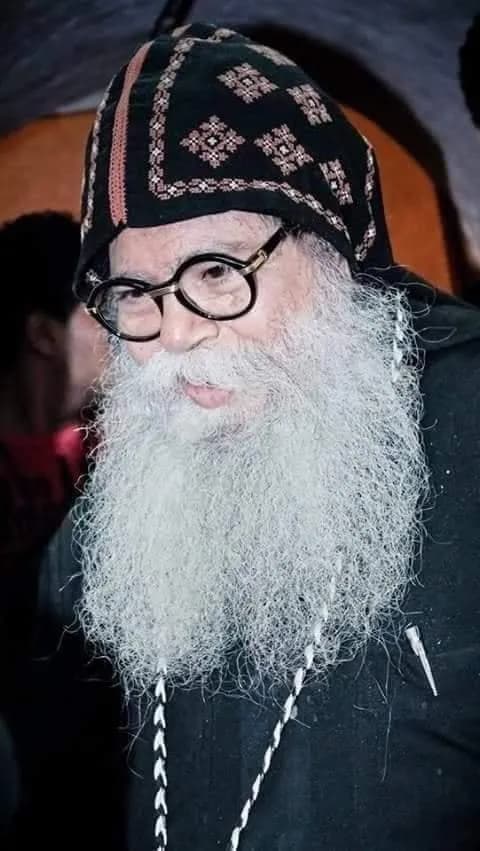
Anba Sarabamoun
His Eminence Metropolitan Anba Sarabamoun was a distinguished spiritual father and the long-serving Bishop and Abbot of the Monastery of Saint Anba Bishoy. Known for his deep ascetic life, wisdom, and devotion to monasticism, he led the monastery through a remarkable period of spiritual and architectural growth. His legacy continues to inspire monks and visitors seeking a life of prayer, humility, and faith.
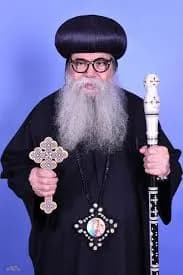
Bishop Sarabamoun was born on February 21, 1937, in the city of Armant, Luxor Governorate. Before becoming a monk, his name was Aziz Qaleed Bastouros, and he was known among his acquaintances as Azar. From his early youth, he longed for the monastic life and consecration, feeling a spiritual calling towards asceticism. Therefore, he went to the Monastery of Saint Bishoy in the Wadi El Natrun desert to begin his monastic journey, recommended by Mr. Alfi Nashid, one of the ministry's trustees in Luxor.
By divine providence, he was directed to the flourishing Monastery of the Syrians (Deir El-Surian), as there was no monastic community at the Monastery of Anba Bishoy at that time. He also carried a recommendation addressed to Deir El-Surian. There, he was entrusted for spiritual guidance and discipleship to Fr. Antonios El-Souriany (who later became His Holiness Pope Shenouda III), and a close spiritual relationship developed between them. He embraced monastic life at Deir El-Surian in Wadi El Natrun on December 7, 1959, receiving the name Fr. Sarabamon El-Souriany. His monastic name was chosen in honor of Saint Anba Sarabamon, Bishop of Nikiou, as the day of his monastic profession coincided with the feast of the saint's martyrdom. From the beginning of his monastic life, he was formed in a strict ascetic tradition that included prolonged fasting, faithful participation in the Agpeya prayers, attendance at the Divine Liturgy, and the Midnight Praises. He remained committed to these spiritual disciplines throughout his life and passed them on to his disciples, many of whom followed the same ascetic path. Despite his deep asceticism, he was known for his spiritual and intellectual balance, often cautioning his spiritual children against becoming preoccupied with dreams, visions, or supernatural phenomena. He was ordained a priest while still a monk on February 24, 1963, and was elevated to the rank of Hegumen (Archpriest) on July 25, 1967. During his years at Deir El-Surian, he held several responsibilities, including serving as the monastery's steward and as a spiritual father and confessor to newly professed monks. On June 17, 1973, he was consecrated as a General Bishop and entrusted with the restoration and revival of the Monastery of Saint Anba Bishoy. He was formally enthroned as Bishop and Abbot of the Monastery on May 28, 1977. Under his leadership, the monastery witnessed remarkable spiritual and architectural growth, including the legalization and development of monastery lands and the establishment of numerous projects supporting its mission and community. On January 31, 1994, Pope Shenouda III invested him with the Great Schema (Eskema), one of the highest monastic distinctions, granted only to a small number of monks who have attained exceptional spiritual maturity and ascetic commitment. After a monastic and pastoral journey spanning more than sixty years, he reposed in the Lord at dawn on Sunday, March 8, 2020. In accordance with his wishes, he was laid to rest at the Monastery of Saint Anba Bishoy, beside the body of His Holiness Pope Shenouda III.