The first attack occurred in 407 AD, and because of it, Saint Anba Bishoy left Scetis and went to Mount Ansena, while Saint John the Short went to Mount Qulzum.

ABOUT US

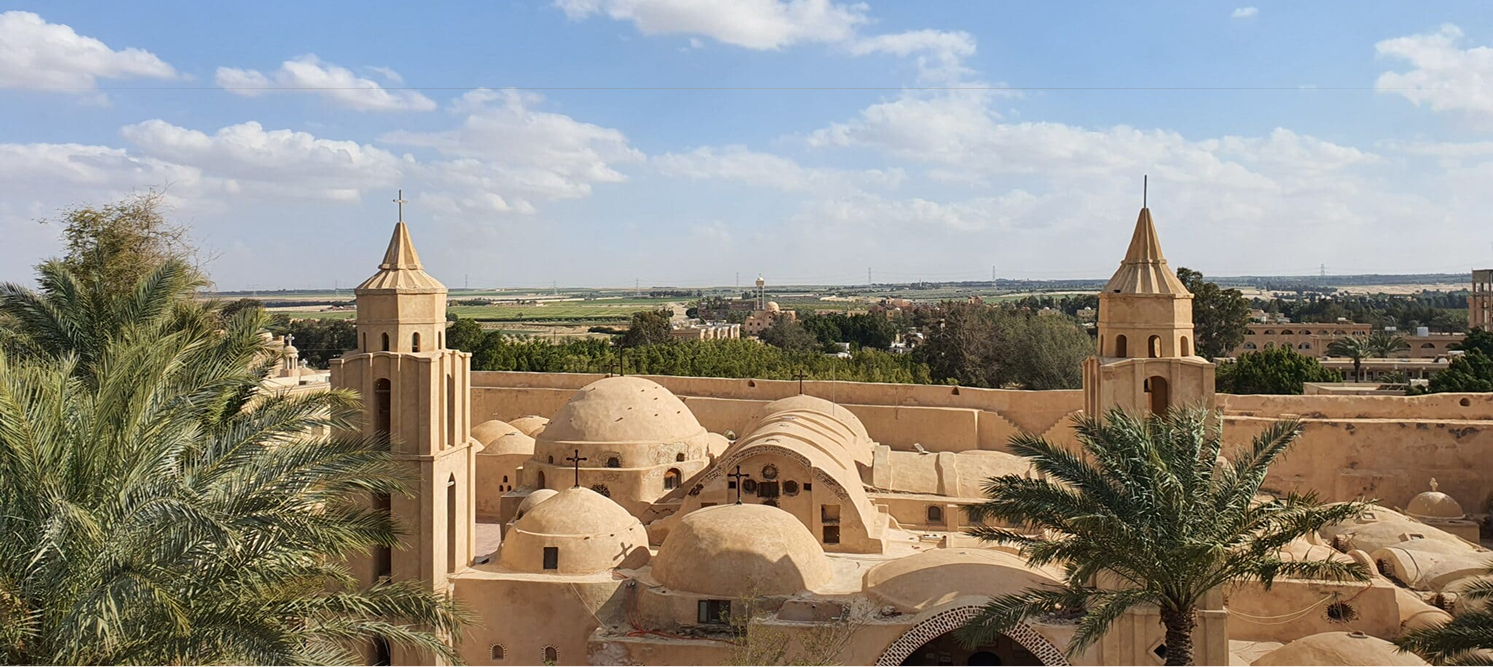
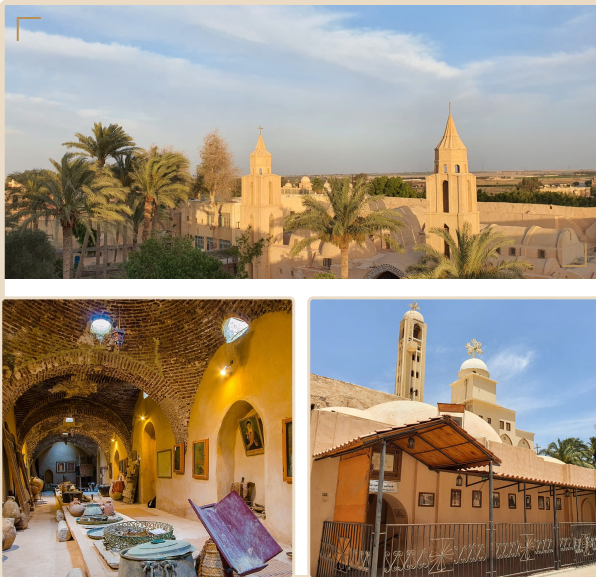
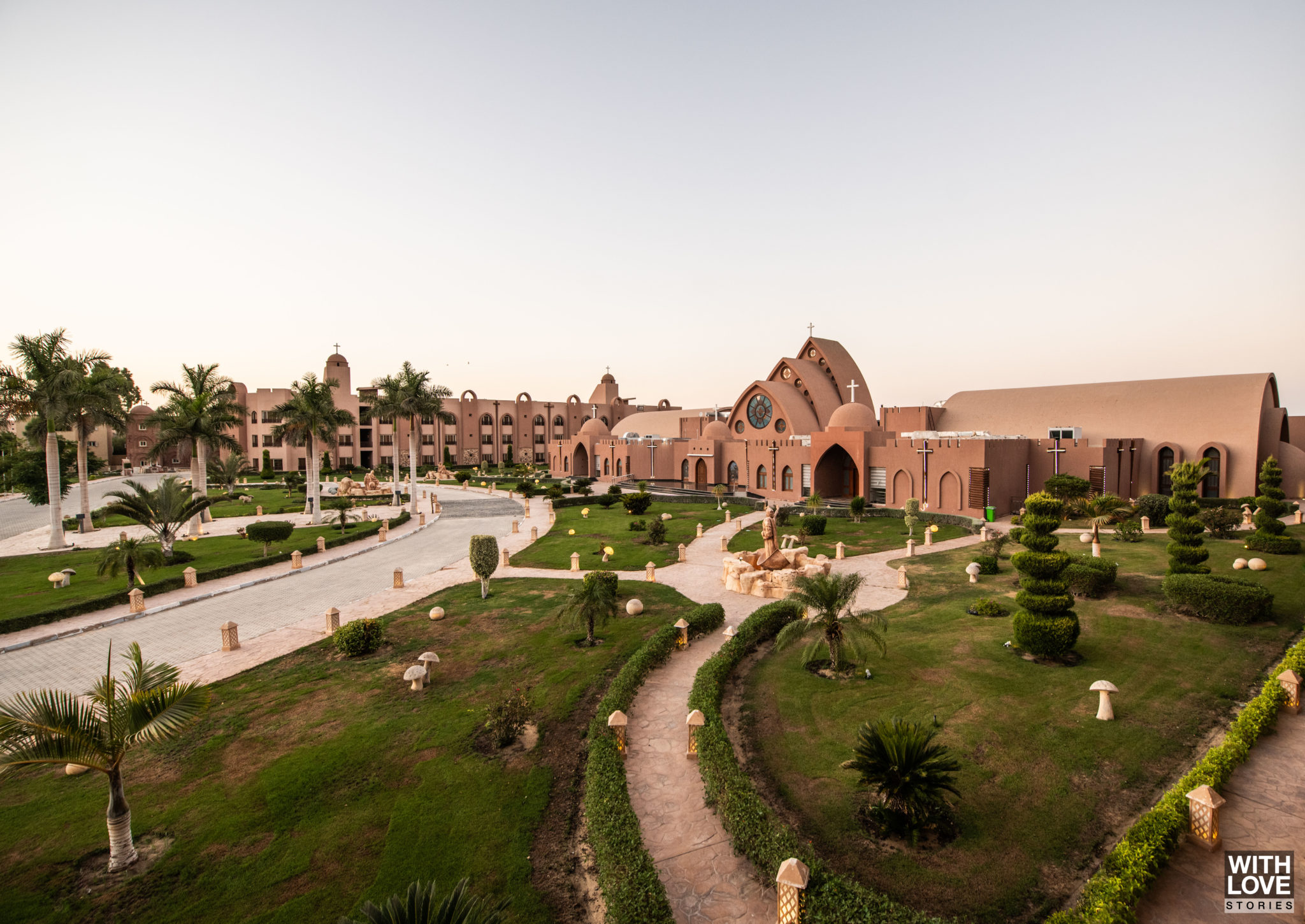
Monastery of Saint Bishoy is considered one of the oldest monasteries in Egypt and in the entire world, as its history dates back to the late fourth century AD. It was founded by the great saint Saint Bishoy. The monastery is located in the wilderness of Wadi El Natroun, west of the Nile Delta in northern Egypt, midway between the cities of Cairo and Alexandria. The historic area of the monastery covers approximately 2 feddans, 16 kirats, and 14 sahms (about 11,300 square meters). This area is surrounded by massive and high walls that were constructed in the 9th century AD. The walls extend 116 meters from north to south and 95 meters from east to west. The late His Holiness Pope Shenouda III chose the monastery to serve as his papal residence during his papacy, and he also selected it as the resting place for his holy body after his departure, having left instructions to be buried there after his repose. It is also worth mentioning that His Holiness Pope Tawadros II, may God grant him a long life, graduated from this monastery and contributed to the development and construction of many buildings within the papal headquarters. He also established the Logos International Center there, which is considered an architectural masterpiece unlike any other. In addition, Pope Gabriel VIII and Pope Macarius III both came from this monastery. A large number of bishops and metropolitans have also graduated from it.
Its architecture gathers many eras into one sacred setting, from early basilican forms to later Byzantine and Ottoman touches, all held together by the continuity of Coptic liturgical life.

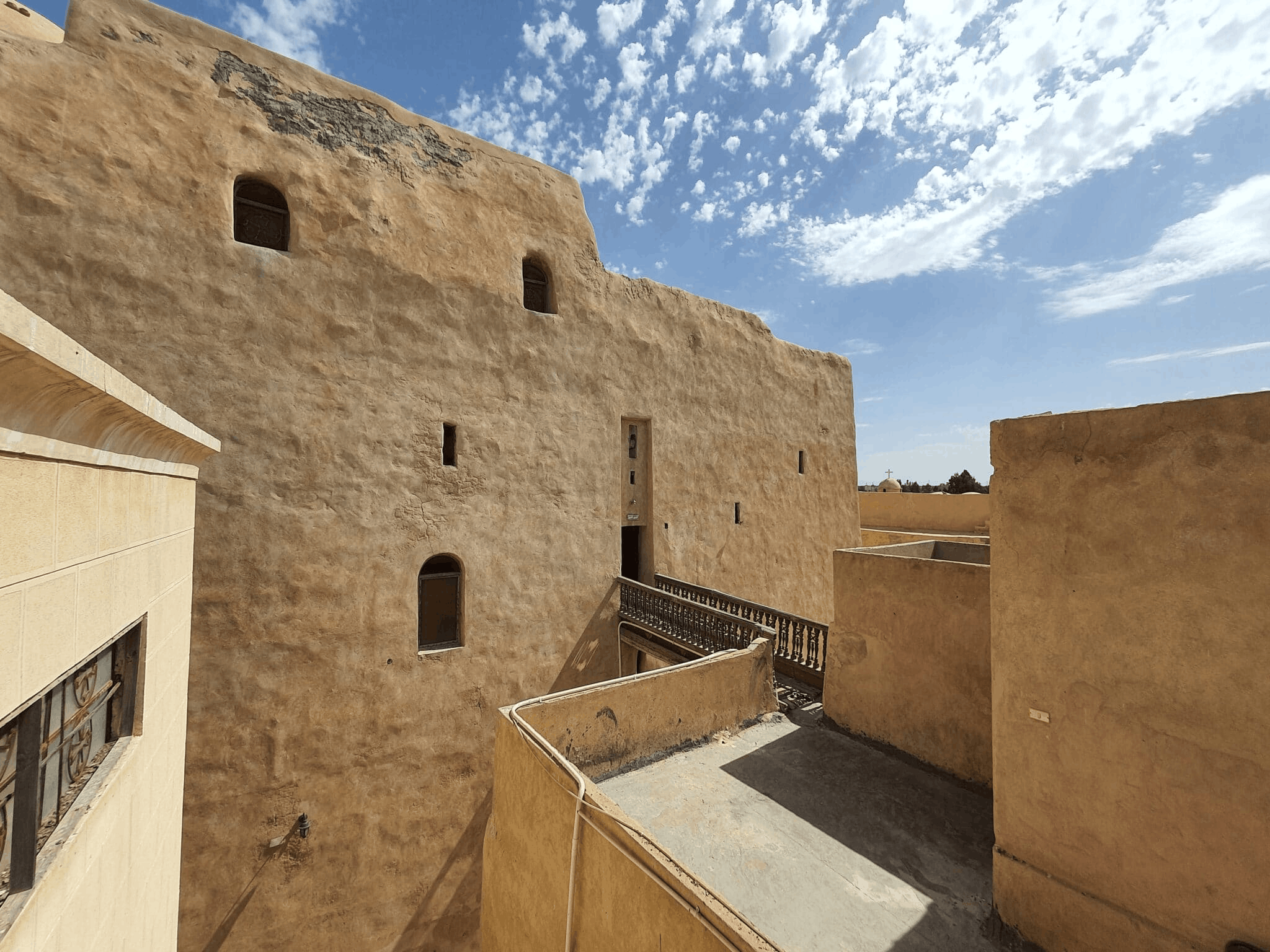
The history of this wall dates back to the 9th century AD (840 AD), when it was built after the defeat of the Berbers and the transfer of the body of Saint Pishoy from Ansena (present-day Mallawi). The wall is approximately 400 meters long and consists of two adjoining walls, with the outer wall being higher than the inner one. Each wall is about one meter thick, while the height reaches approximately 11 meters.

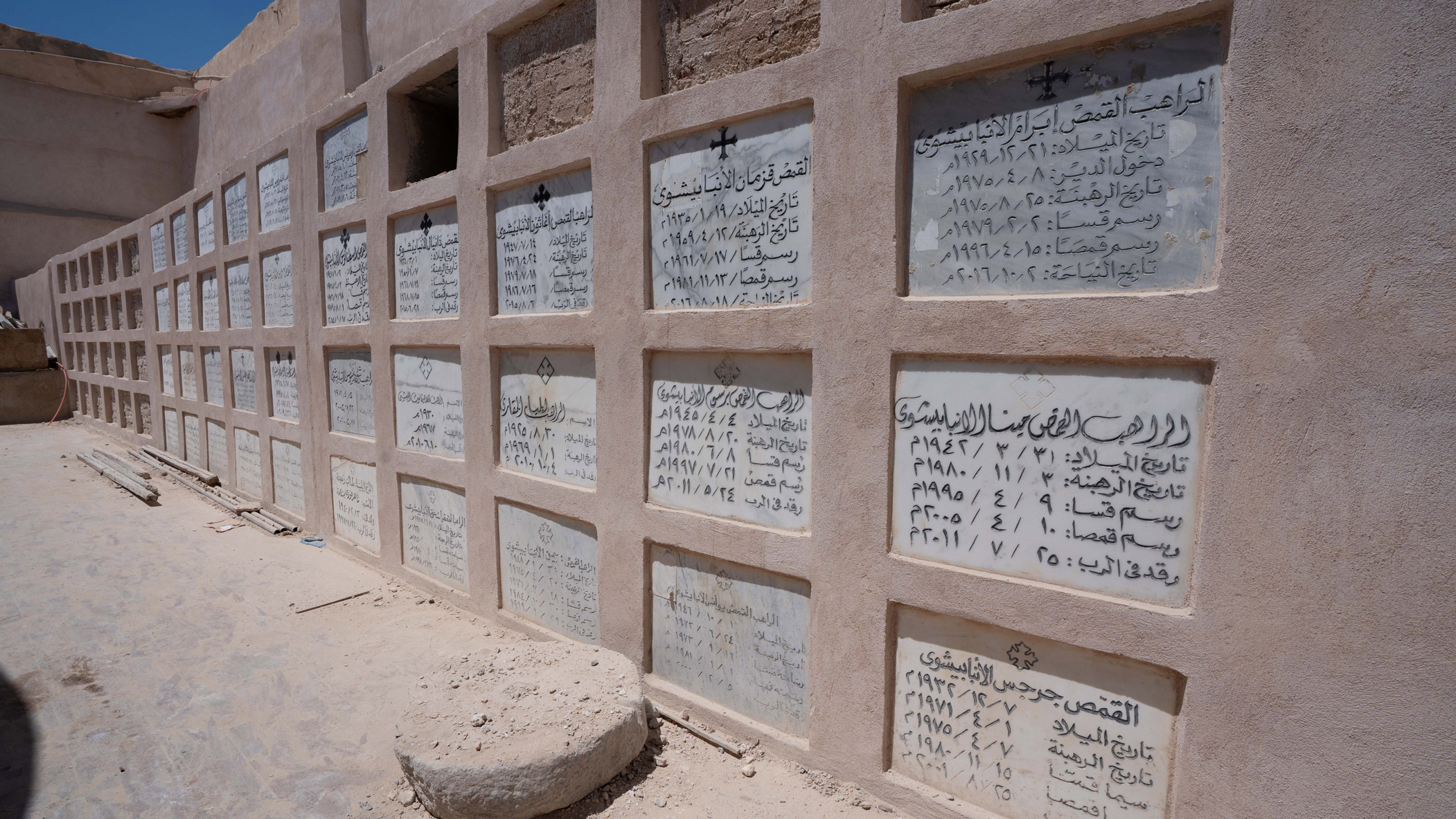
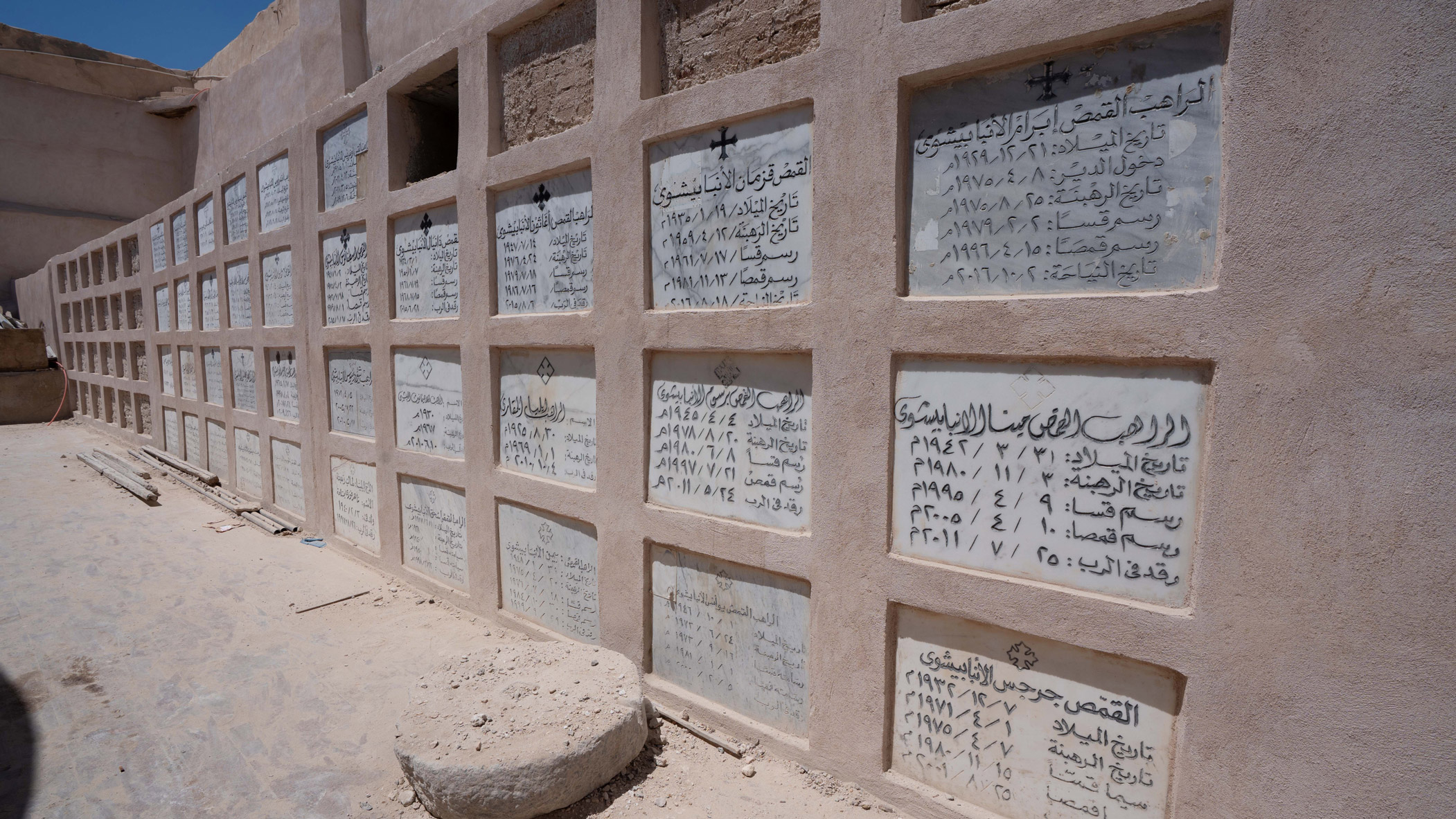
“Al-Tafous” is a Greek word meaning “burial place” or “tomb.” It is the place where the monastic fathers are buried after their repose. It is located on the western side of the Church of Saint George and includes the burial place of the late His Eminence Bishop Markos and the late His Eminence Bishop Athanasius, the metropolitans of Toulon and Marseille in France.
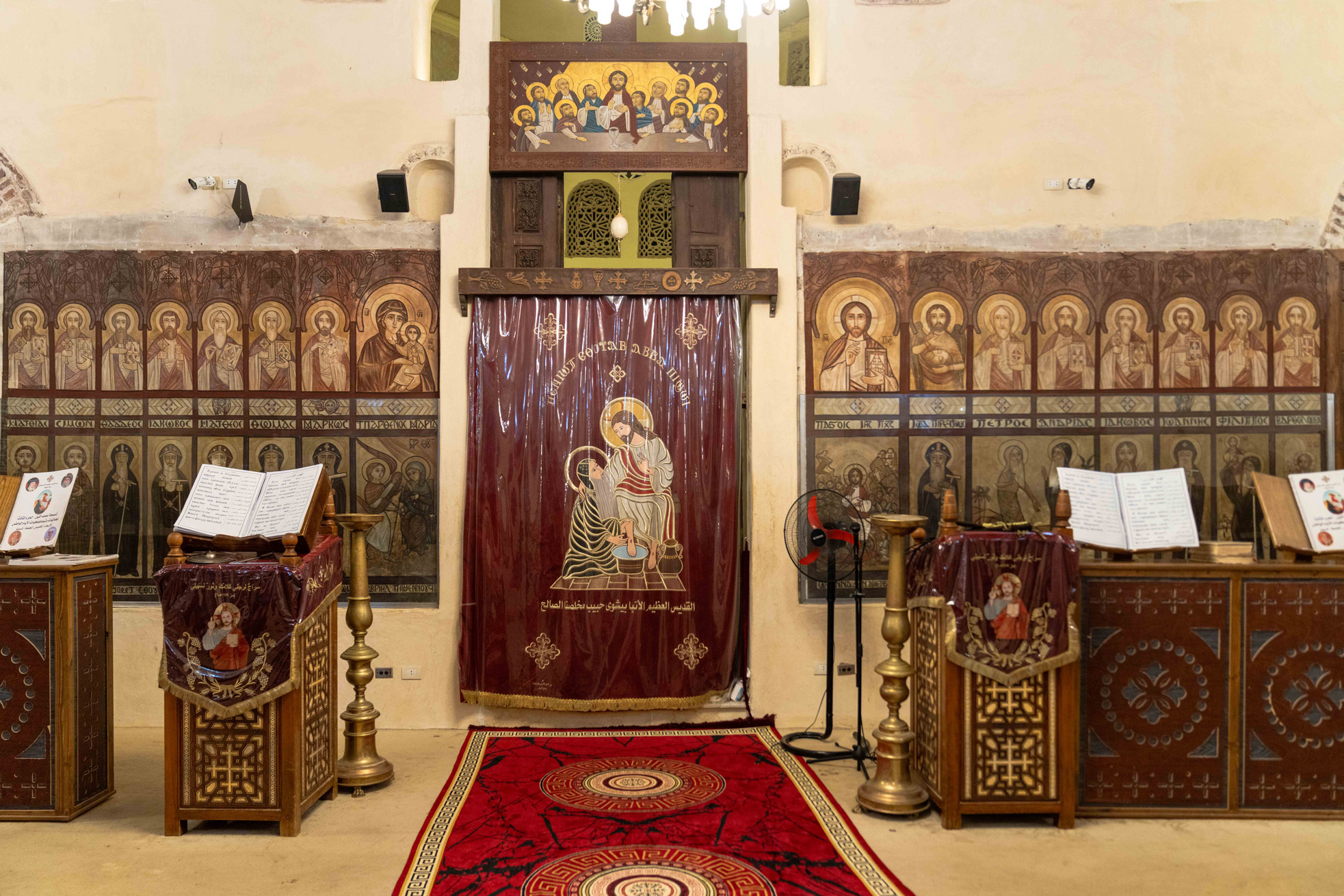
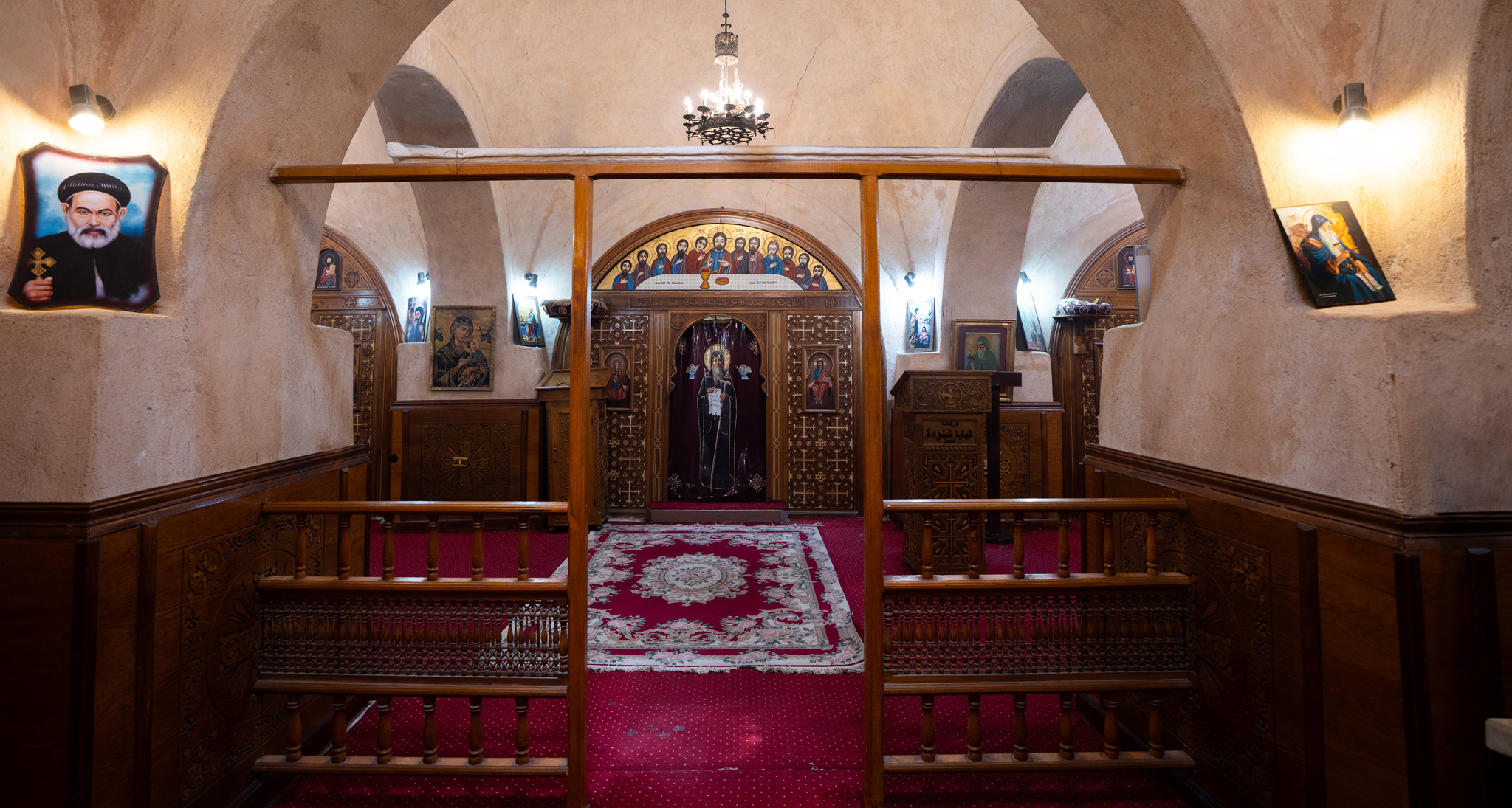
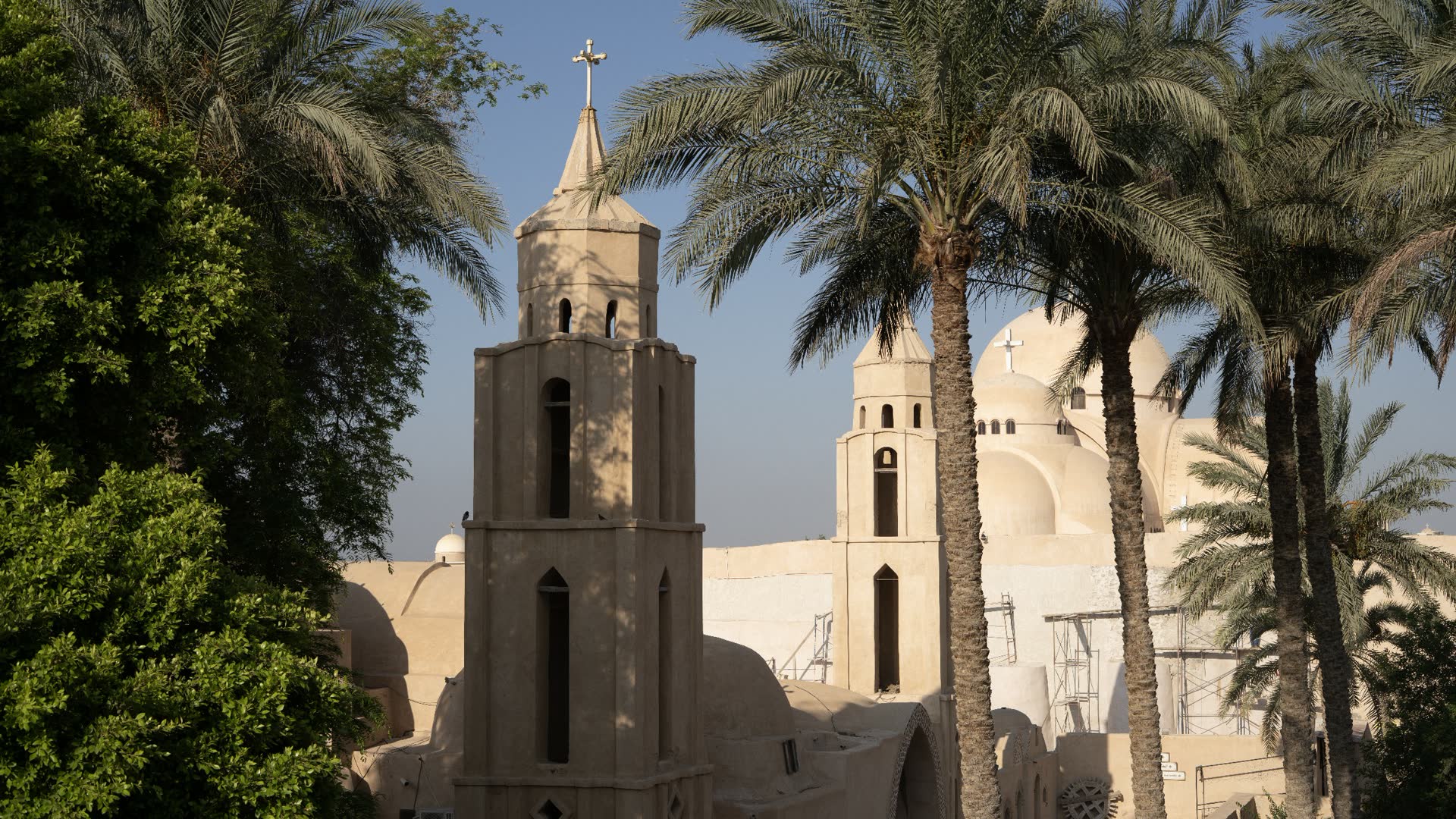
The historic Church of Saint Pishoy dates back to the 4th century AD. Its original features were destroyed, and only its foundations remained due to the successive Berber raids. The church was rebuilt in the 5th century after the first raid in 407 AD. Emperor Zeno also built the fortress at the end of the 5th century AD. During the time of Pope Benjamin I in 645 AD, the church, monastery, and fortress were renovated and rebuilt. Later, the monastery was restored again in 817 AD after being destroyed by the Berbers during the fifth raid, in the era of Pope Jacob (819–830 AD). Pope Joseph I (830–841 AD) took special care in restoring and renovating the monastery. He rebuilt the church and the monastery in general. Therefore, the current architecture of the historic church, with its distinctive basilican and Coptic style, dates back to the 9th century AD, specifically around 841 AD. During his time, the relics of Saint Pishoy were also returned along with those of Saint Paul of Tammah. In the 14th century, Pope Benjamin II (1327–1339 AD) carried out extensive reconstruction work on the monastery and the historic church after the wooden سقف structures were severely damaged by termites. These were replaced with brick domes and semi-barrel vaults, especially in the basilican nave with its northern, western, and southern aisles. He also added the church located in the northeastern side of the historic church. Father Boutros later built the western bell tower beside the northern doxar, and he also constructed the old guesthouse above the Well of the Martyrs in front of the Church of Saint Pishoy in 1912 AD. Shortly afterward, the northeastern bell tower was also established. The late Bishop Theophilus carried out several structural restorations and renovated the Church of Saint George in 1973. Pope Shenouda III later appointed Bishop Sarabamon as bishop of the monastery, marking the beginning of the modern reconstruction era. This included building new individual monks’ cells adjacent to the eastern side of the historic wall in 1977, constructing the new guesthouse beside the ancient fortress in 1981, restoring the historic Church of Saint Pishoy, rebuilding the three sanctuaries of the Church of the Virgin Mary within the fortress, restoring and reinforcing the historic refectory and fortress, and replacing the roof of the Church of Archangel Michael above the fortress with a semi-barrel brick roof to restore the church to its original form. He also restored the Church of Saint Mercurius (known as the Monks’ Church), parts of which had been used as a bakery. In 1990, the Tafous (monastic burial place) was established adjacent to the western side of the historic wall, extending behind the ancient refectory to the old well. A new entrance (doxar) was also created opposite the southern entrance of the church by removing part of the cells attached to the southern wall. Additionally, a gate was opened in the wall to allow access to the monastery’s southern agricultural and urban expansions. As a result of the floods that struck Wadi El Natrun in 2015, urgent intervention became necessary to save the monastery from deterioration and preserve its archaeological and architectural value. The restoration work rescued the church from several dangers, most notably the imminent collapse of many of its roofs. These floods also led to several archaeological discoveries. The following images illustrate some of the most recent restoration works carried out on the historic church, including the dome of the sanctuary of Saint John the Baptist.
A Brief Timeline
The first attack occurred in 407 AD, and because of it, Saint Anba Bishoy left Scetis and went to Mount Ansena, while Saint John the Short went to Mount Qulzum.
In the year 444 AD, they washed their swords stained with the blood of the martyrs in the well located in front of the ancient Church of Anba Bishoy, and therefore this well became known as the “Well of the Martyrs”.
The fourth attack occurred in 620 AD and was exceptionally harsh and violent than the previous ones. Scetis was completely devastated, and the Monastery of Saint Bishoy suffered total destruction. During this attack, Saint Samuel the Confessor was captured and subjected to severe torture. Later, God rebuilt Scetis through Pope Benjamin I, the thirty-eighth patriarch.
The fifth attack came in 840 AD, and it was also severe, resulting in the deaths of a large number of monks and the destruction of Scetis once again. However, these disturbances ended when Ahmad ibn Tulun confronted them, seeing their presence as a threat to Egypt's western borders. He led his army to Wadi El Natrun, where a fierce battle ensued, ending in his victory. After this, the Berbers ceased to exist in the region.
The word “Myron” is a Syriac word meaning “perfume” or “ointment.” The Holy Myron consists of twenty-eight ingredients extracted from herbs that grow in different parts of the world. Since 1981, the consecration of the Holy Myron has been carried out at the Monastery of Saint Pishoy. It was consecrated six times during the papacy of the late His Holiness Pope Shenouda III between 1981 and 2008, and four times during the papacy of His Holiness Pope Tawadros II between 2014 and 2024. He also established a fixed schedule for the consecration of the Holy Myron every three years. Up to the present day, the Holy Myron has been prepared thirty-eight times from the era of the Apostles until the papacy of Pope Tawadros II. It is worth mentioning that the first time the Holy Myron was prepared in this monastery was in April 1981 by the hands of His Holiness Pope Shenouda III.

By the hand of His Holiness Pope Shenouda III.

PAPAL HEADQUARTERS
The Papal Residence at the Monastery of Monastery of Saint Pishoy was chosen by the late His Holiness Pope Shenouda III to serve as his papal residence during his leadership of the Church. He also requested to be buried there after his repose. Later, His Holiness Pope Tawadros II, may God grant him a long life, developed the papal residence and established many buildings within it. He also founded the Logos International Center, the Central Papal Library, and the Saint Mark Coptic Orthodox Academy to serve as the educational umbrella encompassing the various Coptic theological institutes and colleges.
This presence joins the ancient spiritual identity of the monastery with the administrative life of a global church, making the monastery both a historical refuge and a living center of leadership.
This table was once used as a gathering place for monks after Sunday Mass to share a meal together. One of the monastery elders would sit at the head of the table and read passages from the Bible or the Book of the Garden of the Monks, allowing the monks to combine physical and spiritual nourishment. Afterward, each monk would return to his cell. Located on the western side of the Church of Saint Bishoy, it is separated from the church by a narrow passageway, approximately two meters wide, and dates back to the 4th century AD. It is no longer in use, having been replaced by a more modern table, but it still contains many artifacts and icons.

The ancient cells are an important part of the monastic heritage. The word "cell" refers to the place where a monk lives and spends his life in worship and contemplation. This word is derived from the Greek word "celli," reflecting the cultural and linguistic influences that have blended over the ages. These cells date back to the 9th century AD, giving them significant historical and archaeological value, as they have stood for centuries as witnesses to ancient monastic life. These cells are located adjacent to the inner wall of the ancient monastery, indicating their close connection to the monastery's structure and internal organization. They provided the monks with a quiet and secluded environment conducive to their spiritual life. Today, there are six buildings housing the monks, as well as several individual cells scattered around the monastery grounds.

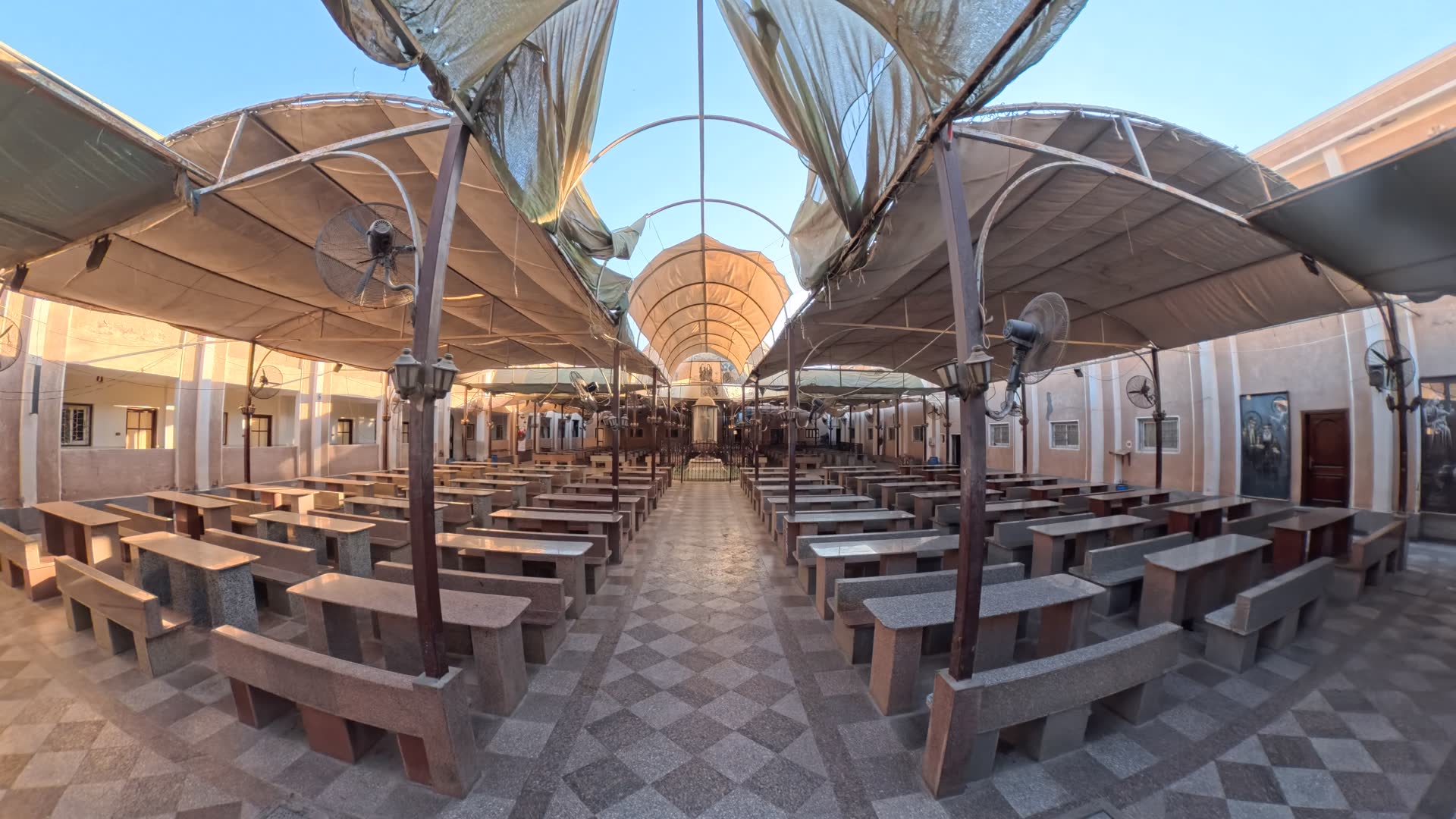
The Cathedral of the Monastery of Saint Bishoy is located on the western side of the Church of Saint Bishoy, outside the ancient monastery walls, and was built on an area of approximately 2,000 square meters. The cathedral contains three altars: the central altar dedicated to Saint Bishoy, the northern altar dedicated to Saint Shenouda the Archimandrite, and the southern altar dedicated to Saint Sarabamoun the Bishop. It also houses the relics of Saint Philopater Mercurius Abu Sefein and Saint Archdeacon Habib Girgis. It was consecrated and inaugurated in 2005 by His Holiness Pope Shenouda III, of blessed memory. Divine Liturgy is celebrated there every Friday, Saturday, and Sunday, and it also hosts some events presided over by His Holiness the Patriarch due to its capacity to accommodate large numbers of people.

Currently, a new museum is being built next to the cathedral, which will house a large number of archaeological icons, artifacts and tools that have been used throughout the history of the monastery.

The first attack occurred in 407 AD, and because of it, Saint Anba Bishoy left Scetis and went to Mount Ansena, while Saint John the Short went to Mount Qulzum.
The fourth attack occurred in 620 AD and was exceptionally harsh and violent than the previous ones. Scetis was completely devastated, and the Monastery of Saint Bishoy suffered total destruction. During this attack, Saint Samuel the Confessor was captured and subjected to severe torture. Later, God rebuilt Scetis through Pope Benjamin I, the thirty-eighth patriarch.
In the year 444 AD, they washed their swords stained with the blood of the martyrs in the well located in front of the ancient Church of Anba Bishoy, and therefore this well became known as the “Well of the Martyrs”.
The fifth attack came in 840 AD, and it was also severe, resulting in the deaths of a large number of monks and the destruction of Scetis once again. However, these disturbances ended when Ahmad ibn Tulun confronted them, seeing their presence as a threat to Egypt's western borders. He led his army to Wadi El Natrun, where a fierce battle ensued, ending in his victory. After this, the Berbers ceased to exist in the region.
By the hand of His Holiness Pope Shenouda III.
By the hand of His Holiness Pope Tawadros II
Built in 1980 within the ancient monastery, it includes a large minaret and several rooms for guests of the monastery, as well as some rooms for receiving visitors. The building also includes an attached medical clinic and pharmacy to serve the monks and visitors.

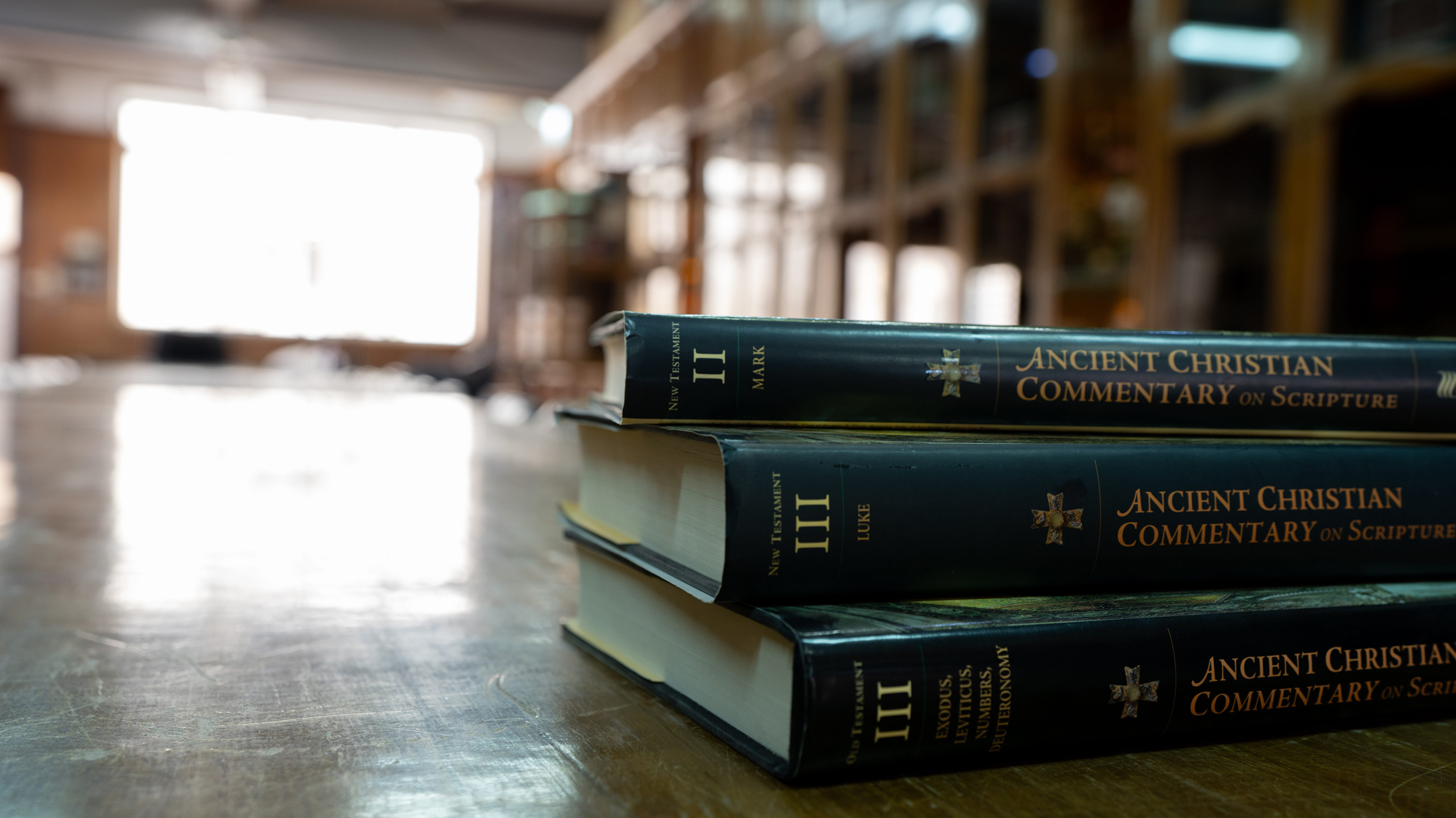
The monks' lending library was established in 1988 and is considered one of the most important facilities within the monastery due to its vast intellectual and spiritual resources. It houses thousands of references and books in various fields and in several languages, making it a rich resource for research and study. The library also preserves a distinguished collection of ancient books that the monks of the monastery used to copy by hand in earlier times for prayer, meditation, and spiritual reading. This reflects the value of the religious and cultural heritage that the library is committed to preserving and passing on to future generations.

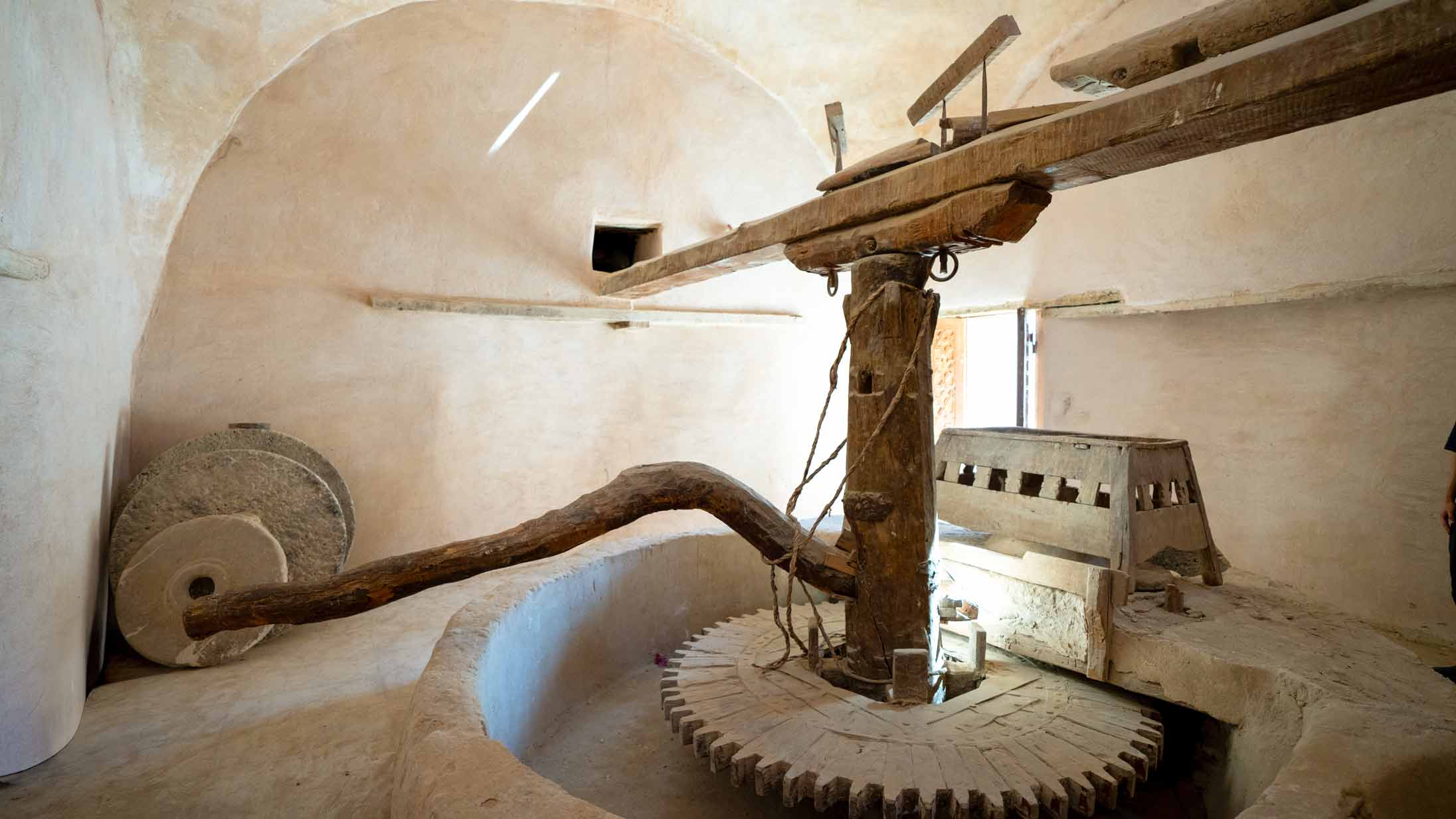
The ancient mill is an important historical landmark that was used in the past for grinding grain. Its operation relied on a traditional system consisting of wooden millstones, powered by animals, reflecting the simplicity of the technology used at that time. Dating back to the 4th century AD, this mill demonstrates its antiquity and significant archaeological value, serving as a living testament to the lifestyles and production methods of that era. Located behind the Church of Saint Bishoy on the eastern side, the mill is part of an area rich in religious and historical sites that attract visitors and those interested in heritage.

Baptism is an important religious rite for the Coptic people, many of whom are keen to have their children baptized in monasteries due to the special sanctity and spirituality these places hold. The baptistery welcomes families daily, starting at 7:00 AM, who come to have their children baptized in an atmosphere of faith and joy on this blessed religious occasion.

This is the place where the Eucharist is baked. It is a modern building that was opened in 2006 AD, and it is located on the southern side of the Cathedral of Saint Anba Bishoy.

An unforgettable spiritual journey

It is considered one of the most beautiful and largest historic churches in the monasteries of Wadi El Natrun. The earliest foundation of this church dates back to the 4th century AD.
Read More →
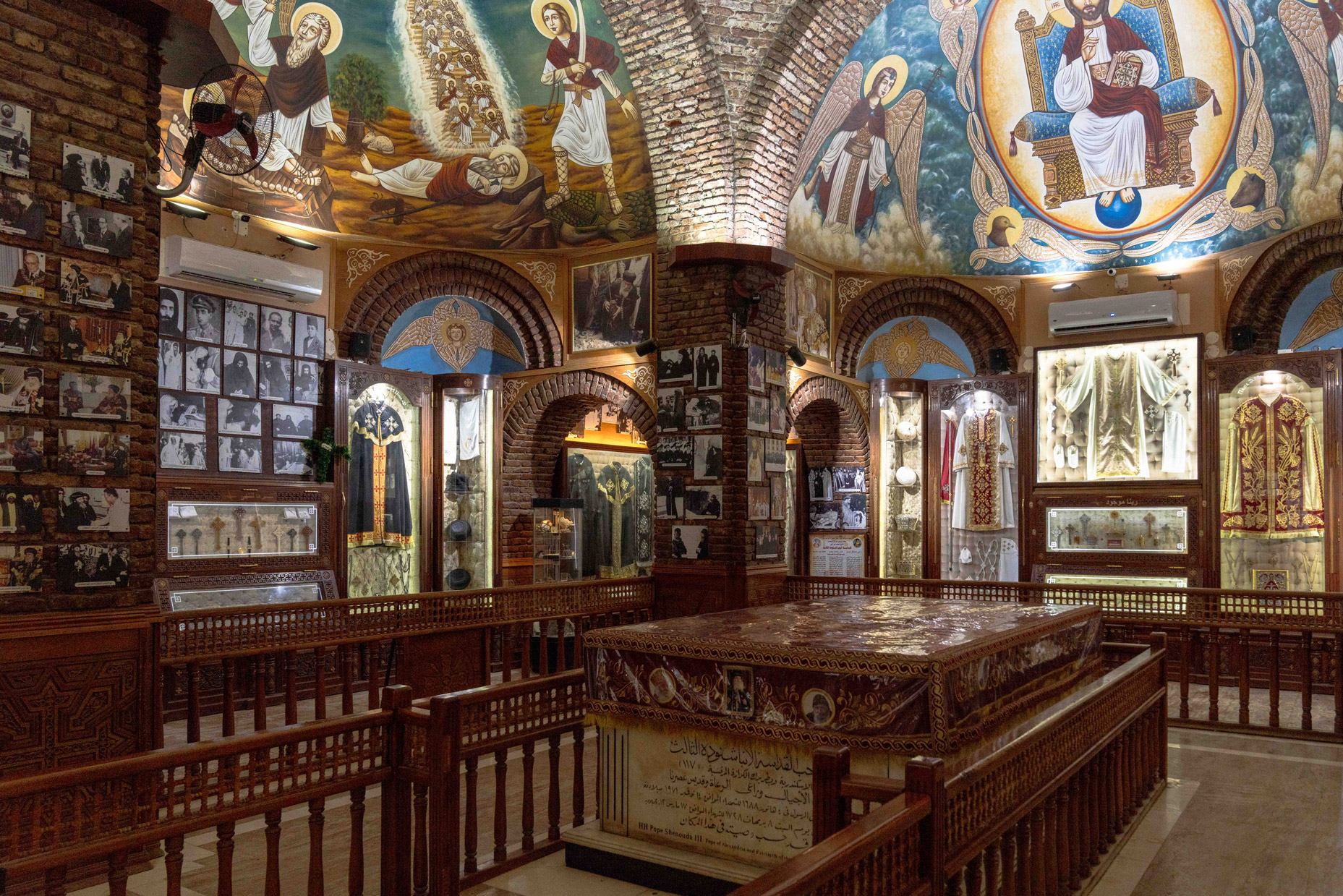
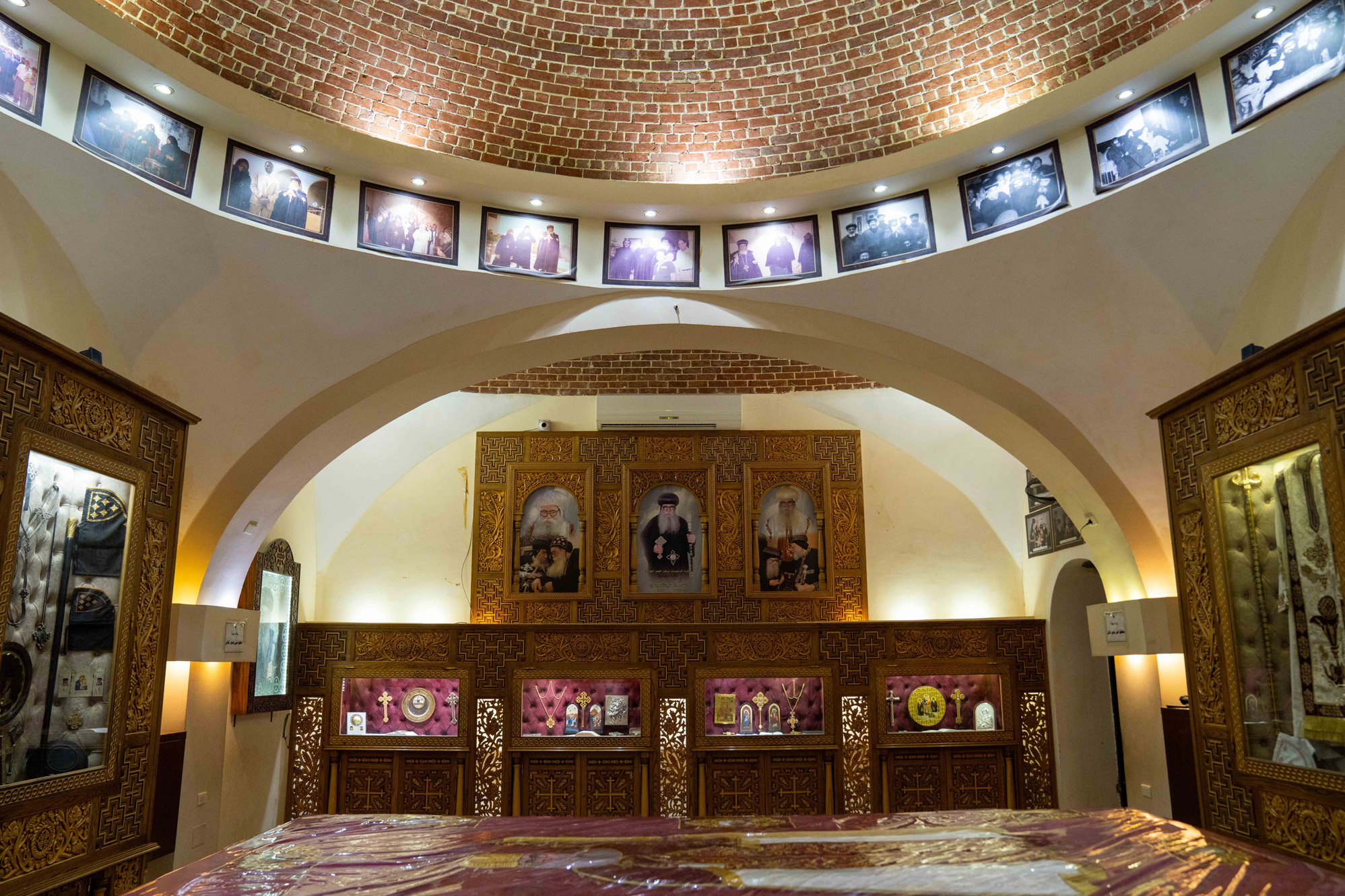
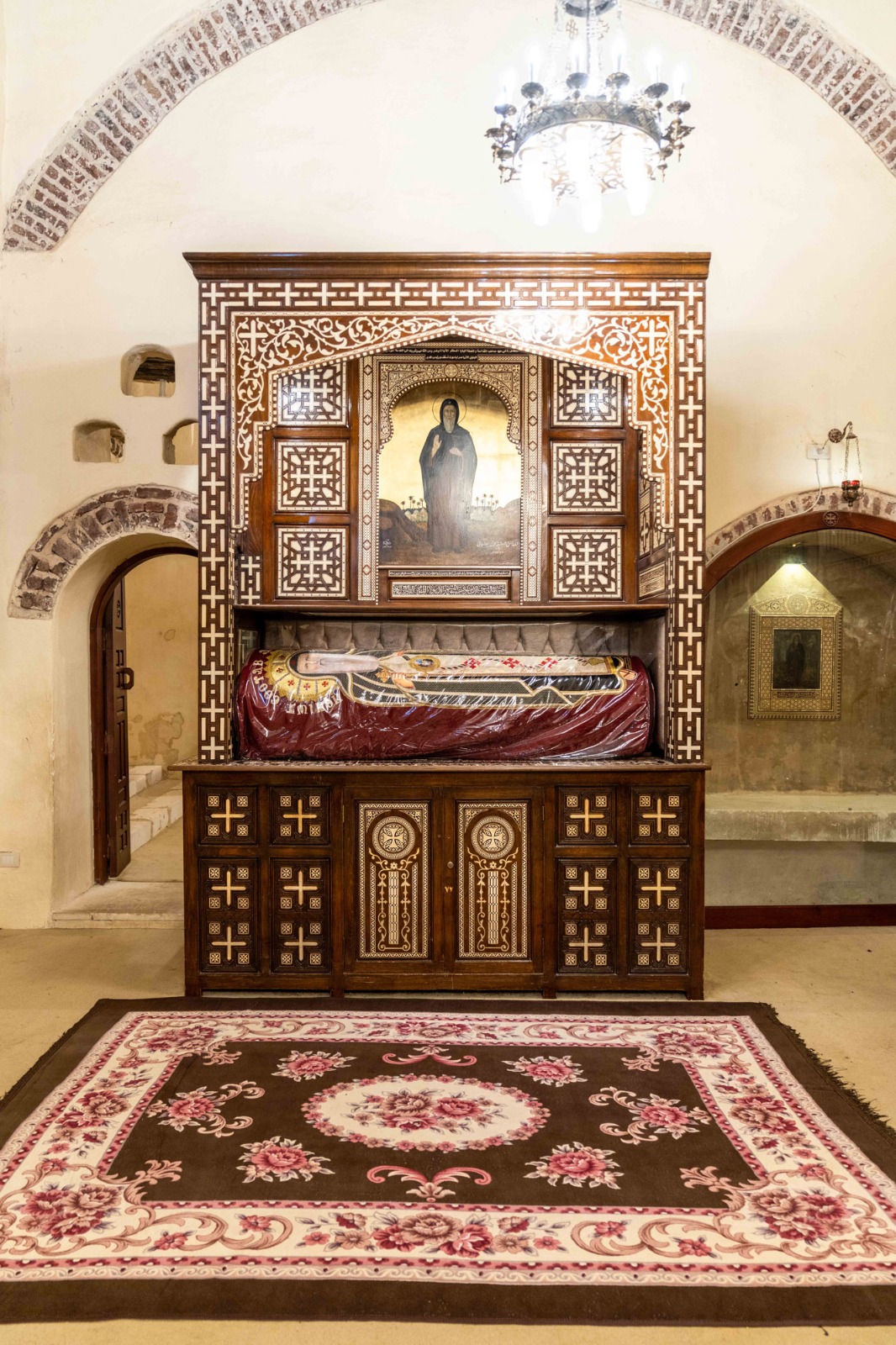
The shrine of the late Pope Shenouda III is located on the seaward side of the historic Church of Saint Bishoy in the Monastery of Saint Bishoy, where he had requested to be buried after his passing. The shrine houses a large collection of Pope Shenouda III's personal belongings, including his writings, photographs, priestly vestments, and other personal effects, as well as the awards and honorary doctorates he received. The shrine is also adorned with Coptic paintings on its domes, depicting saints from the Old and New Testaments, as well as saints of monasticism.
Read More →
The Shrine of the Blessed Anba Sarabamoun Adjacent to the Shrine of the Blessed Pope Shenouda III, the body of the Blessed Anba Sarabamoun was buried in a special shrine containing many of his belongings and priestly clothes.
Read More →
This fortress was built by King Zeno in the middle of the fifth century AD to be a refuge to protect the monks during the Berber attacks. In the past, one of the monks would sit at the top of the fortress to watch for their approach. If he sensed their approach, he would ring the bell to alert the monks, who would quickly gather and enter the fortress via a wooden bridge. This bridge would then be raised by a pulley fixed at the top of the fortress, thus isolating the fortress from the rest of the monastery, and the monks would remain inside it until the Berbers left.
Read More →MONASTERY MONKS
Meet some of the monastery's monks and learn about their service and spiritual life.
Monk
Anba Shenouda is considered the first bishop to be ordained from among the monks of the Monastery of Anba Bishoy. He was ordained by Pope Cyril II in 1087 AD, when he was consecrated Bishop of Fustat (Cairo).
Monk
He was consecrated as Bishop of the See of Menoufia on March 1, 1931, by His Holiness Pope John XIX.
Monk
Bishop of the Monastery of St. George in Khatatba. He became a monk at the Monastery of the Syrians on July 30, 1967, taking the name Monk Bemoa the Syrian. He was then ordained a priest and appointed secretary of the Monastery of St. Bishoy on June 18, 1978, taking the name Priest Bemoa of St. Bishoy. He was also consecrated a chorepiscopus for the ancient monasteries and played a significant role in the restoration of the Monastery of St. George in Rizeiqat, Luxor. He was then consecrated Bishop of the Monastery of St. George in Khatatba on June 11, 1995, and passed away peacefully on March 30, 2002.

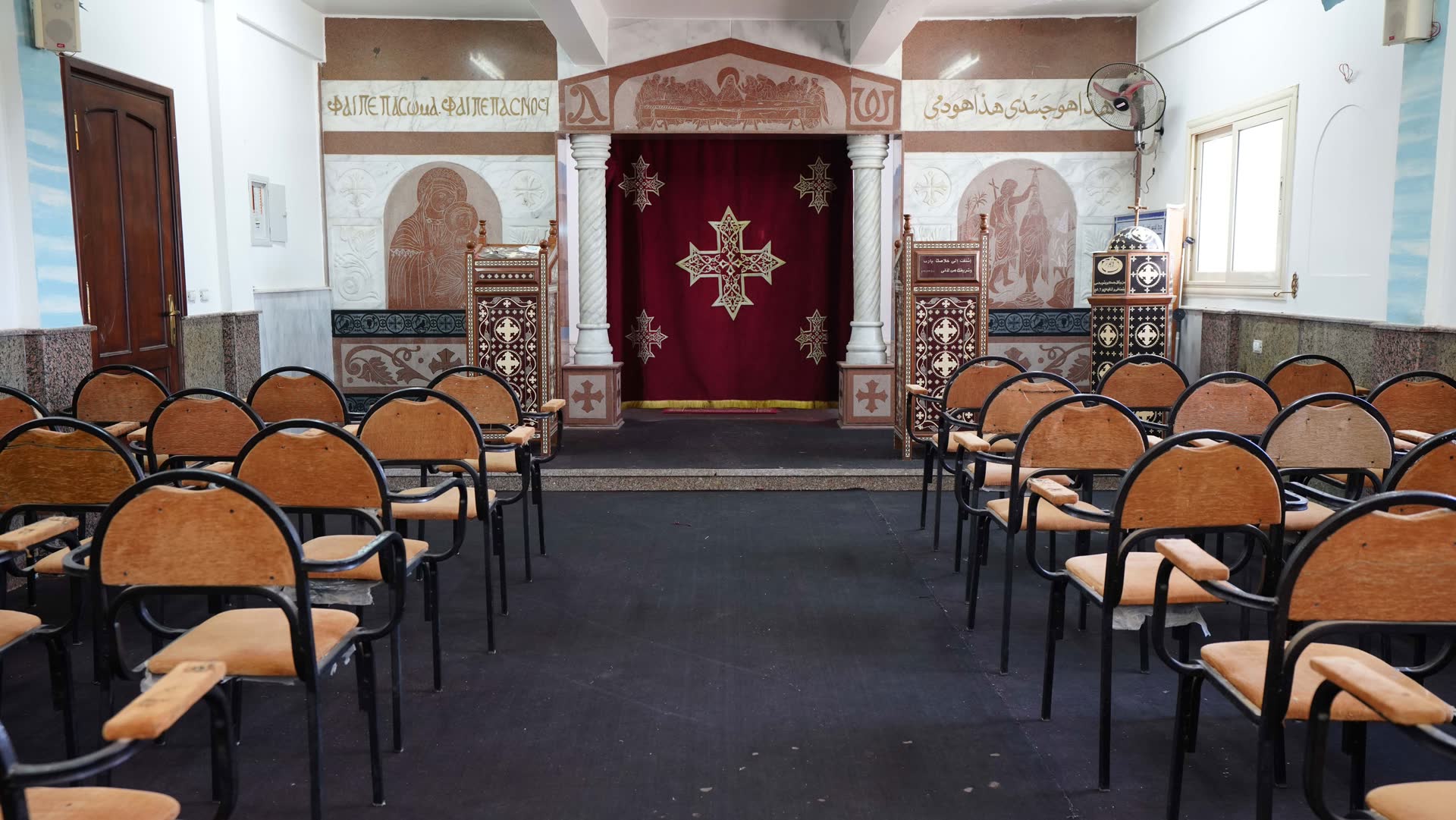
The retreat house is one of the distinctive spiritual places that gives young people the opportunity to step away temporarily from the pressures of daily life and devote themselves to reflection and prayer. It offers a three-day retreat program aimed at full spiritual dedication and spending time with God in a calm atmosphere that helps clear the mind and open the heart. The house is also distinguished by having a private church with an altar dedicated to Saint Mary the Virgin and Archangel Michael, which gives the place a deep spiritual character and enriches the retreat experience. In addition, the retreat house can accommodate around 70 young people, making it suitable for hosting youth groups seeking to experience a renewed spiritual life in an organized and peaceful setting.
Explore the Monastery