ST. BISHOY MONASTERY
One of the most beautiful and largest historic churches in Wadi El Natrun, with foundations dating to the 4th century AD.
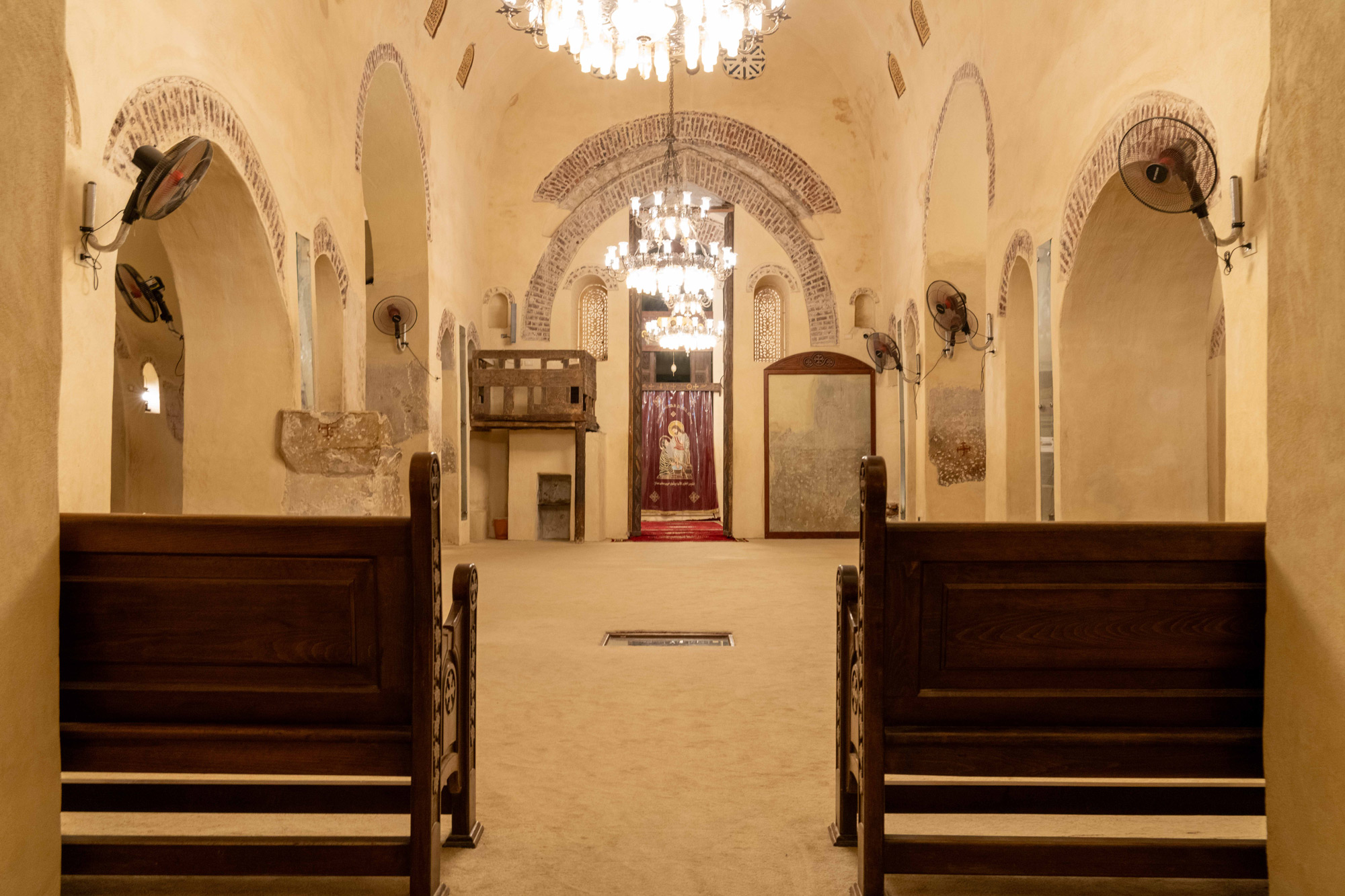
Interior stone pillars — Ancient Church of Saint Bishoy
Ancient Church
The Ancient Church is considered one of the most beautiful and largest historic churches among the monasteries of Wadi El Natrun. Its earliest core dates back to the 4th century AD, while later rebuilding and restoration works shaped the church across different historical periods.
The church was rebuilt during the 9th century, in the pontificate of Pope Benjamin II, following the fifth Berber raid on the monastery. The northern sanctuary belongs to this reconstruction period, while other architectural and artistic features were added in later centuries.
Across the church, visitors can see elements from several eras, including elevated domes, stained glass windows, stucco decorations, the architecture of the nave, and later modifications from the 10th, 11th, 12th, and 14th centuries. A special tomb for Pope Benjamin II is located in the southwestern section of the church, with a modern wall painting depicting the Pope above it.
4th Century AD
EARLIEST CORE
9th Century
MAJOR REBUILDING
Wadi El Natrun
LOCATION
Architectural Details
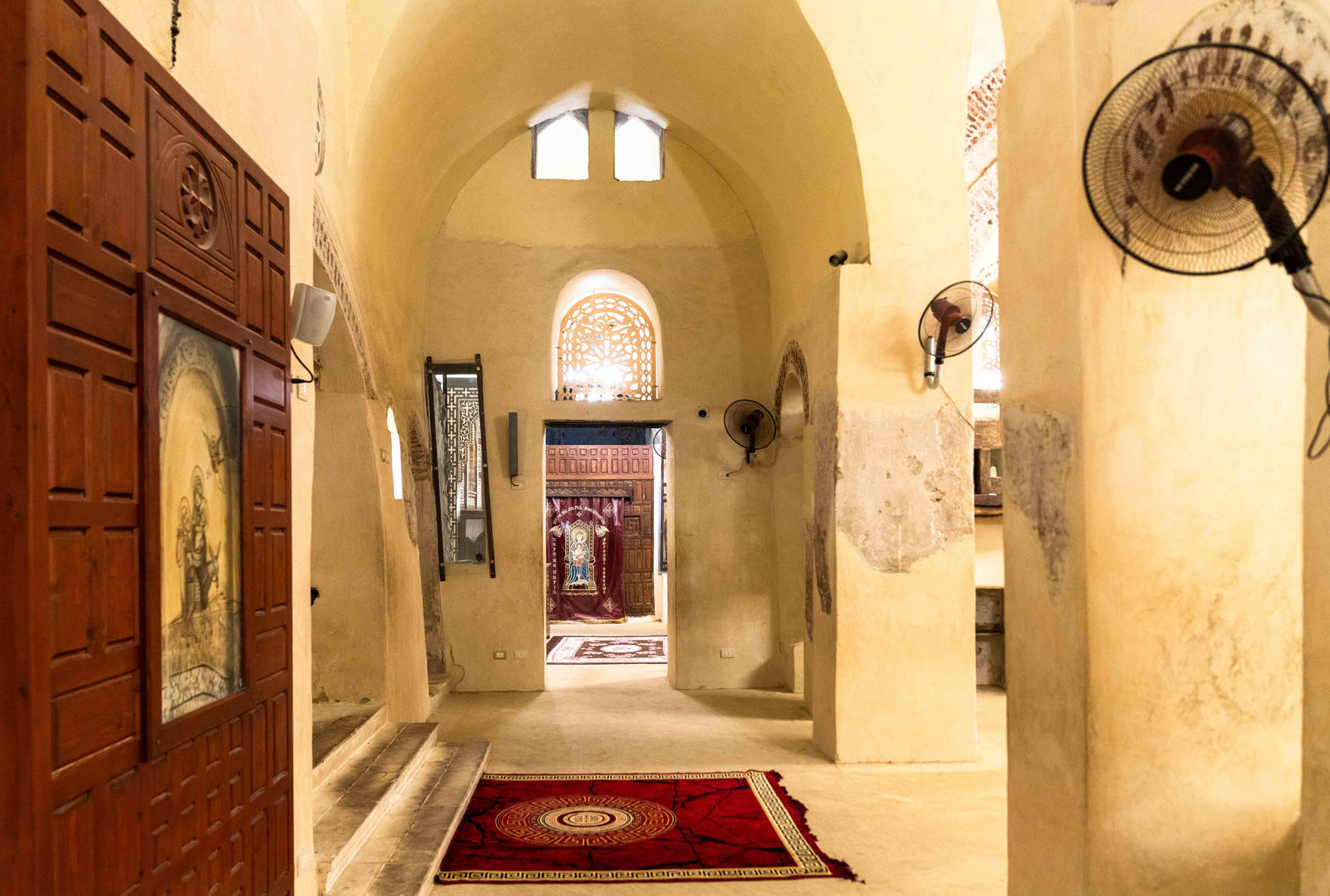
Stone piers supporting the nave
The Ancient Church follows the Long Type style of churches, which is closely related to the basilican architectural style. Its layout includes a nave, two side aisles, a western circular aisle, a transverse choir, and three sanctuaries.
Murals & Archaeological Finds
01 / 02
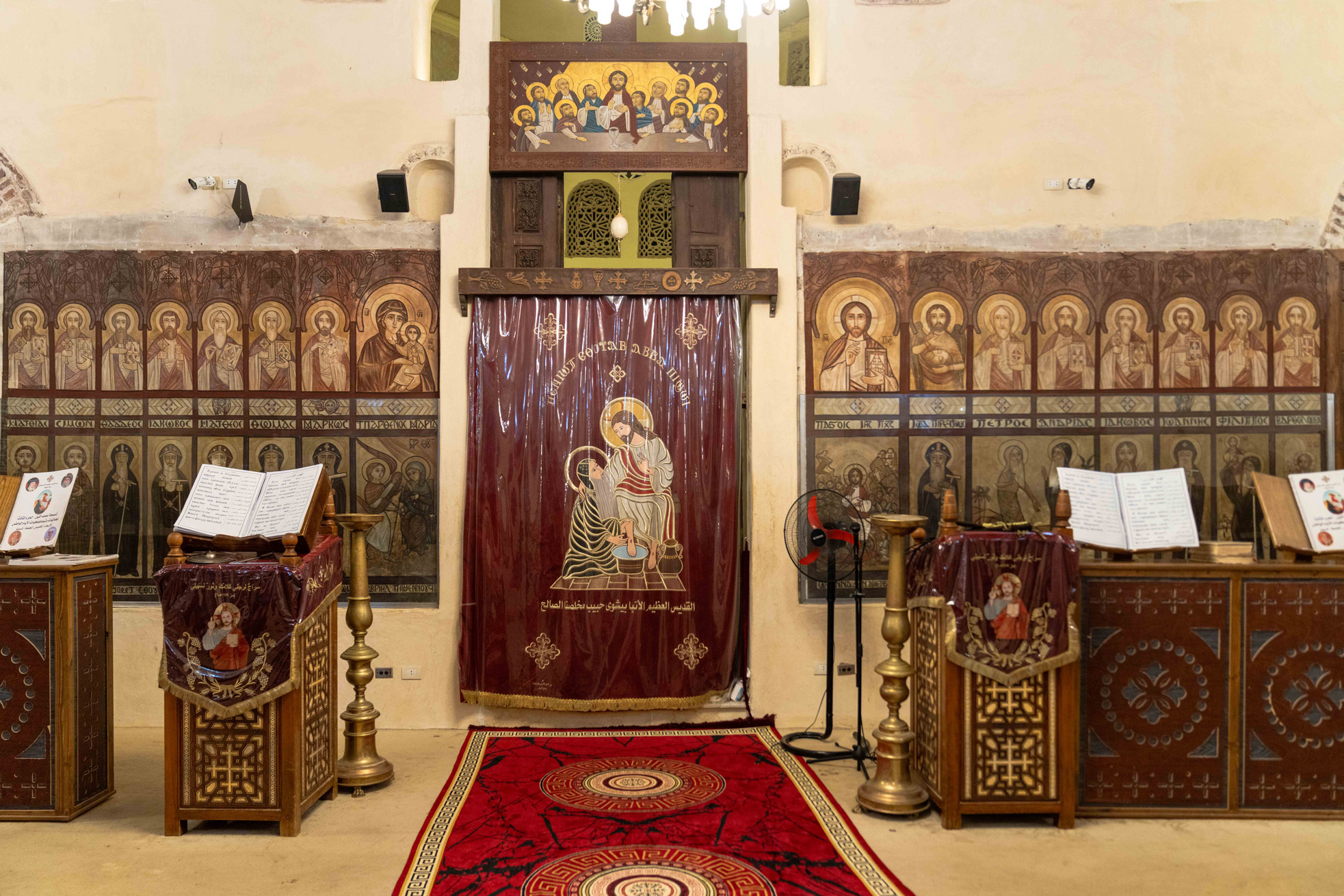
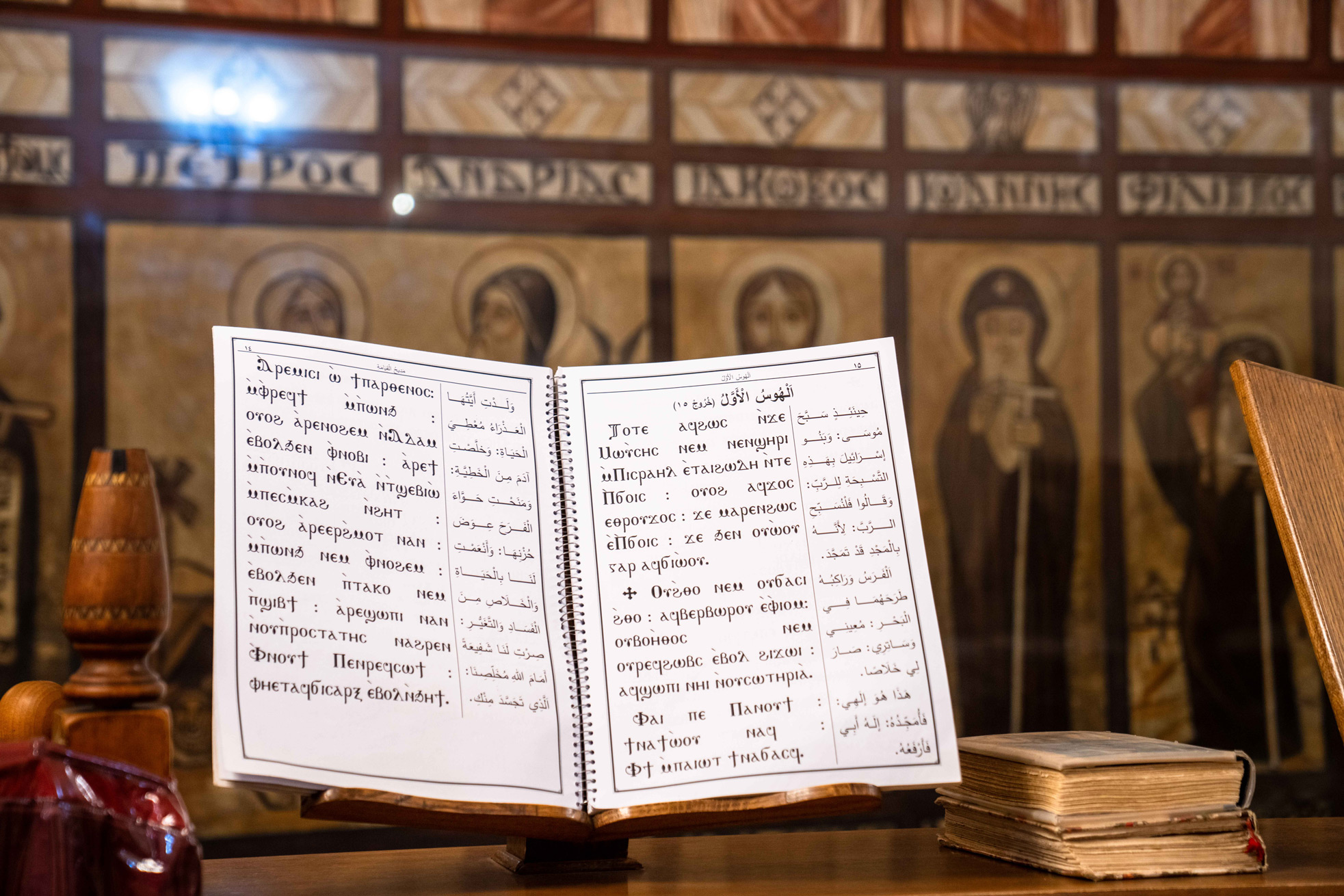
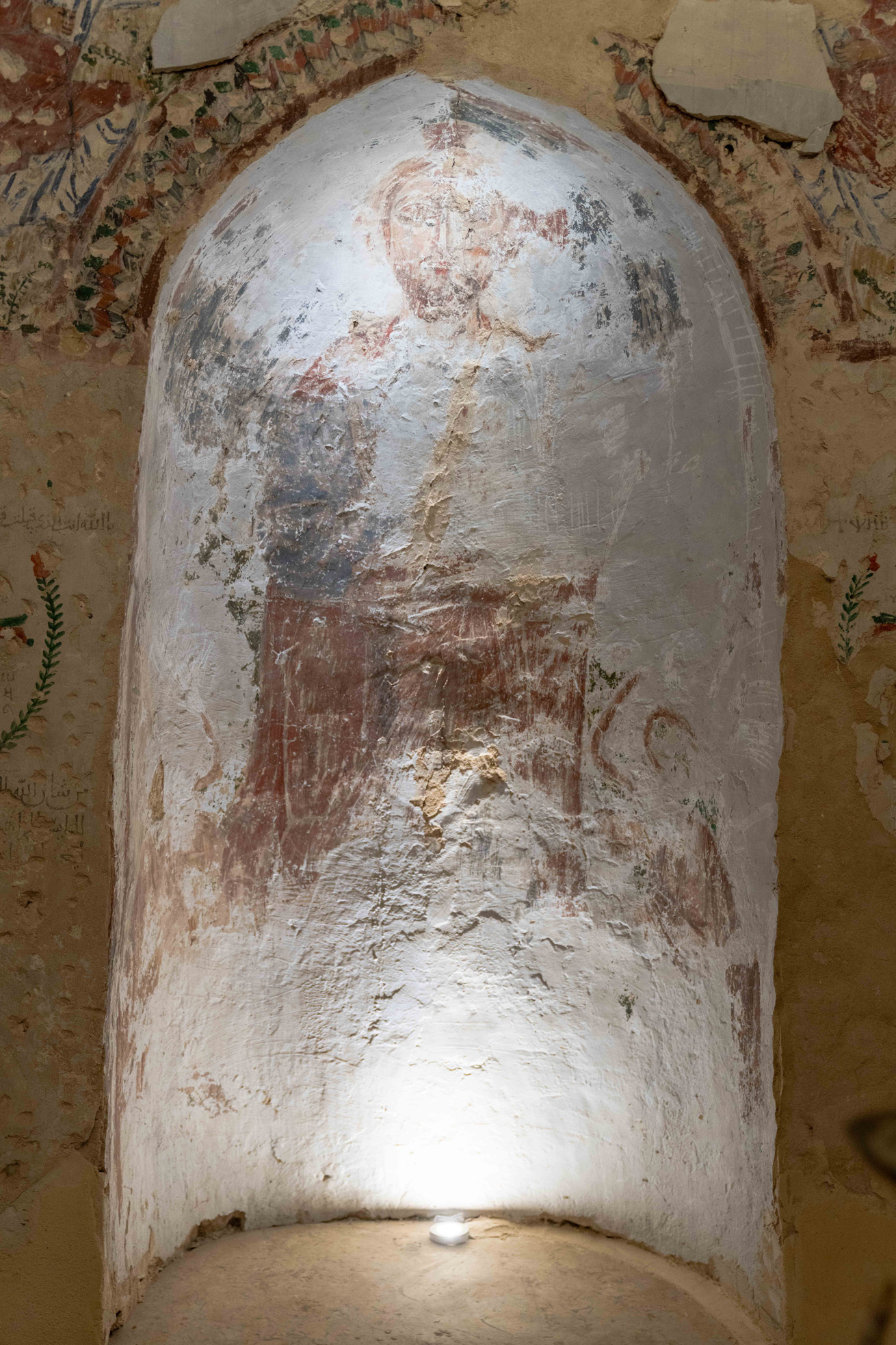
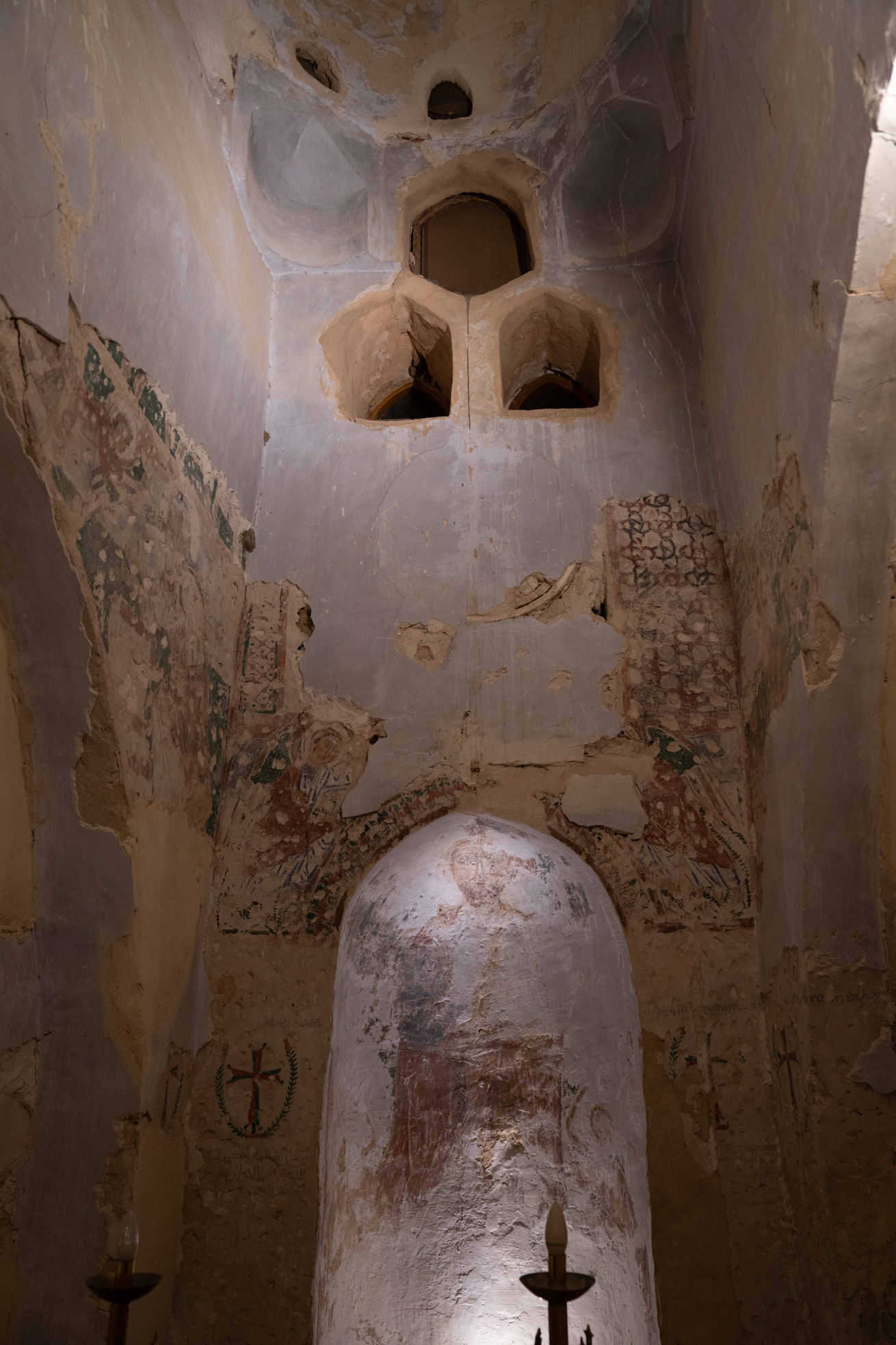
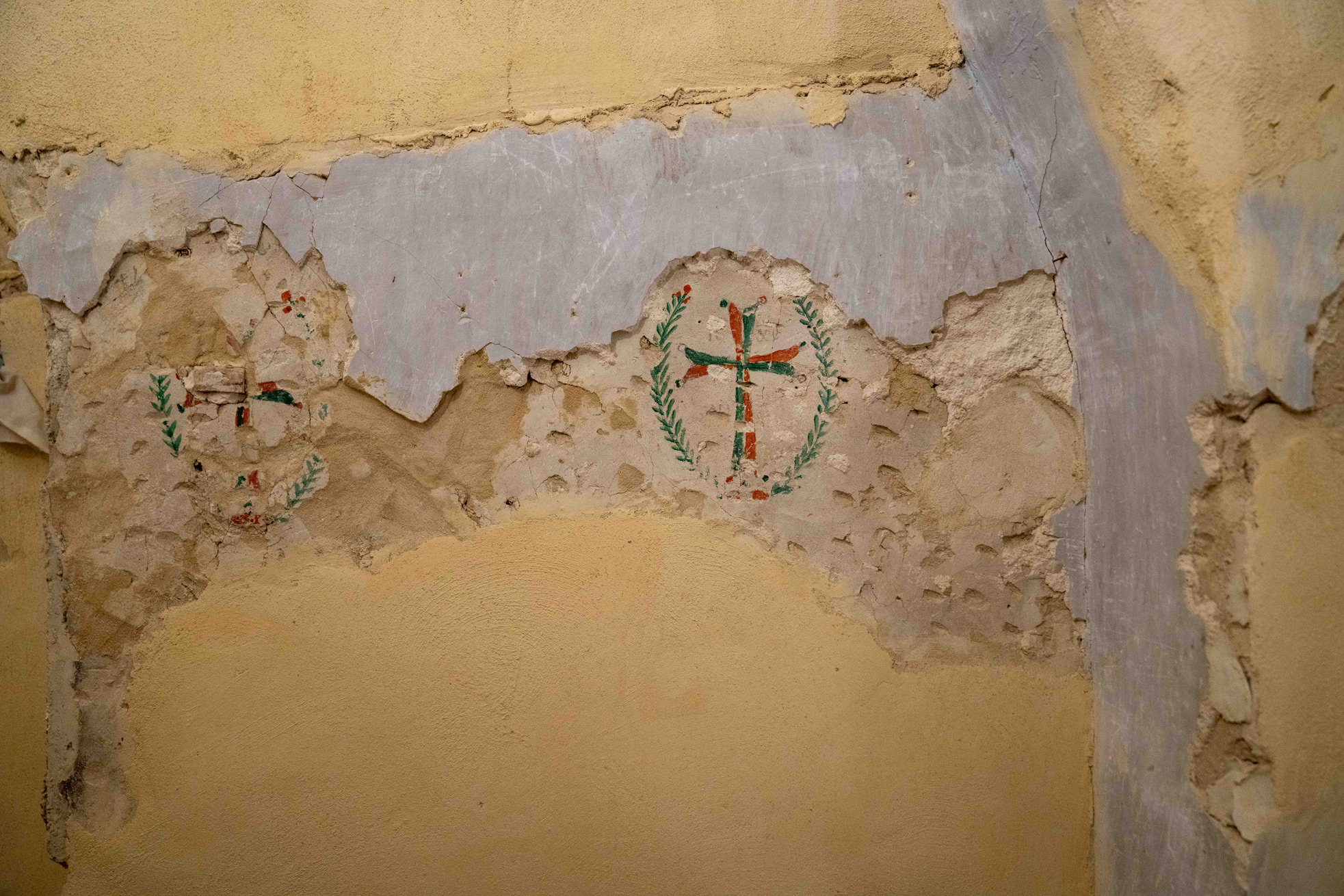
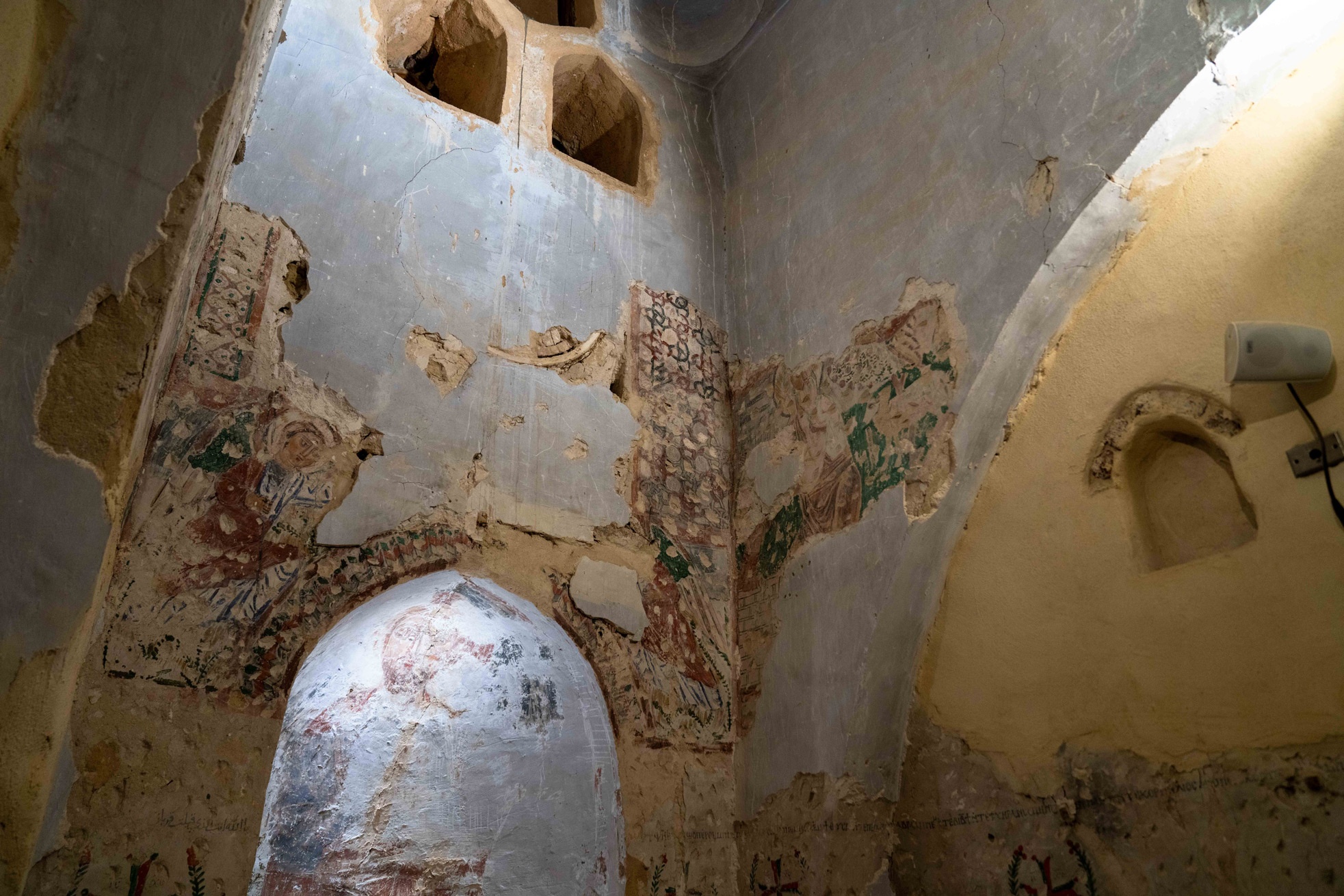
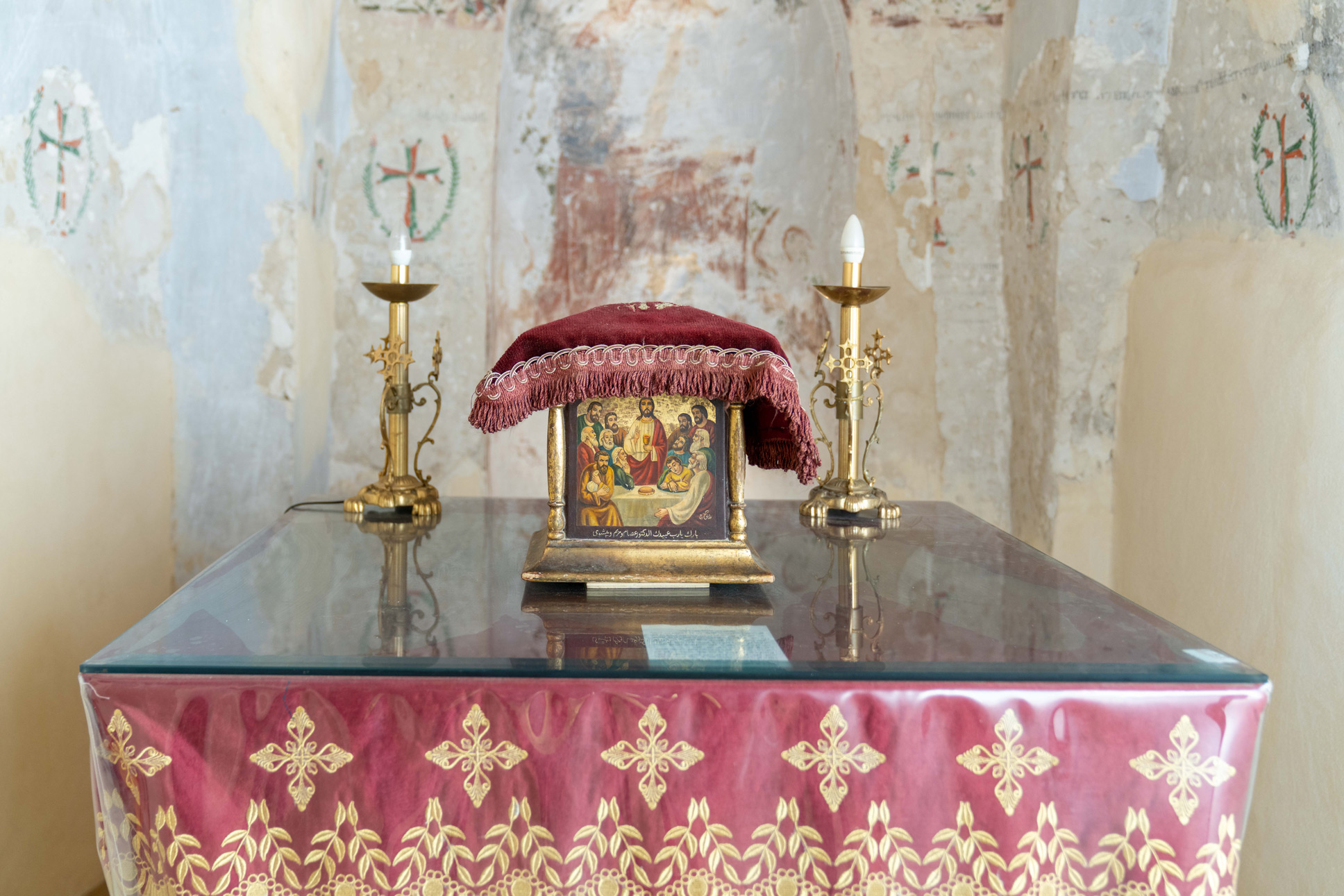
An important collection of ancient wall paintings survives inside the church and its sanctuaries. Some remained hidden under layers of plaster for centuries before restoration work uncovered them, while others still await discovery and study. The Martyr Horseman: beside the sanctuary of Pope Benjamin, a painting of a martyr on horseback, believed to depict the Martyr Apa Skhiron al-Qalini; part of the image is hidden behind a wall added in a later building phase. Saint Rebecca and Her Children: on the western wall, a painting of a saint embracing five children, believed to depict Saint Rebecca and her martyred children. The Sacrifice of Isaac & the Purifying of Isaiah's Lips: in the Sanctuary of the Virgin Mary, a painting of Abraham offering his son Isaac, and another of the angel touching the Prophet Isaiah's lips with a burning coal from the altar. The Archangels and Saints Peter and Paul: in the Sanctuary of Saint John the Baptist, paintings of the Archangels Michael and Gabriel alongside Saints Peter and Paul. The Apostolic Fathers: the Sanctuary of Pope Benjamin holds a set of paintings depicting the Apostolic Fathers. Wall Crosses: a large number of painted crosses of varying sizes, shapes, and decorative styles are scattered throughout the church, reflecting its many historical and artistic phases. The Isaac Fanous Mural (1974): painted in the tempera technique, showing the twelve disciples with Saint John the Baptist and Saint Mark the Evangelist above, and below, the monastic fathers alongside Christ's Entry into Jerusalem on the right and the Virgin Mary on the left.

Sanctuaries
01 / 04
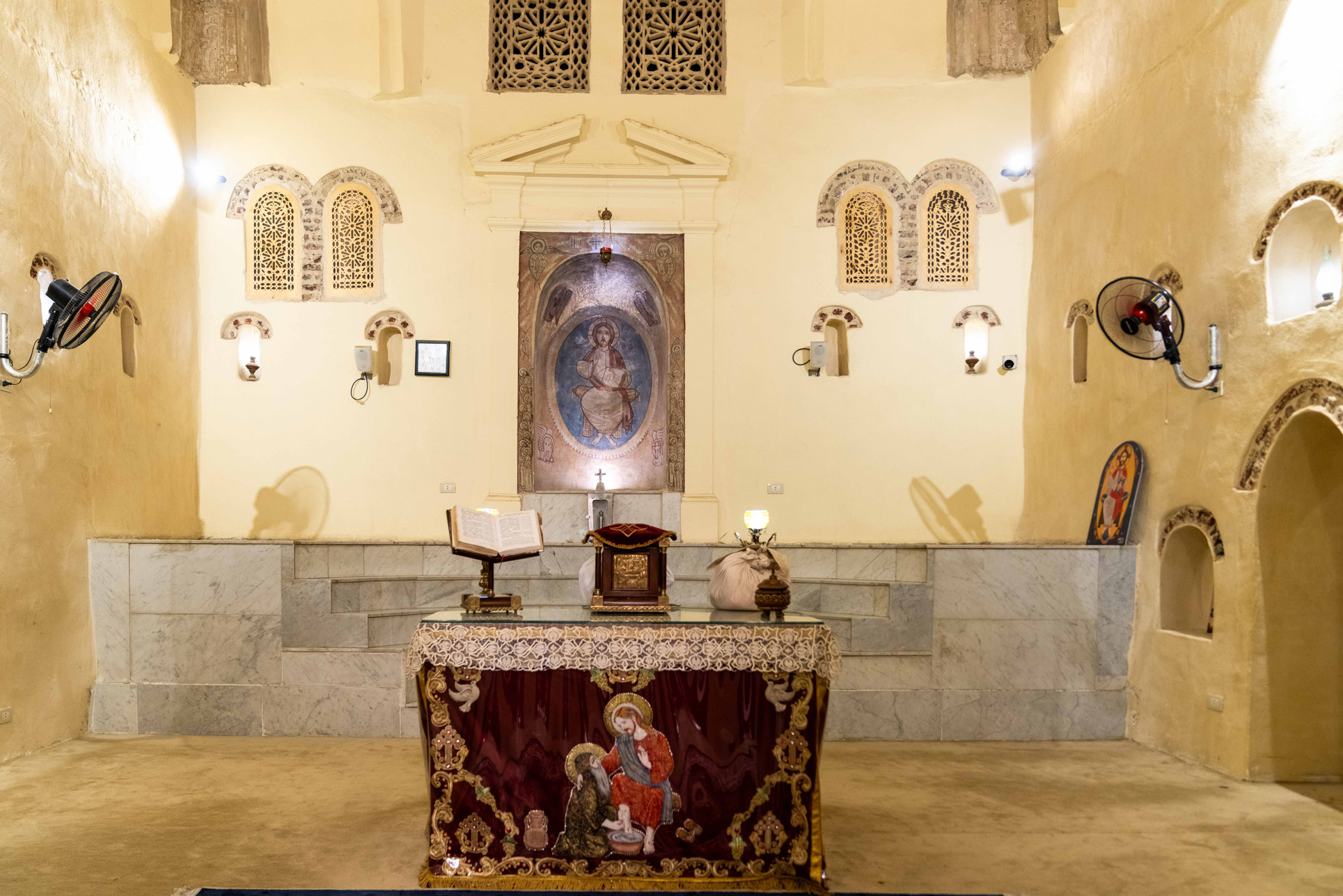
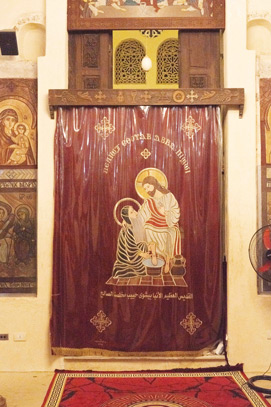
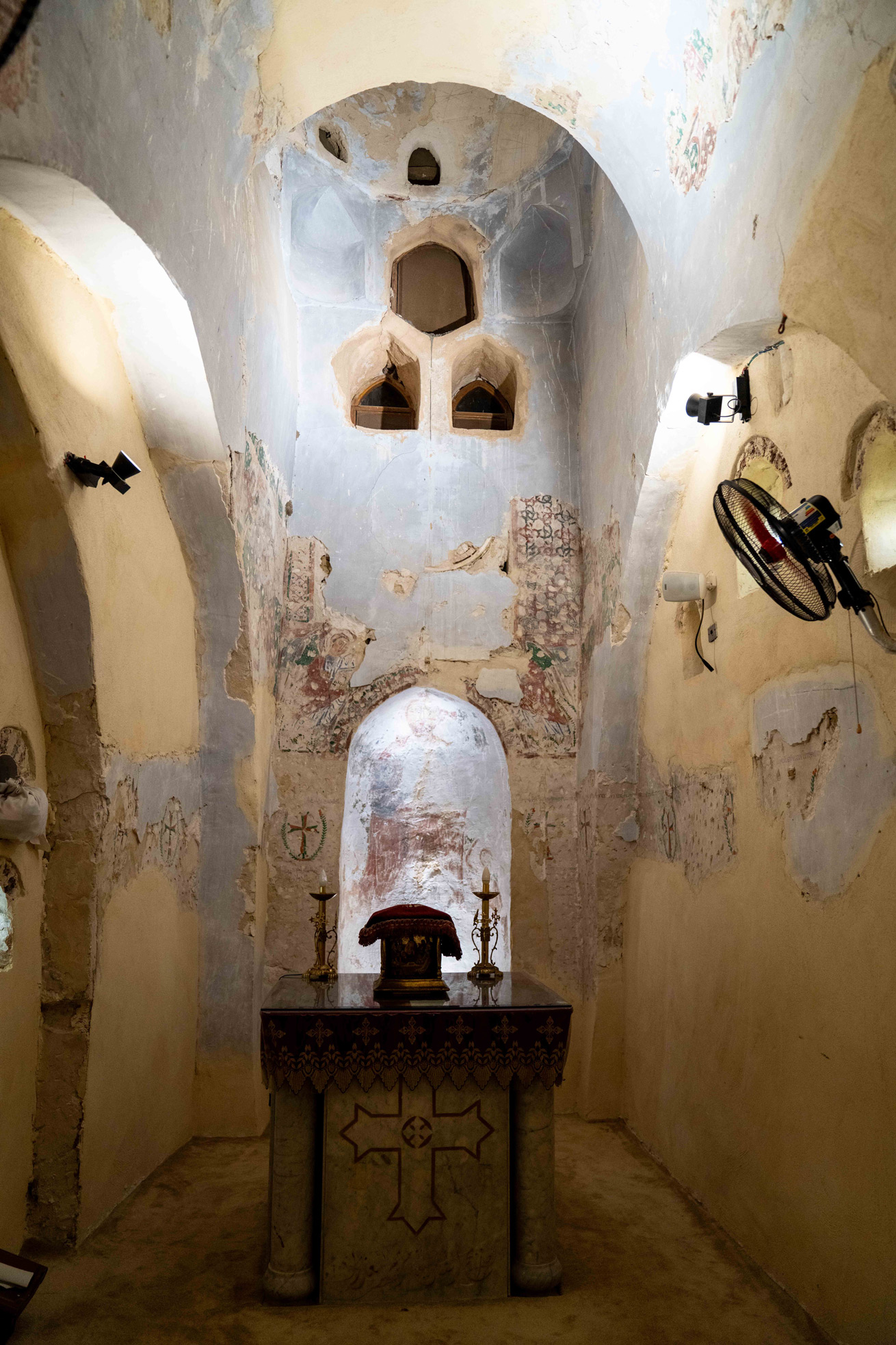
Dates to the 9th century AD. Contains an altar dedicated to Saint Bishoy. To its east is a staircase of seven steps, symbolizing the ranks of priesthood. The sanctuary's hemispherical dome, built of red brick, dates to the 14th century and uses corner squinches. Entrances in its northern and southern walls open onto the two side sanctuaries. Painted decorations were found beneath and around the plaster boss at the center of the dome, dating to the 14th–15th centuries. The lunettes and lamp niches in the dome of the Anba Bishoy sanctuary.
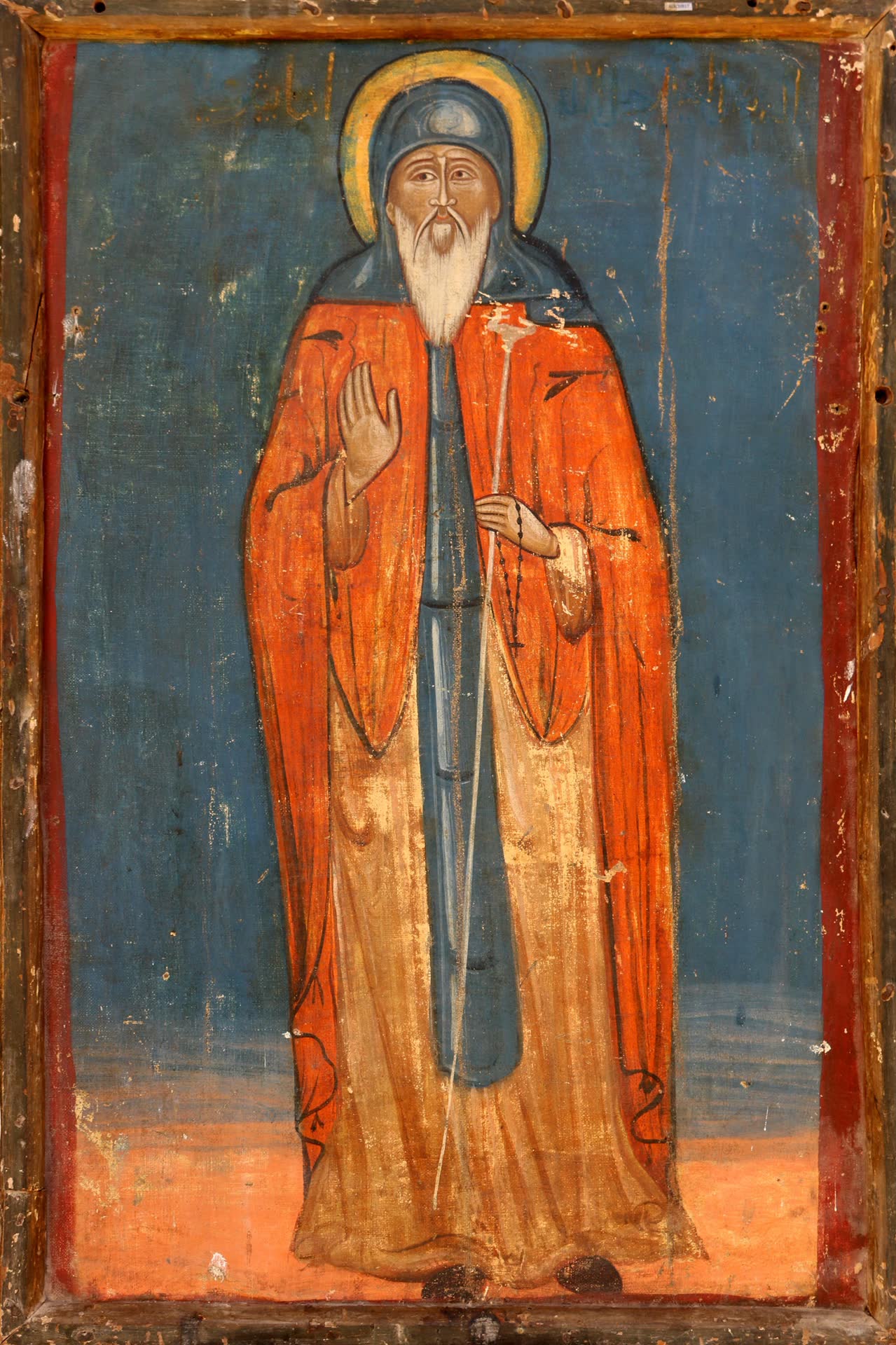
Icon of Saint Bishoy — 13th-15th Century AD
Icons
The Ancient Church preserves a collection of important Coptic icons from different centuries — reflecting the spiritual, artistic, and historical richness of the monastery.
01 / 06
A historic icon of Saint Bishoy, the patron saint of the monastery, reflecting the contemplative character and devotional simplicity of Coptic iconography in the late medieval period.
The Ancient Table
The monks would gather here after Sunday liturgy to have breakfast together. One of the monastery's elders would sit at the head of the table to read passages from the Holy Bible or the book of the Monks' Garden, so that the monastic fathers could nourish body and soul alike, before each monk returned to his cell.
It is located on the western side of St. Bishoy Church, separated from the church by a narrow corridor two metres wide.
It dates back to the fourth century AD.
It is no longer in use, having been replaced by a modern table.
It contains many antique pieces and icons.
4th Century AD
DATING
West of St. Bishoy Church
LOCATION
2 Metres
PASSAGE WIDTH
Explore the Ancient Church through an immersive virtual reality tour. This experience allows visitors to view the church interior, architectural details, sanctuaries, arches, and sacred spaces in a more interactive way.
For the best experience, use a VR headset. The tour is also accessible on desktop and mobile browsers.
Gallery
Continue Exploring the Monastery
One of the most beautiful and largest historic churches in Wadi El Natrun — foundations from the 4th century AD.
CURRENT PAGE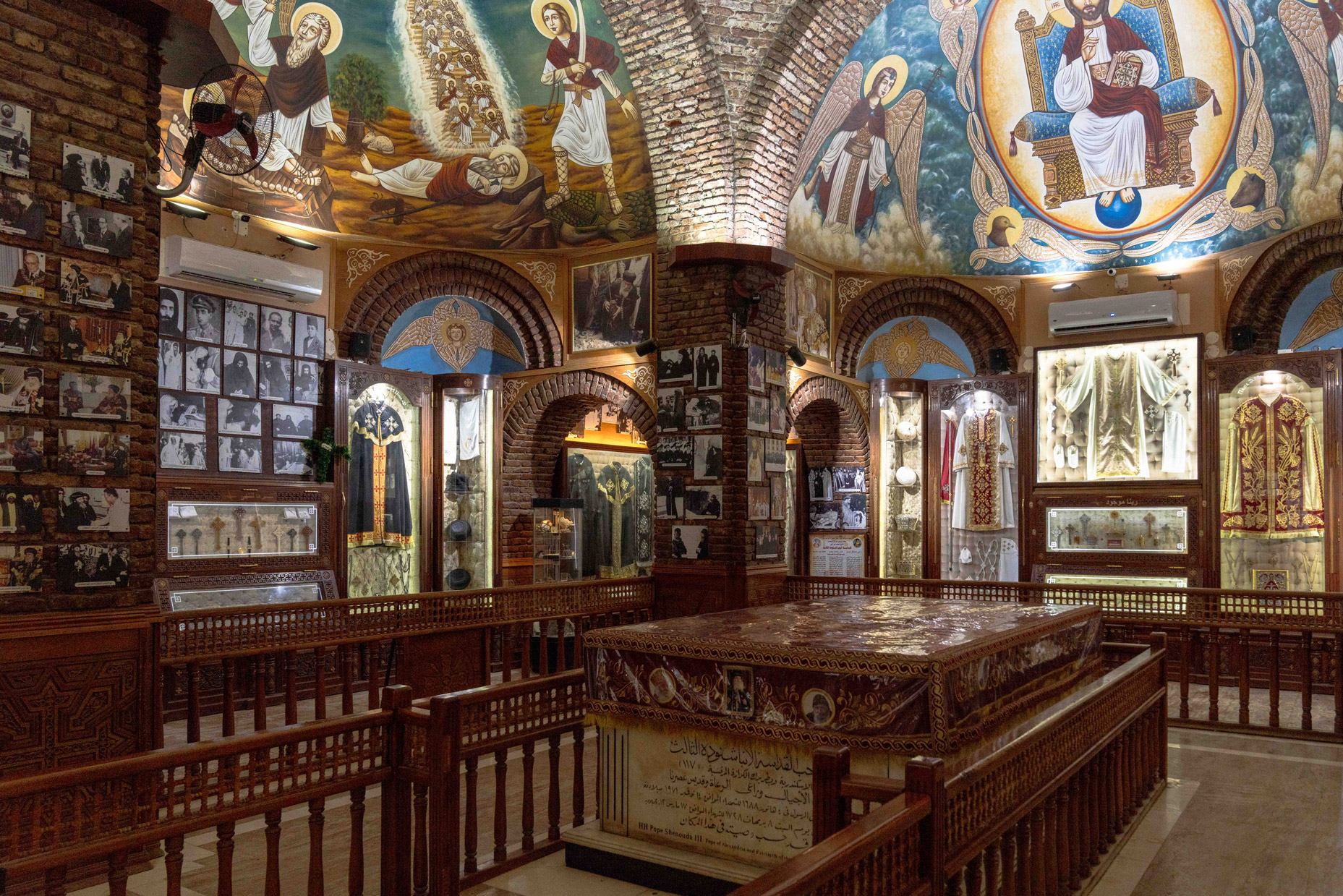
Located on the seaward side of the historic Church. Pope Shenouda III requested to be buried there.
READ MORE →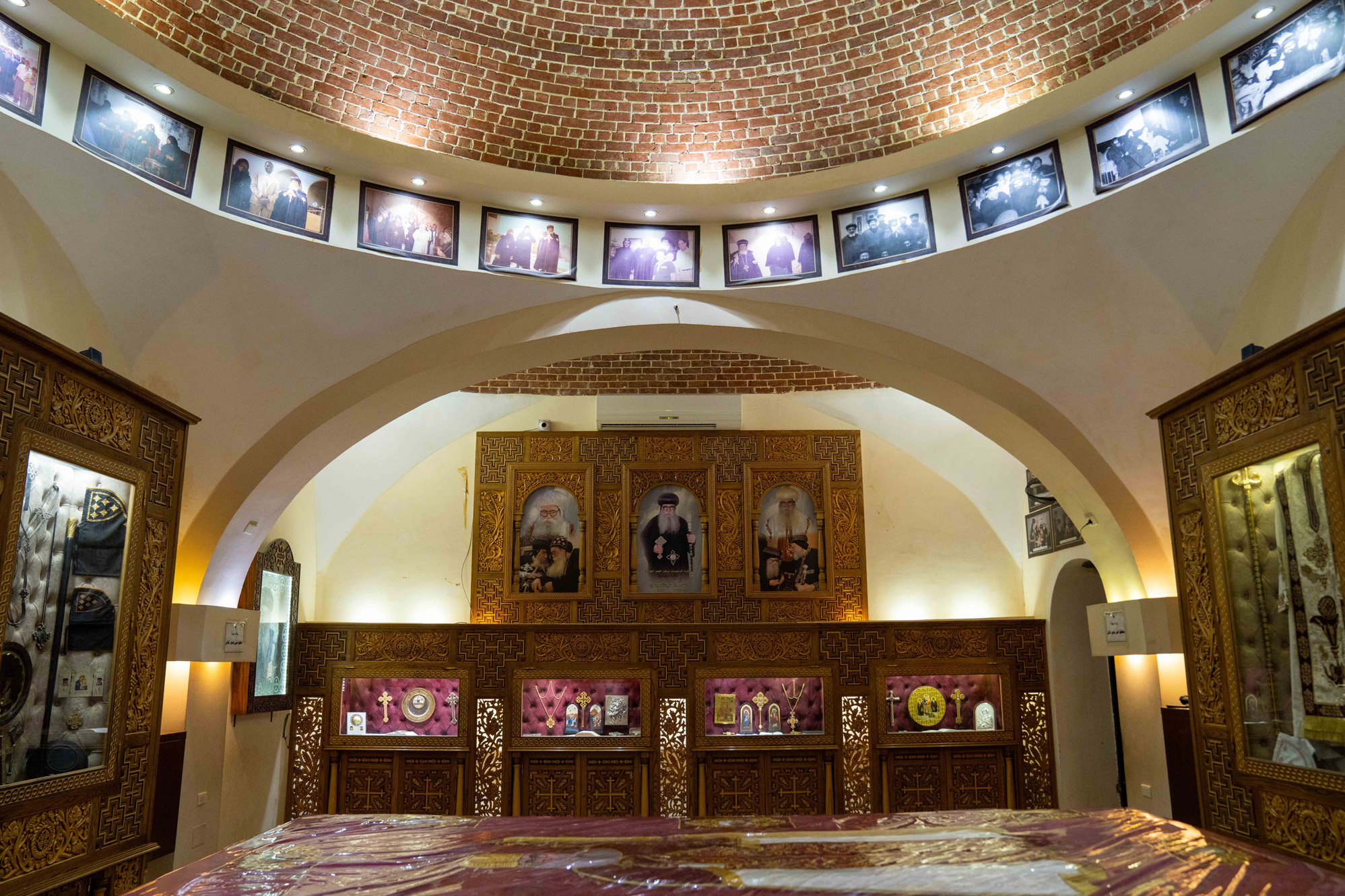
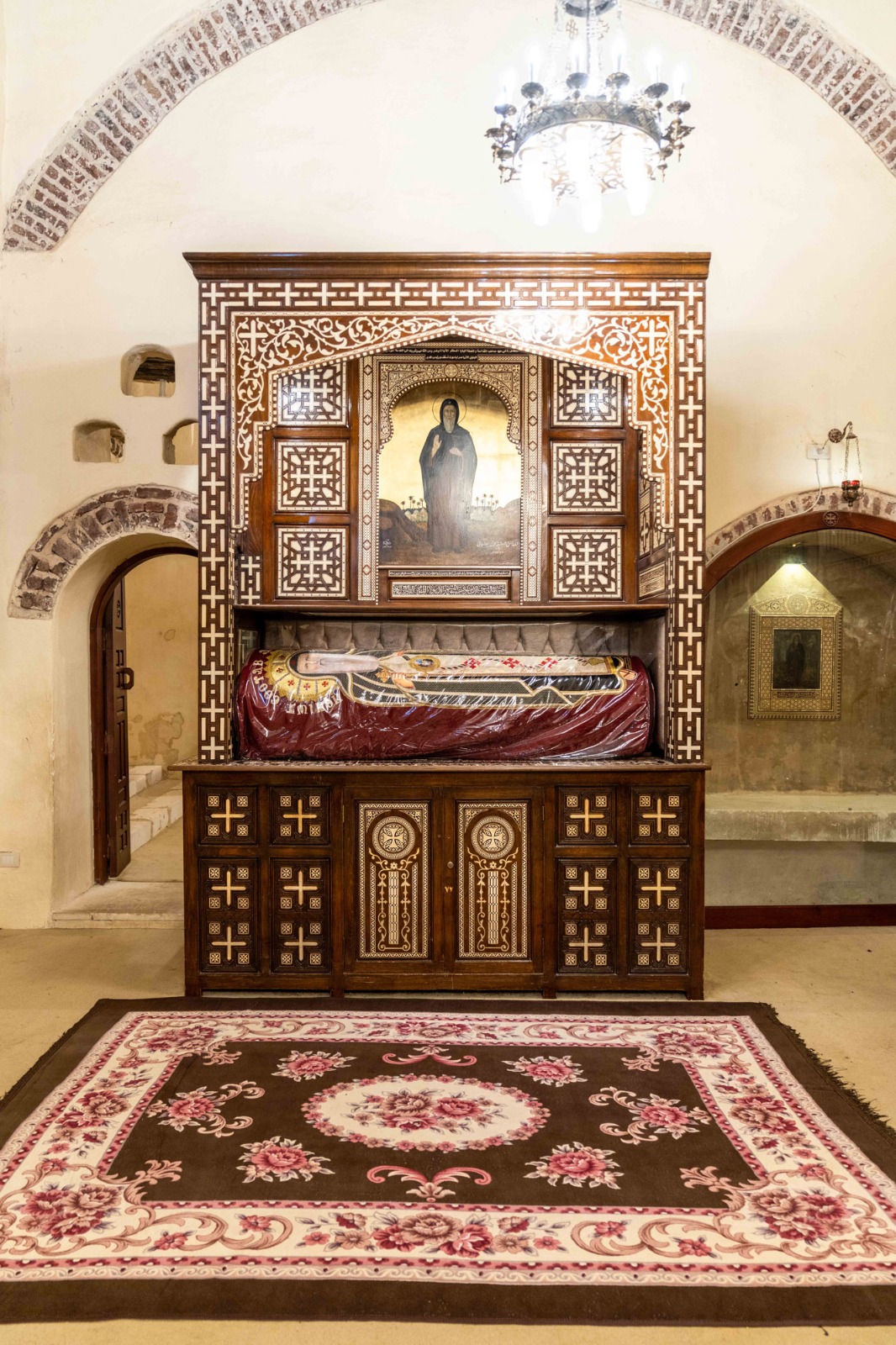
Adjacent to the Shrine of Pope Shenouda III. Contains the body of Anba Sarabamoun and his priestly clothes.
READ MORE →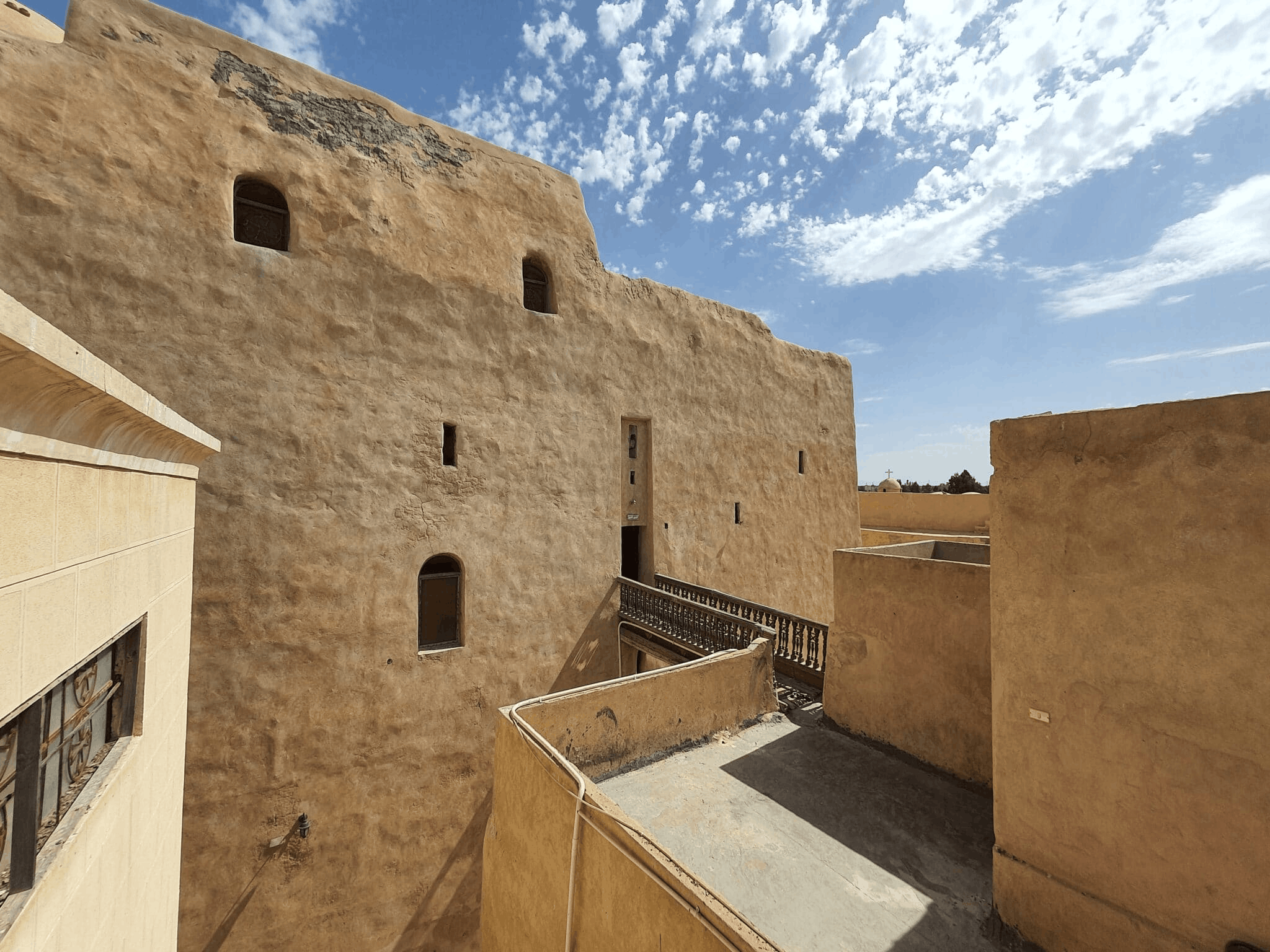
Built by King Zeno in the 5th century AD. A refuge for monks during Berber attacks with a drawbridge pulley system.
READ MORE →