St. Bishoy Monastery
A fort built by King Zeno in the fifth century AD to protect the monks, comprising three floors and standing 25 metres tall.
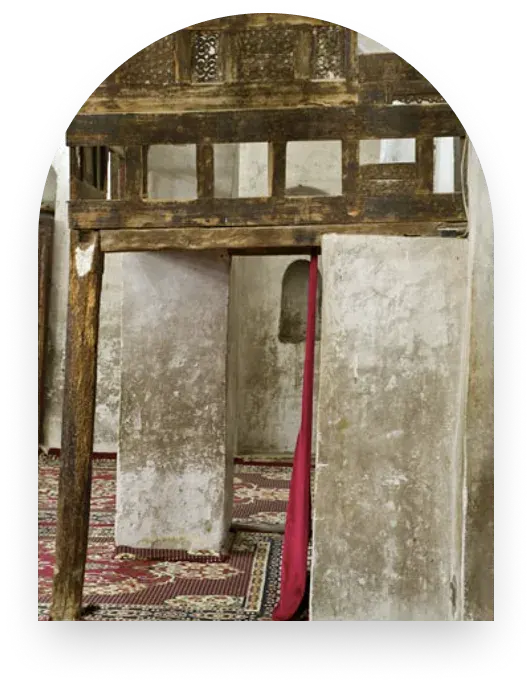
The Ancient Fort — St. Bishoy Monastery, Wadi El Natrun
It was built by King Zeno in the mid-fifth century AD to protect the monks during Berber raids.
In earlier times, a monk would sit atop the fort to watch for approaching Berbers. Upon sensing their arrival, he would ring the bell to gather the monks, who would then enter the fort via a wooden drawbridge. The bridge was then raised by a pulley fixed at the top of the fort, completely isolating it from the rest of the monastery. The monks would remain inside until the Berbers departed.
Parts of the fort fell into ruin and were restored by Ibrahim El-Gawhari in 1790 AD.
The fort measures 20×20 metres and stands approximately 25 metres tall.
It is located to the right of the entrance to the ancient monastery.
5th Century AD
DATING
3
FLOORS
20×20m — Height 25m
DIMENSIONS
Floors
Contains a drinking well for use during Berber sieges, and several cells for the monks to live in during the siege.
Contains a church dedicated to the Virgin Mary with three altars: the central one to the Virgin Mary, the northern one to St. Anba Abraham Bishop of Fayyum, and the southern one to the Three Holy Macarii. It also contains a book library, a grain store, and a bread oven for use during sieges.
Contains a church dedicated to the Archangel Michael. It was the tradition of monks to name the church on the top floor of any fort after the Archangel Michael, as he is the guardian angel who protects the fort from attack.
Continue Exploring the Monastery
One of the most beautiful and largest historic churches in Wadi El Natrun — foundations from the 4th century AD.
READ MORE →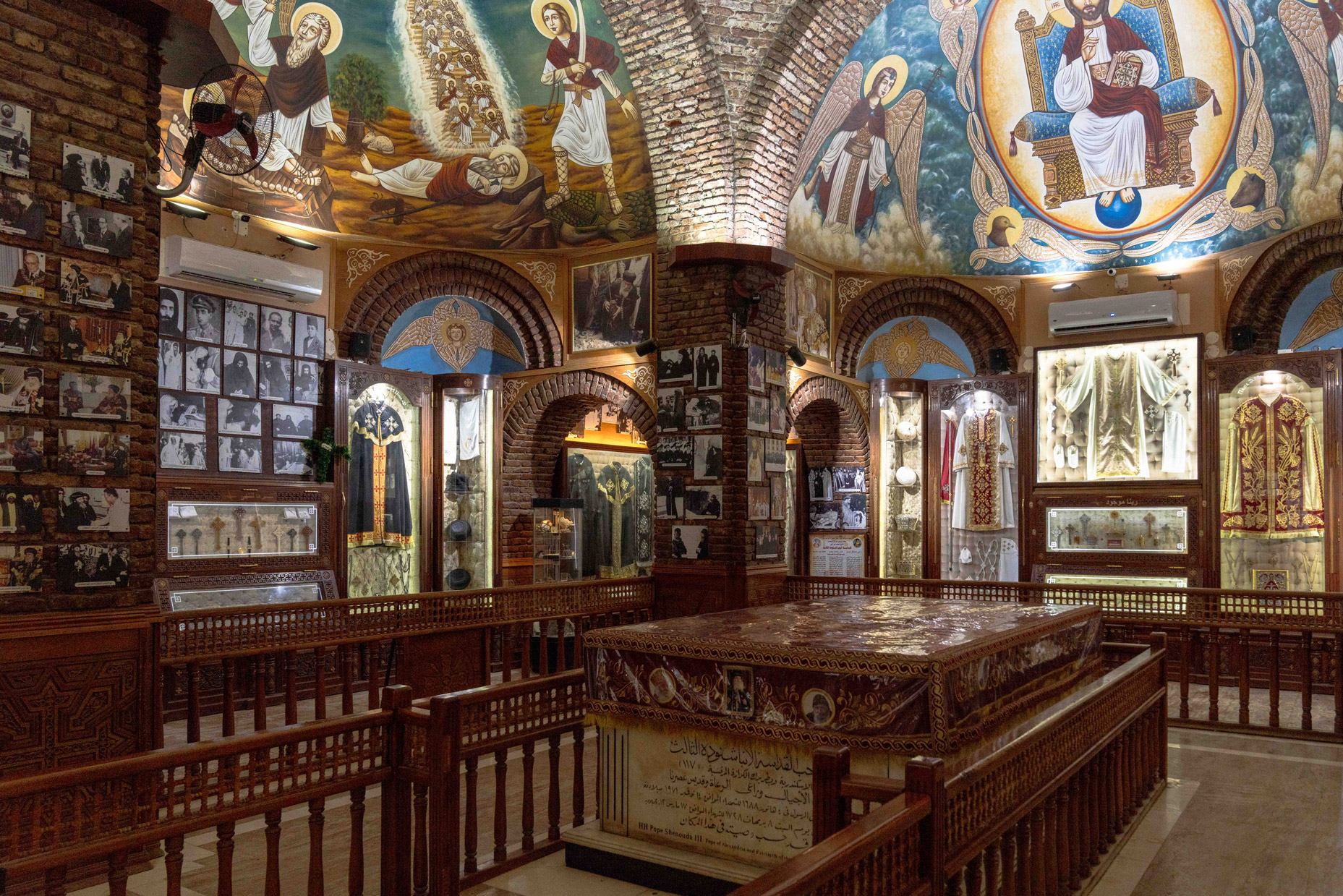
Located on the seaward side of the historic Church. Pope Shenouda III requested to be buried there.
READ MORE →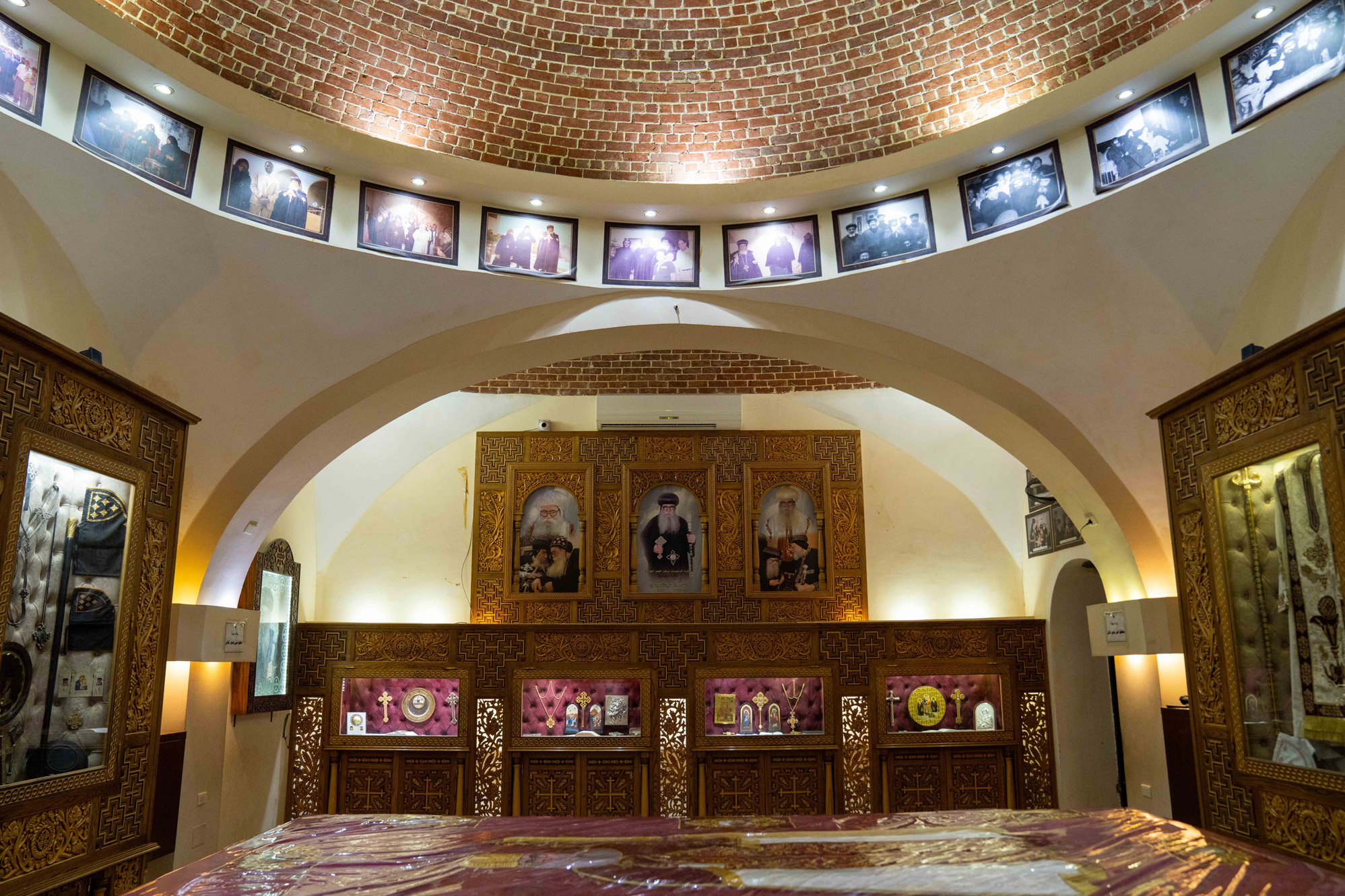
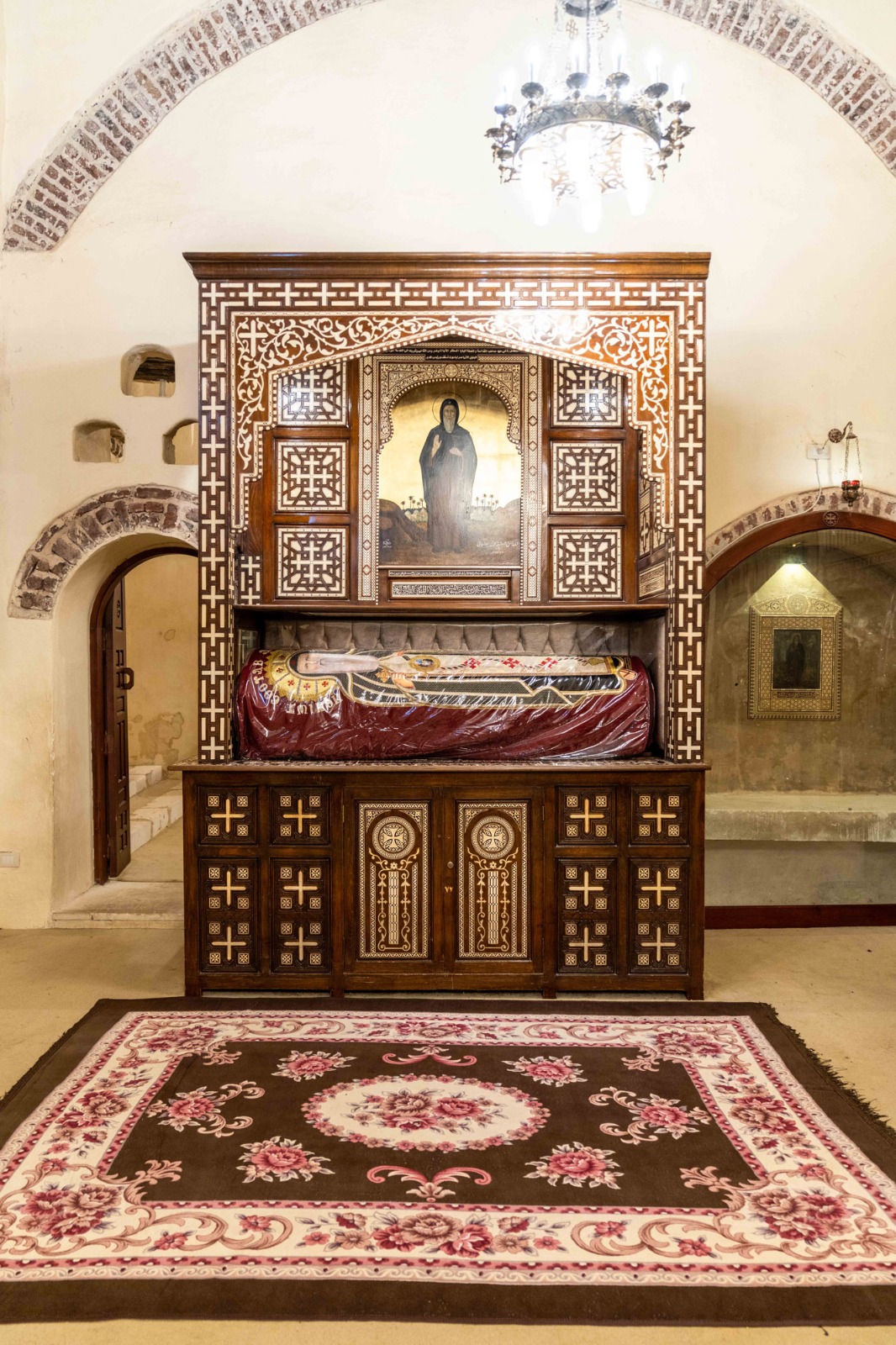
Adjacent to the Shrine of Pope Shenouda III. Contains the body of Anba Sarabamoun and his priestly clothes.
READ MORE →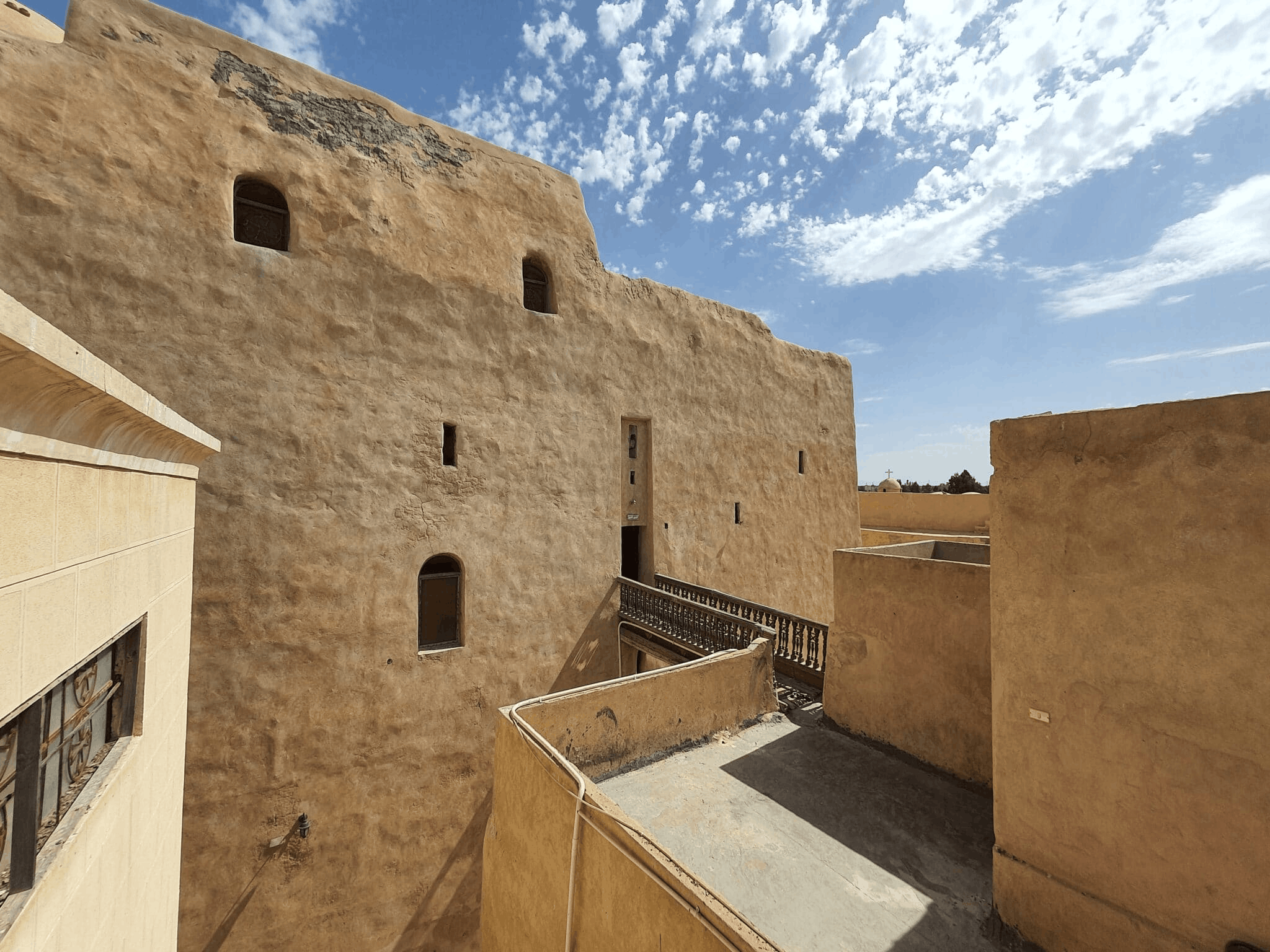
Built by King Zeno in the 5th century AD. A refuge for monks during Berber attacks with a drawbridge pulley system.
READ MORE →