St. Bishoy Monastery
A historic church dating to the 12th century, housing the relics of Martyr Abaskhiron of Qillin and a rare ancient baptistery.
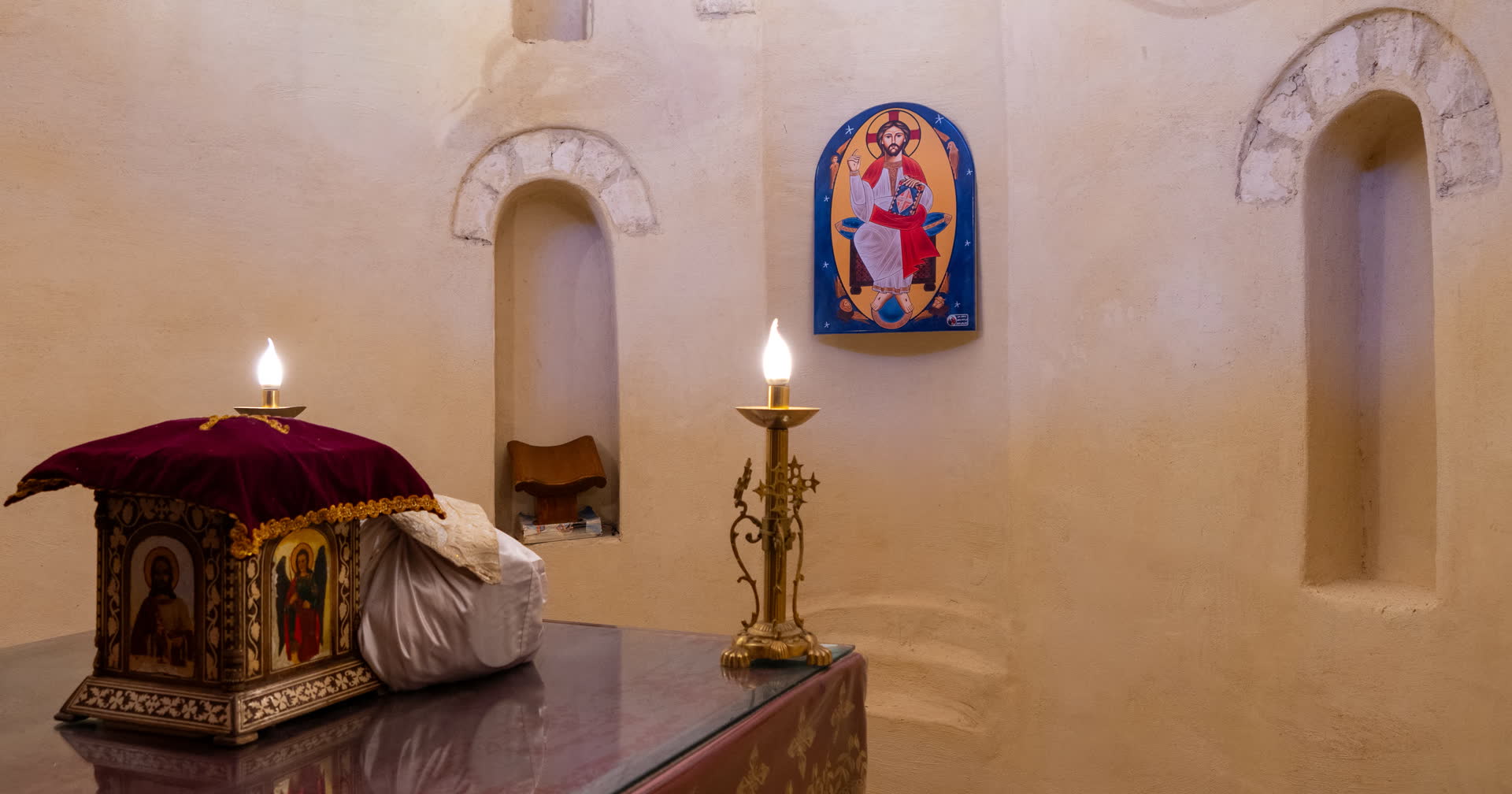
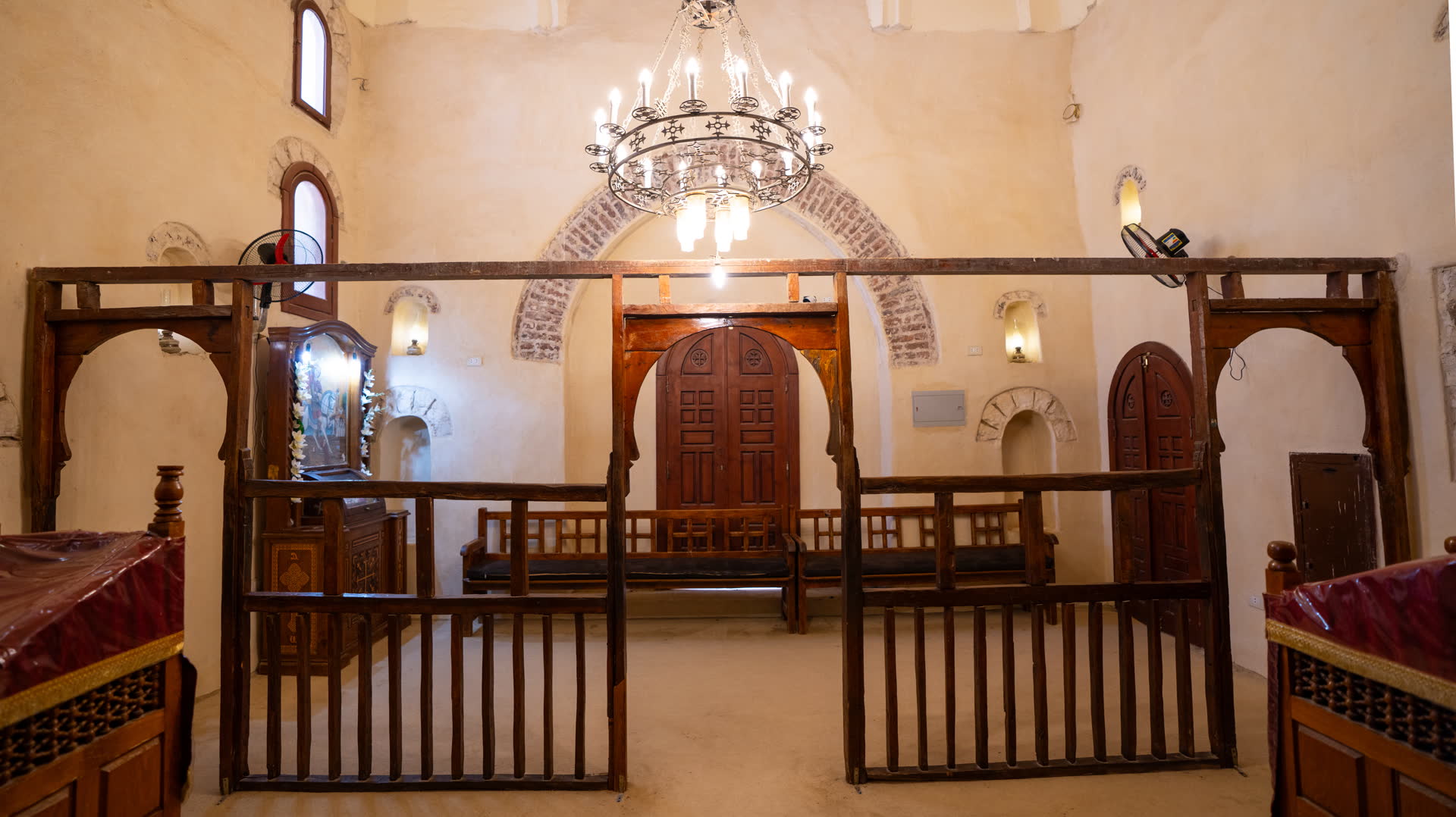
Church of Abaskhiron & Ancient Baptistery — St. Bishoy Monastery, Wadi El Natrun
It dates to the 12th century AD.
It was built in the corner formed by the southern sanctuary wall and the eastern wall of the southern narthex.
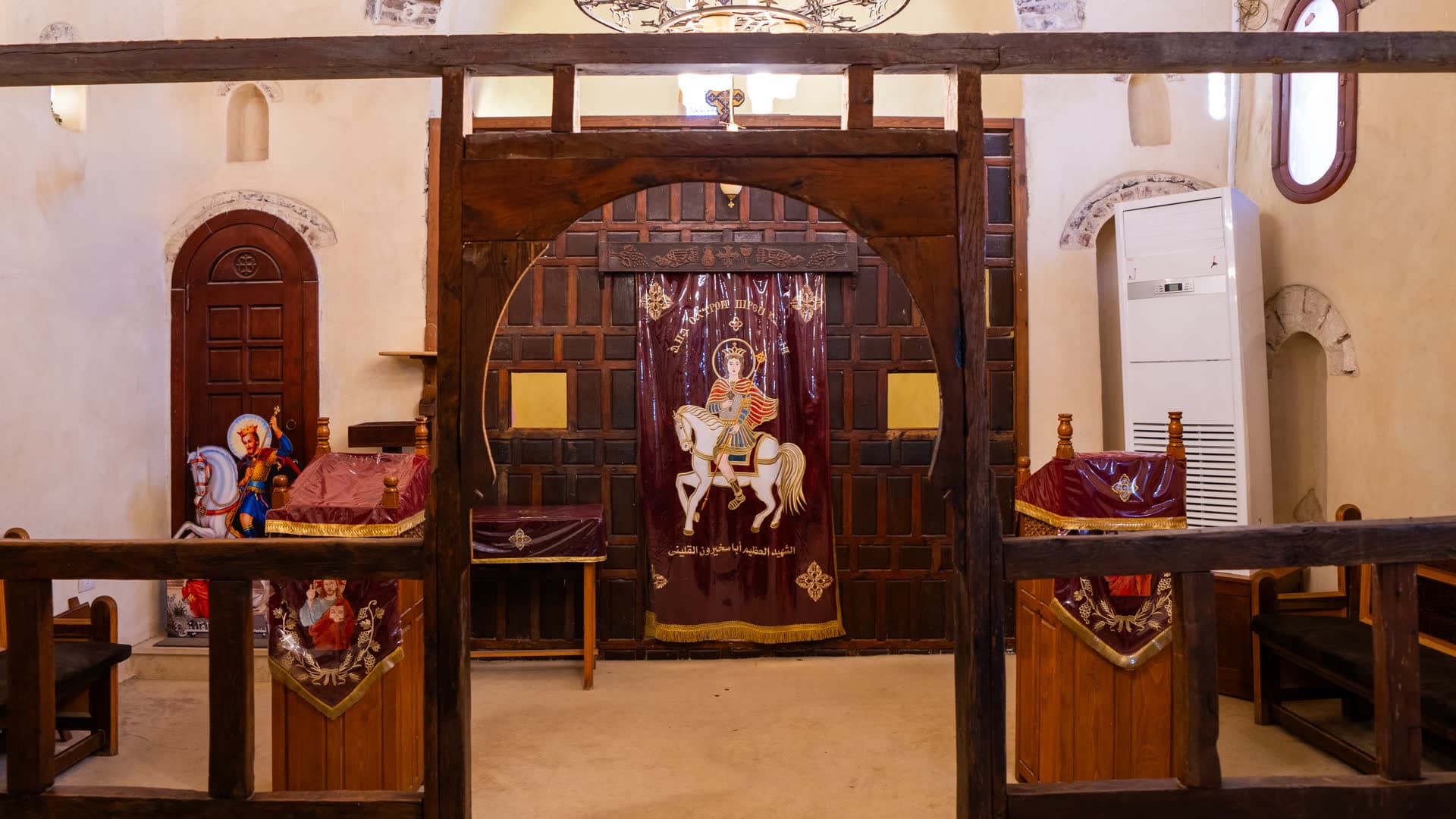
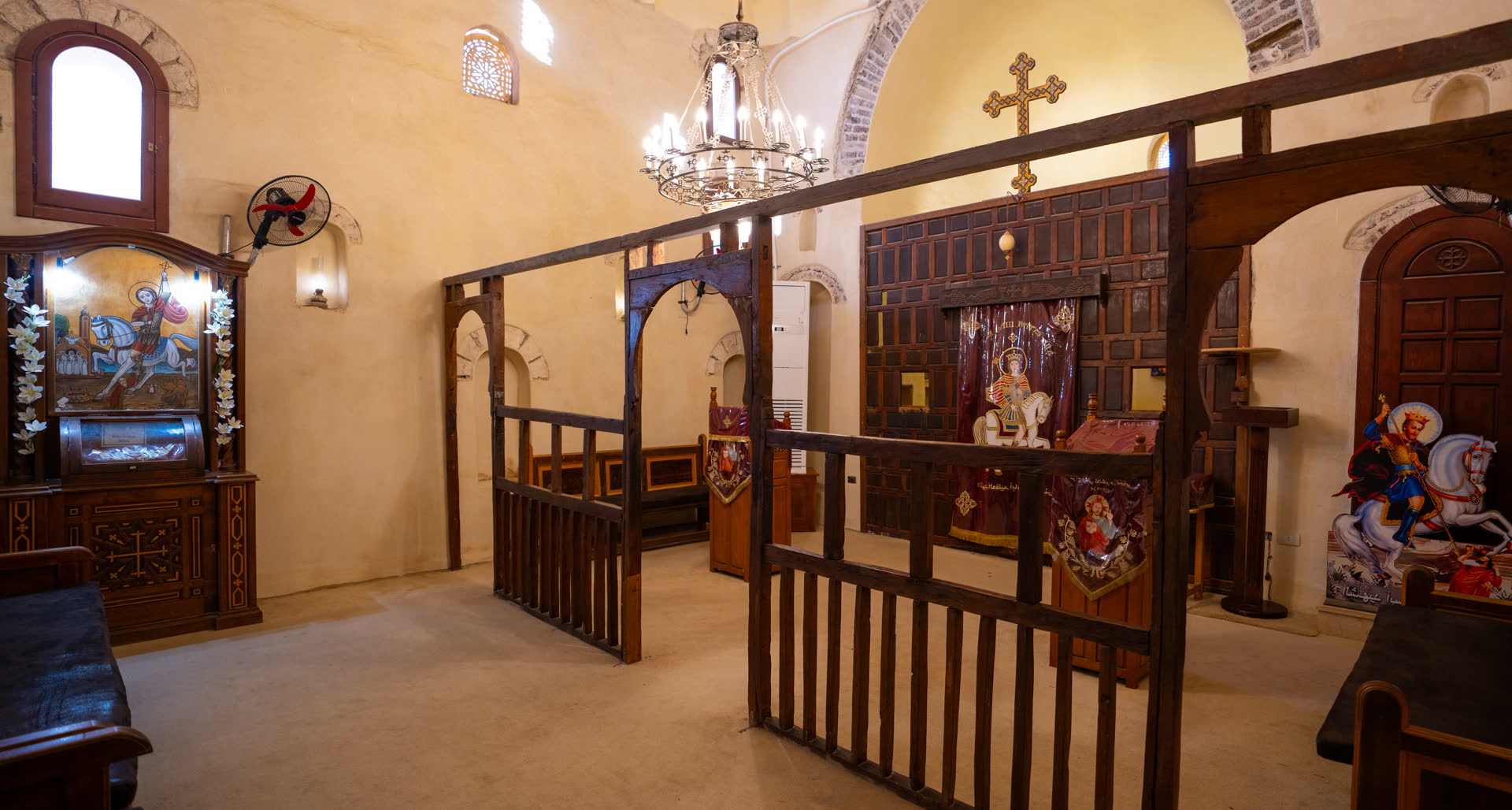
It is divided into a nave and a choir separated by a modern wooden screen.
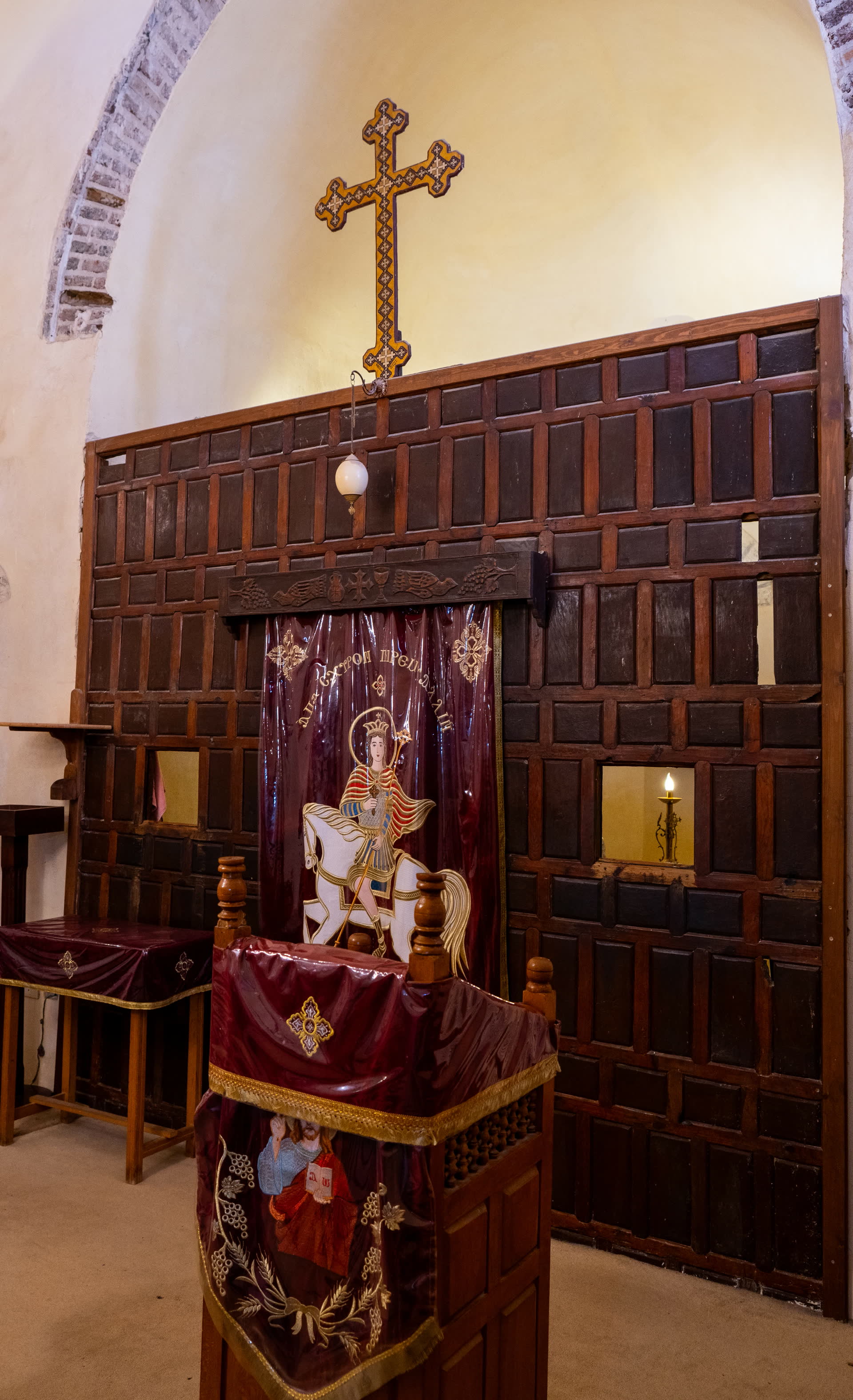
It has a single semi-circular sanctuary with a simple iconostasis.
The sanctuary contains an altar dedicated to Martyr Abaskhiron.
The church body is covered by a hemispherical dome on squinches dating to the 14th century.
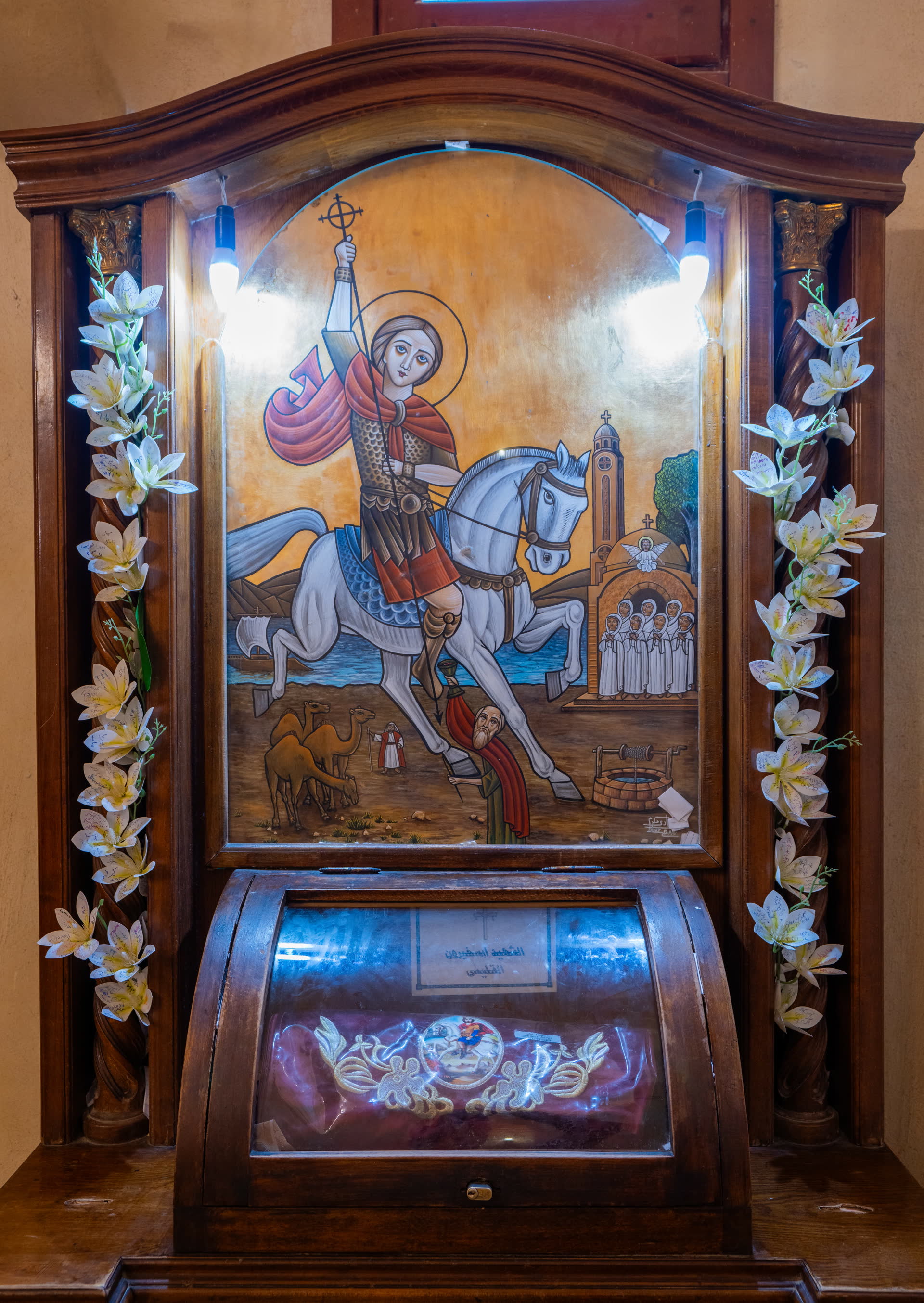
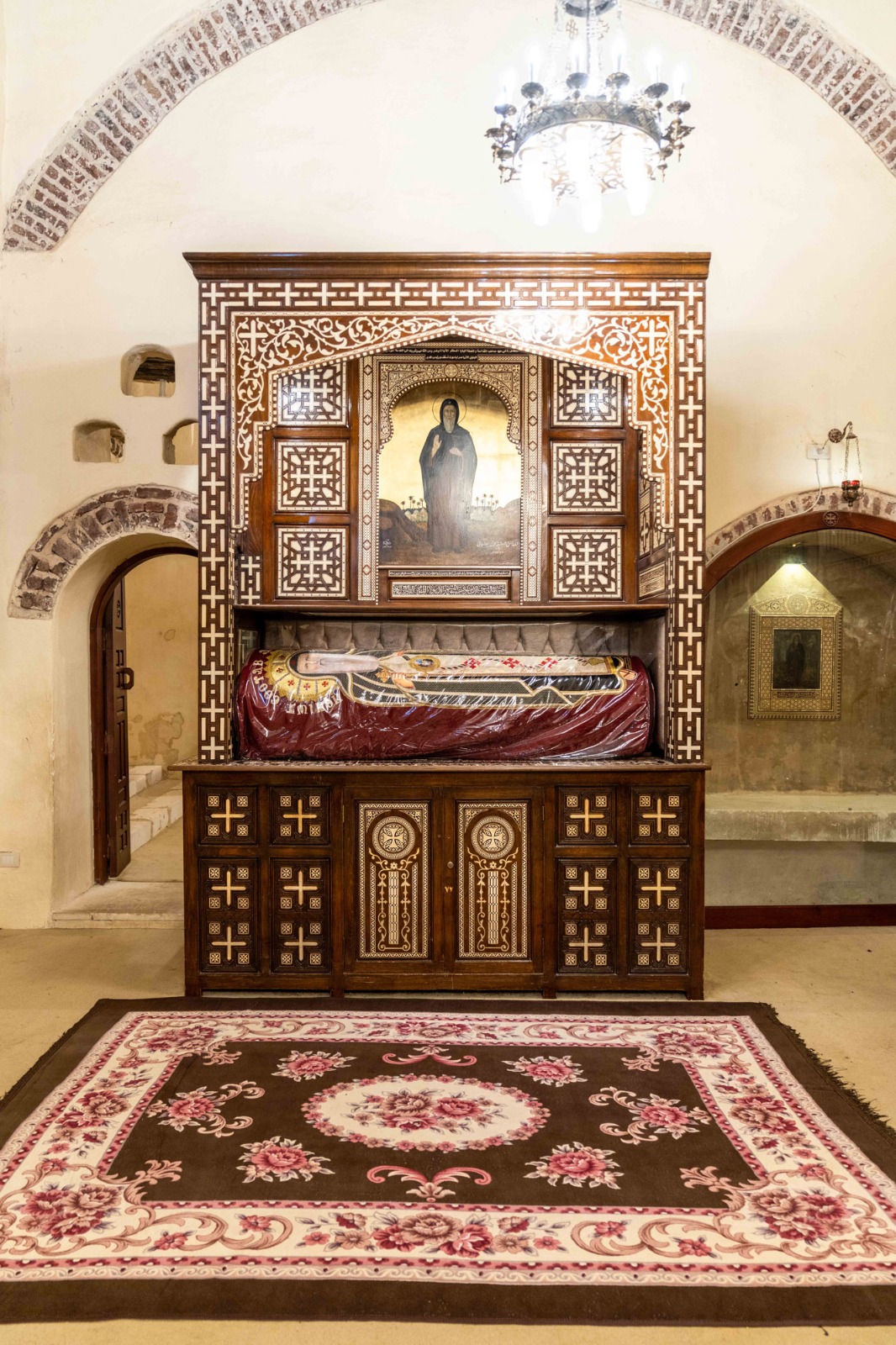
It houses the relics of Martyr Abaskhiron of Qillin.
A small door to the north of the sanctuary opens onto a narrow barrel-vaulted corridor leading to the baptistery chamber, which may have formerly been a regular sanctuary.
The baptistery chamber is divided into two parts: a medium-sized northern room with a dome, and a very narrow cell connected to it by a door with a rounded arch above. The cell is the original baptistery, covered by a semi-barrel vault, with the baptismal font at its eastern end.
The baptismal font is a cylindrical stone basin.
This baptistery is the original eastern end of the Church of Abaskhiron; the cell is the southern lateral sanctuary, and the larger adjacent room is the main sanctuary (9th-century style).
In the 14th century, when the southern sanctuary of St. Bishoy Church was rebuilt, the northern sanctuary of Abaskhiron Church collapsed. A new semi-circular sanctuary was built in place of the choir, the nave was converted and re-roofed, and the remaining eastern sanctuaries became the current baptistery.
This altar was once part of the altars of the Ancient Church of Anba Bishoy and was separated from it in the fourteenth century.
It contains a historic iconostasis dating to the eleventh century.
12th Century AD
DATING
14th Century AD
DOME
11th Century AD
ICONOSTASIS
Explore the Church of Martyr Abaskhiron and the ancient baptistery through a virtual tour.
For the best experience, use a VR headset. The tour is also accessible on desktop and mobile browsers.
The name "Aba Skhiron" or "Abaskhiron" derives from two words: "Aba" meaning "father," and "Skhiron" meaning "the strong."
He was born in Qillin in Kafr El-Sheikh governorate. He was a brave and beloved soldier of great renown among his peers and commanders, serving in the regiment stationed at Atrib (Banha).
Diocletian issued an edict commanding sacrifice to idols throughout the empire. When the edict was announced among the troops, Abaskhiron refused to worship idols. The governor struck him and rebuked him, but he threw his military belt before him. The governor immediately ordered his imprisonment. While praying, an angel of the Lord appeared to him, encouraging and strengthening his faith in Christ. The following morning he was brought to trial. The governor alternately threatened and flattered him, but finding him firm in his faith, ordered him transported to Arianus, governor of Ansena, bound in chains aboard a vessel heading south. Christ appeared to him on the ship and loosened his chains; at the soldiers' plea, he allowed himself to be re-chained so they would not face punishment.
They did not find the governor at Ansena and learned he had gone to Asyut, so they set out after him. There Abaskhiron met a group of believers from Aswan and Esna who had been brought to Arianus for torture, and all comforted one another.
The saint cast out an evil spirit tormenting the governor's advisor Maximus, which angered the governor, who ordered the saint bound to horses and paraded through the city streets. He was subjected to many tortures, yet the Lord sustained and strengthened him. Arianus accused him of sorcery and summoned a sorcerer named Alexander, who offered him a cup of poison. The saint made the sign of the cross over it and was unharmed; the sorcerer believed in Christ, and Arianus beheaded him.
Arianus intensified the torture of the saint and finally beheaded him on the 7th of Baounah, 304 AD, together with five of his soldier companions.
There was a church in the town of Qillin in Kafr El-Sheikh where seven wedding parties were celebrating simultaneously, with no fewer than a hundred people present. A gang of evildoers attacked the church, and the people cried out invoking the intercession of Martyr Abaskhiron. The entire church with all its occupants was miraculously transported from Qillin in Kafr El-Sheikh to El-Bayhou in Minya. To this day, the Church of Martyr Abaskhiron stands in the village of El-Bayhou, containing the iron pulley and wooden mast of the vessel that returned the wedding parties from El-Bayhou back to Qillin.
Gallery
Continue Exploring the Monastery
One of the most beautiful and largest historic churches in Wadi El Natrun — foundations from the 4th century AD.
READ MORE →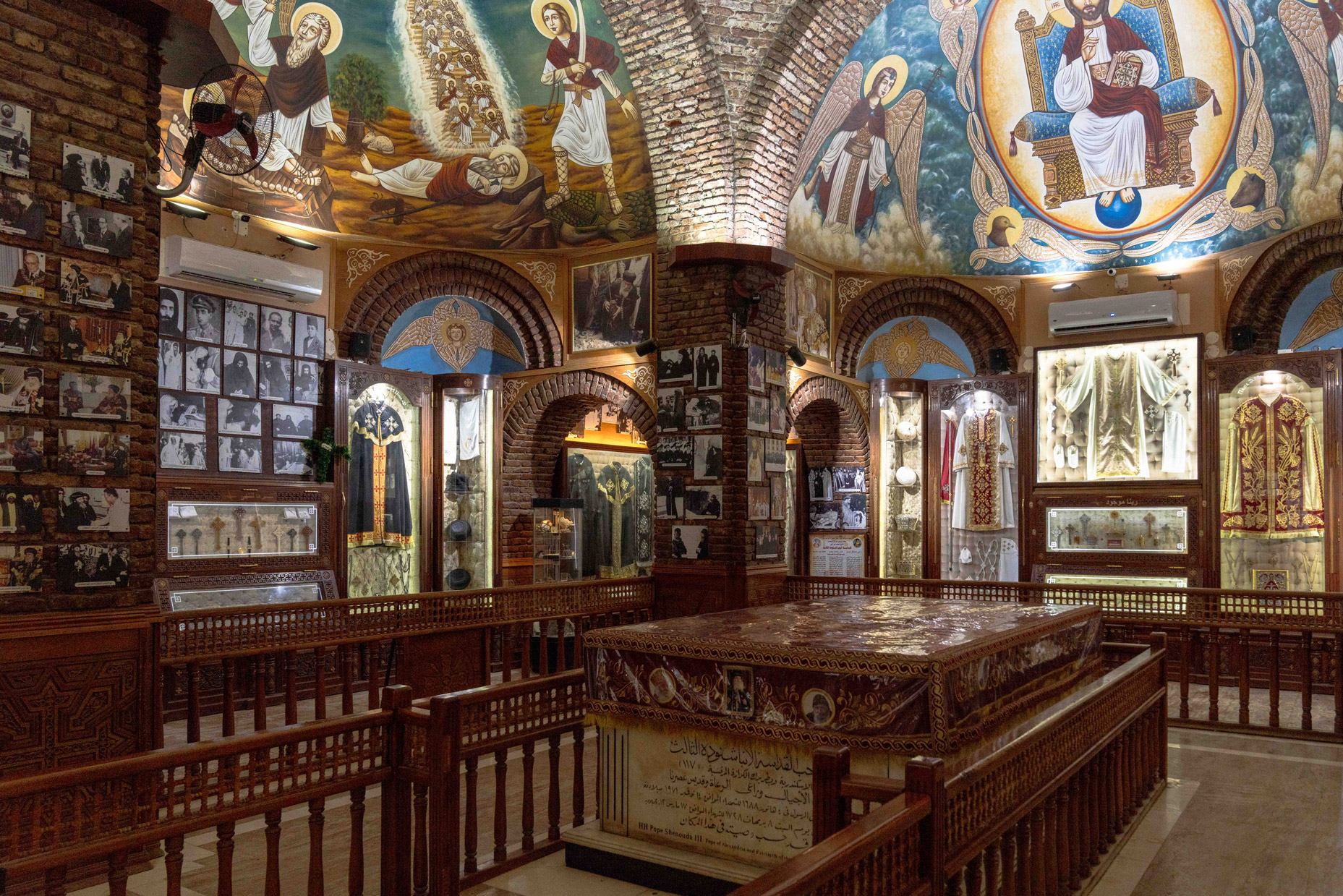
Located on the seaward side of the historic Church. Pope Shenouda III requested to be buried there.
READ MORE →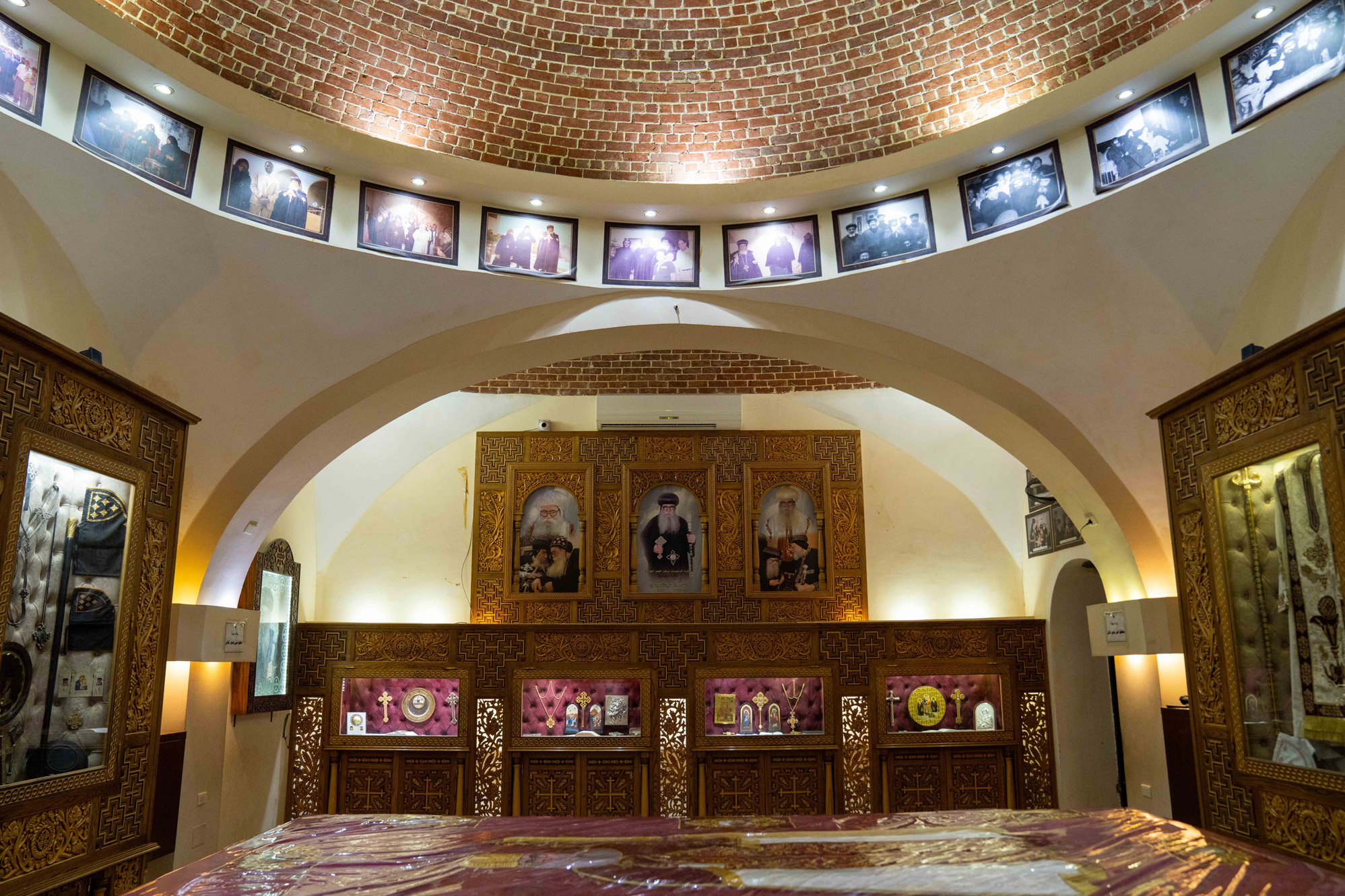
Adjacent to the Shrine of Pope Shenouda III. Contains the body of Anba Sarabamoun and his priestly clothes.
READ MORE →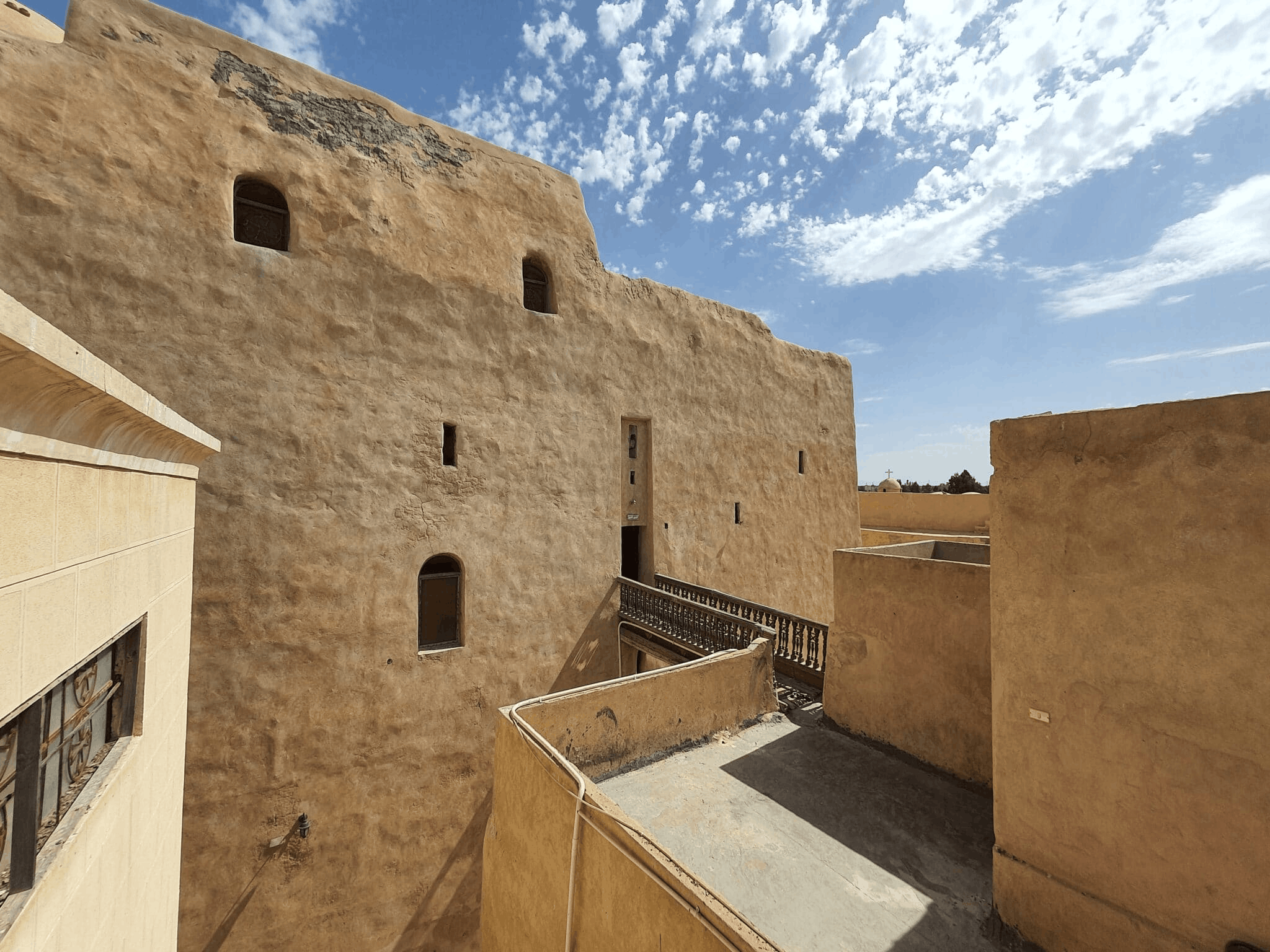
Built by King Zeno in the 5th century AD. A refuge for monks during Berber attacks with a drawbridge pulley system.
READ MORE →