St. Bishoy Monastery
Bishoy is a Coptic word meaning "the exalted" or "the high one".
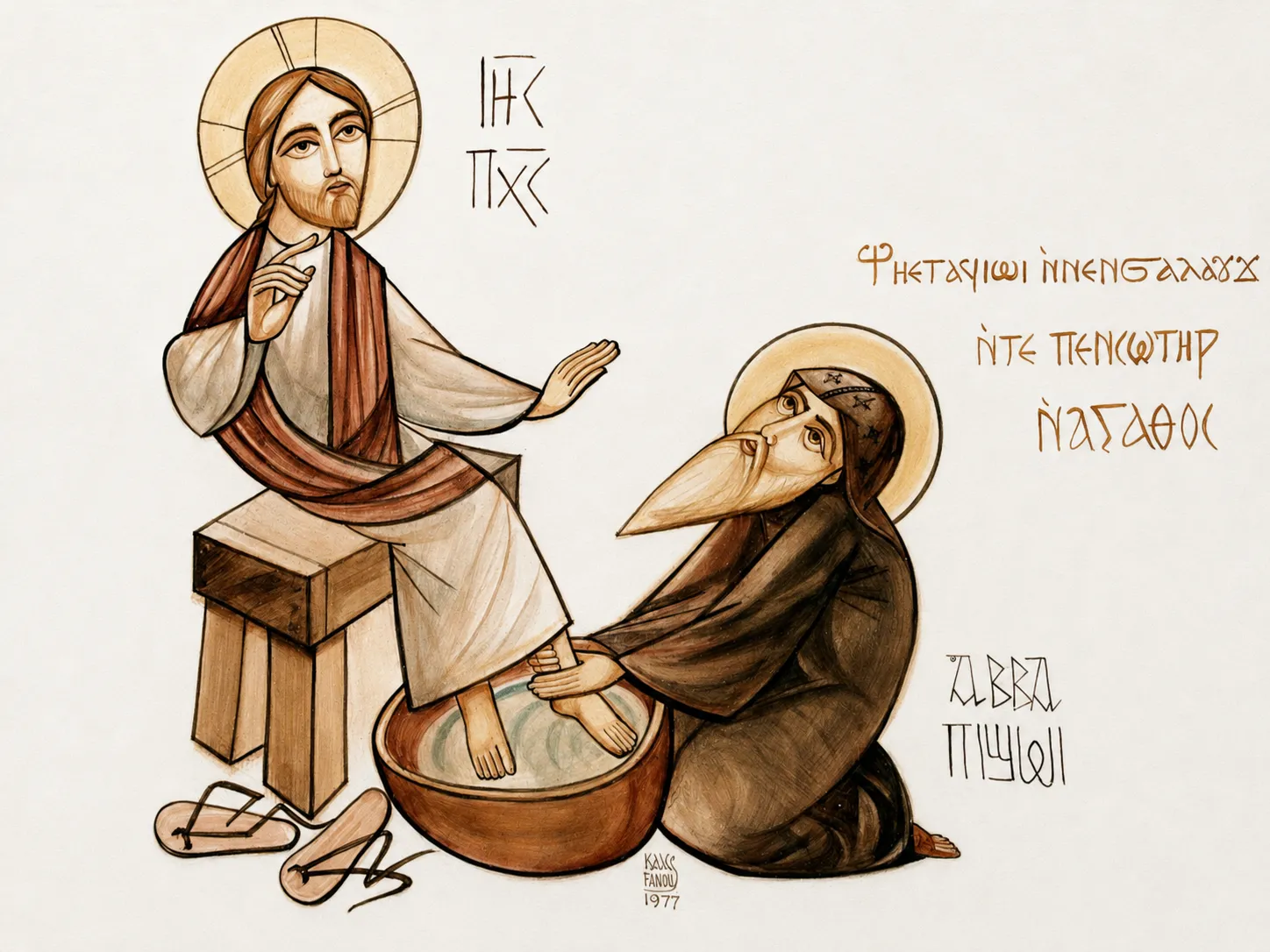
The Perfect Man
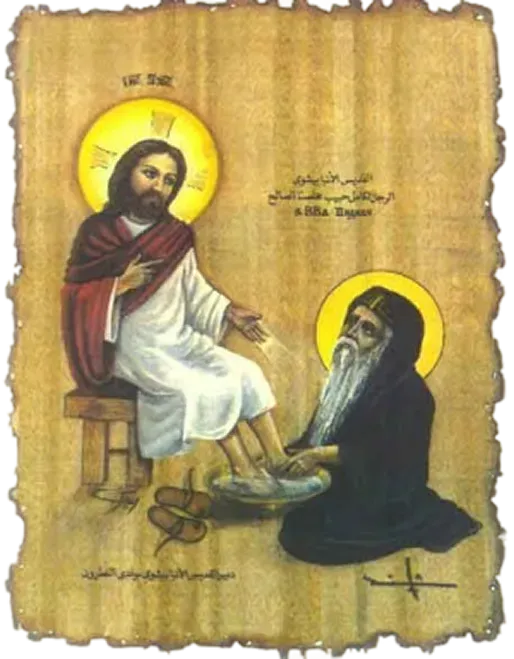
He was one of the fathers of Coptic monasticism in the fourth century. He loved prayer so deeply that he would tie his hair with a cord to keep himself praying and prevent sleep. He excelled in fasting, often going without food for days at a time, and became a spiritual guide to hundreds of monks. He was deemed worthy to wash the feet of our Good Savior and to carry Him; for this reason, our Lord Jesus Christ told him that his body would not see corruption.
Saint Bishoy
Explore the defining moments in the life of Saint Bishoy through an interactive milestone timeline.
Saint Anba Bishoy was born in 320 AD in the village of Shantana, in the Menoufia Governorate. He was one of seven brothers. He was an orphan, as his father died when he was still young.
One night, God sent His angel to tell the mother of Saint Anba Bishoy in a vision that one of her sons would become a saint, would be the father of many monks, and would serve the Lord God all the days of his life. The mother rejoiced greatly and said to the angel, "All my children belong to the Lord." But the angel took Anba Bishoy by the hand and said to his mother, "The Lord has chosen Bishoy." The mother replied simply, "You can choose any one of his brothers, for Bishoy is the youngest and weakest." The angel said to her, "God looks at the heart, not the body."
Saint Ephrem the Syrian visited Anba Bishoy in his cave, which is currently located within the Monastery of the Syrians (Deir El-Surian). Anba Bishoy asked God to grant him the ability to speak Syriac so that he could converse with the visiting saint and share mutual spiritual edification; Anba Bishoy’s native tongue was Coptic, the language prevalent in Egypt at the time. God granted his request, enabling him to speak Syriac with Saint Ephrem for a full week. Upon entering the cave, Saint Ephrem left his staff outside, as he did not wish to hold it in Anba Bishoy’s presence—in keeping with monastic etiquette, which dictates that a monk should not hold a staff when in the presence of a senior. When the visit concluded and Saint Ephrem emerged from the cave, he found that the staff he had left behind had sprouted leaves and transformed into a tree. That tree still stands at the Monastery of the Syrians today and is known as the Tree of Saint Ephrem the Syrian.
Continue Exploring the Monastery
One of the most beautiful and largest historic churches in Wadi El Natrun — foundations from the 4th century AD.
READ MORE →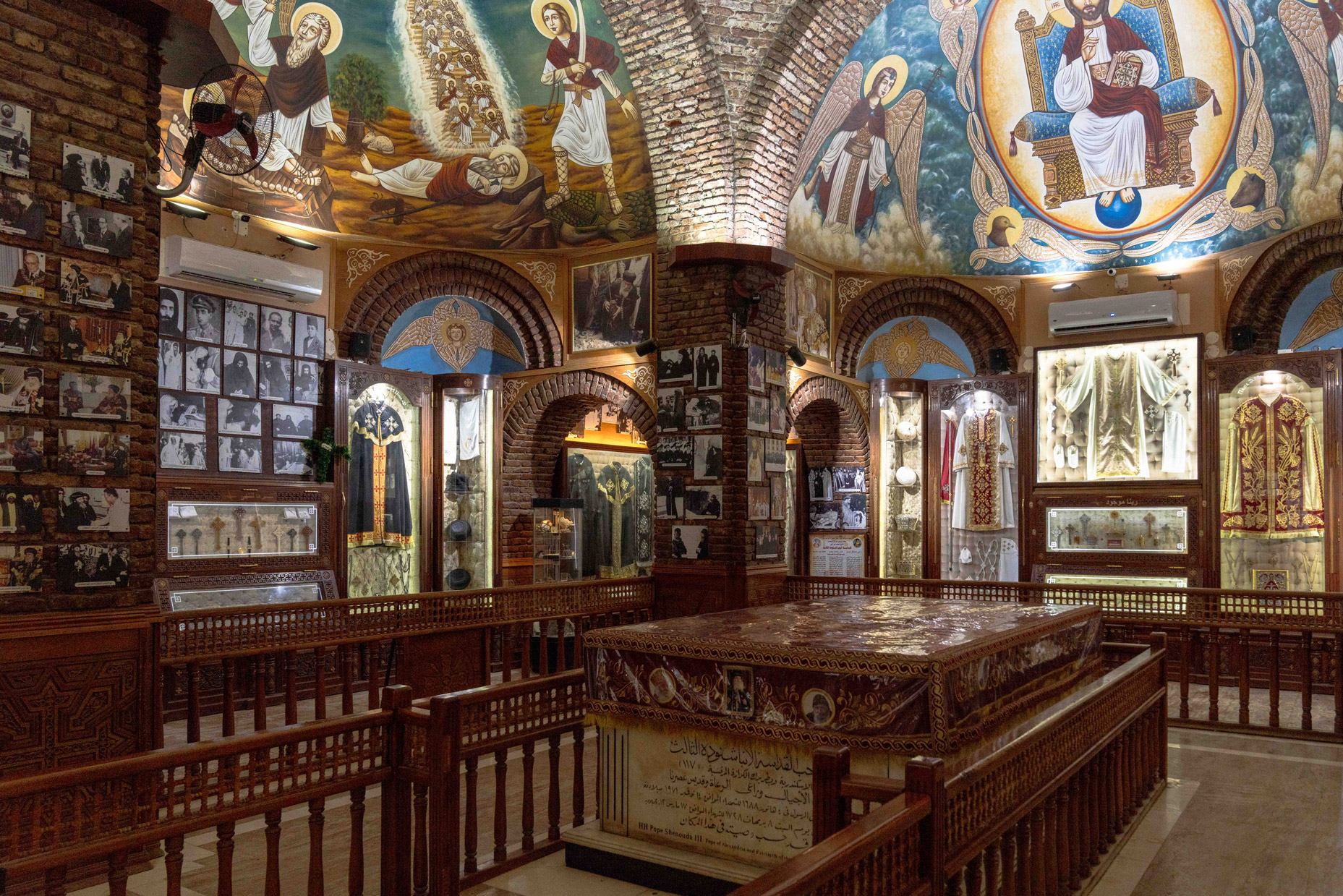
Located on the seaward side of the historic Church. Pope Shenouda III requested to be buried there.
READ MORE →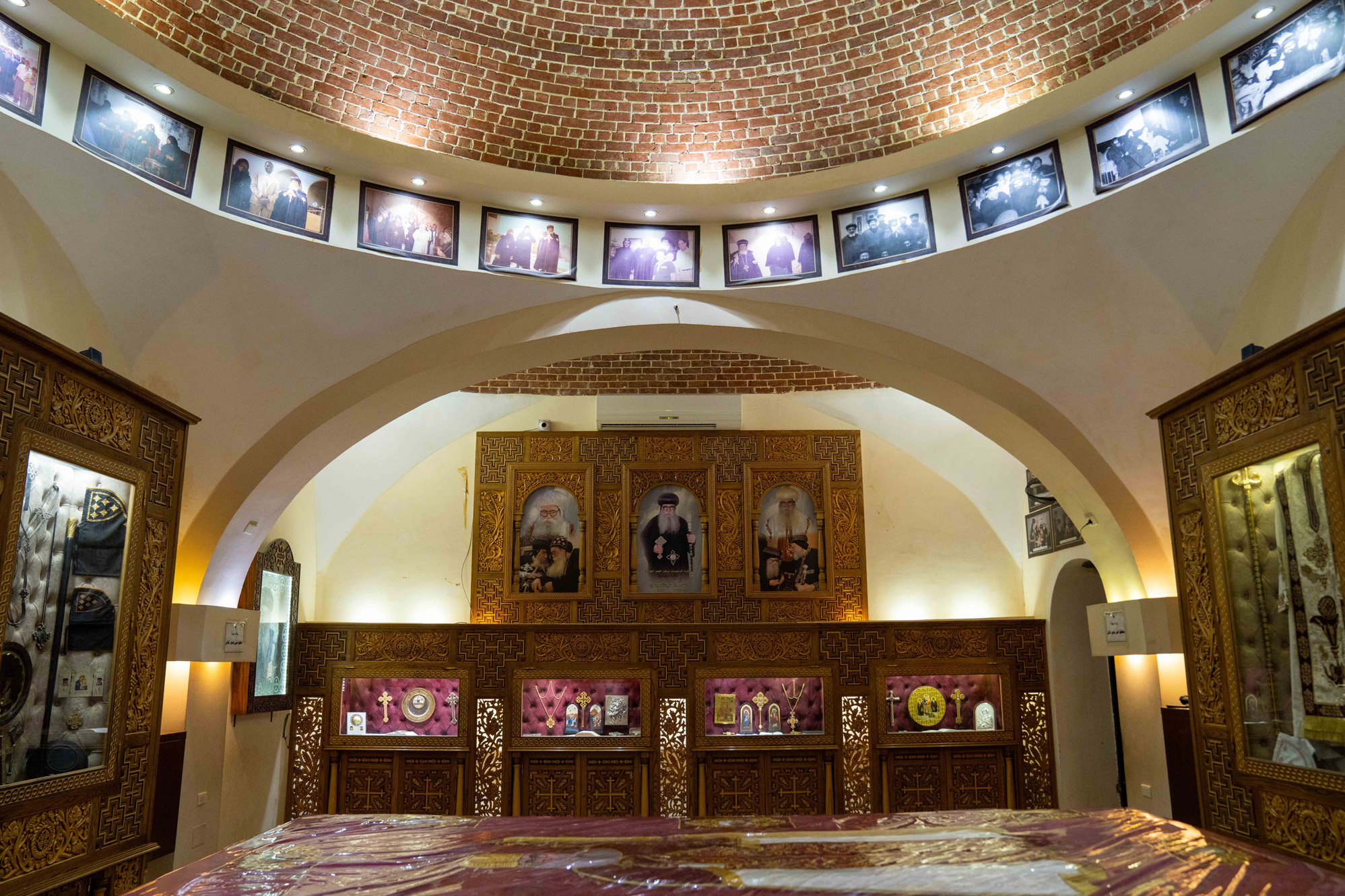
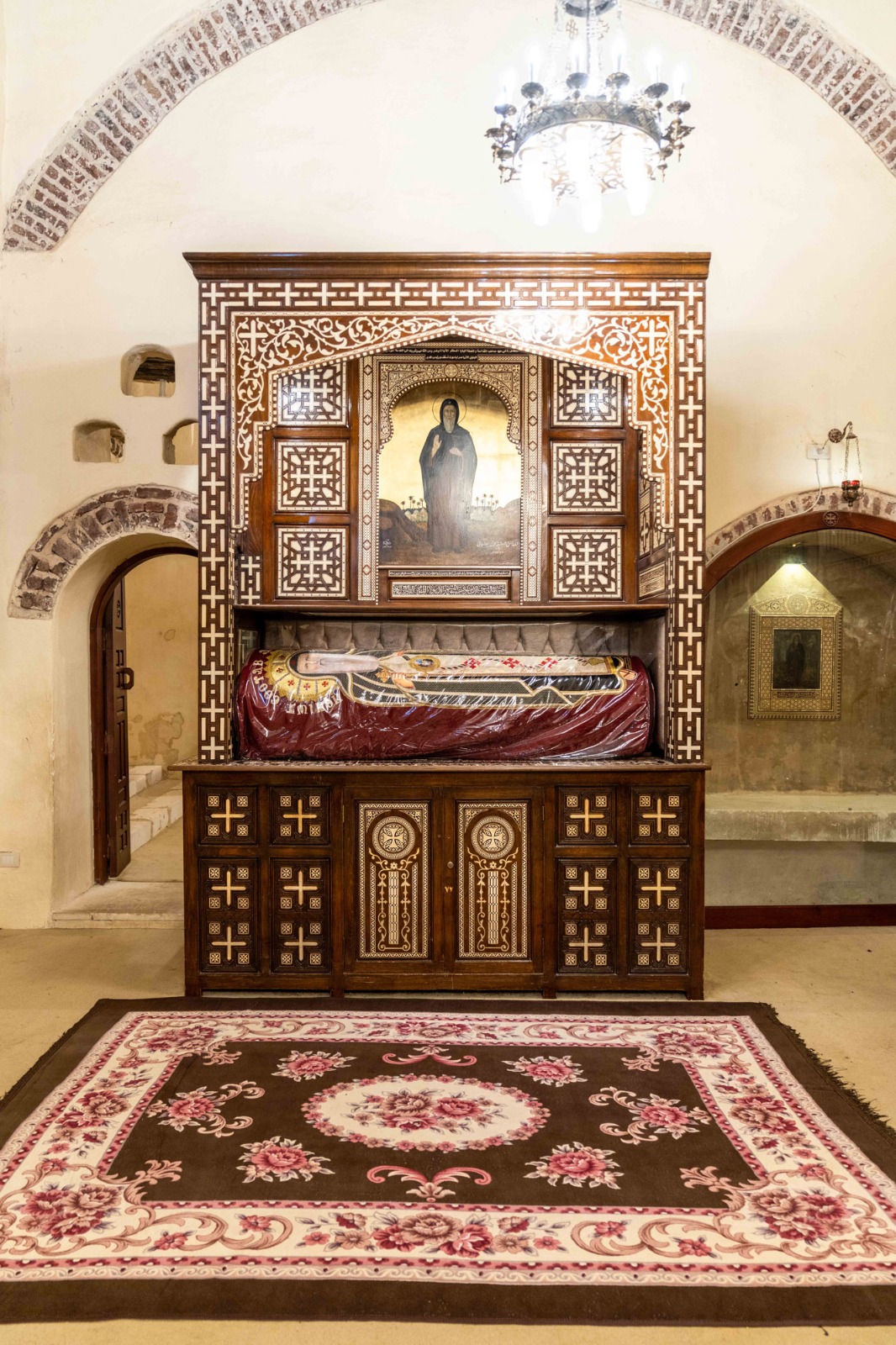
Adjacent to the Shrine of Pope Shenouda III. Contains the body of Anba Sarabamoun and his priestly clothes.
READ MORE →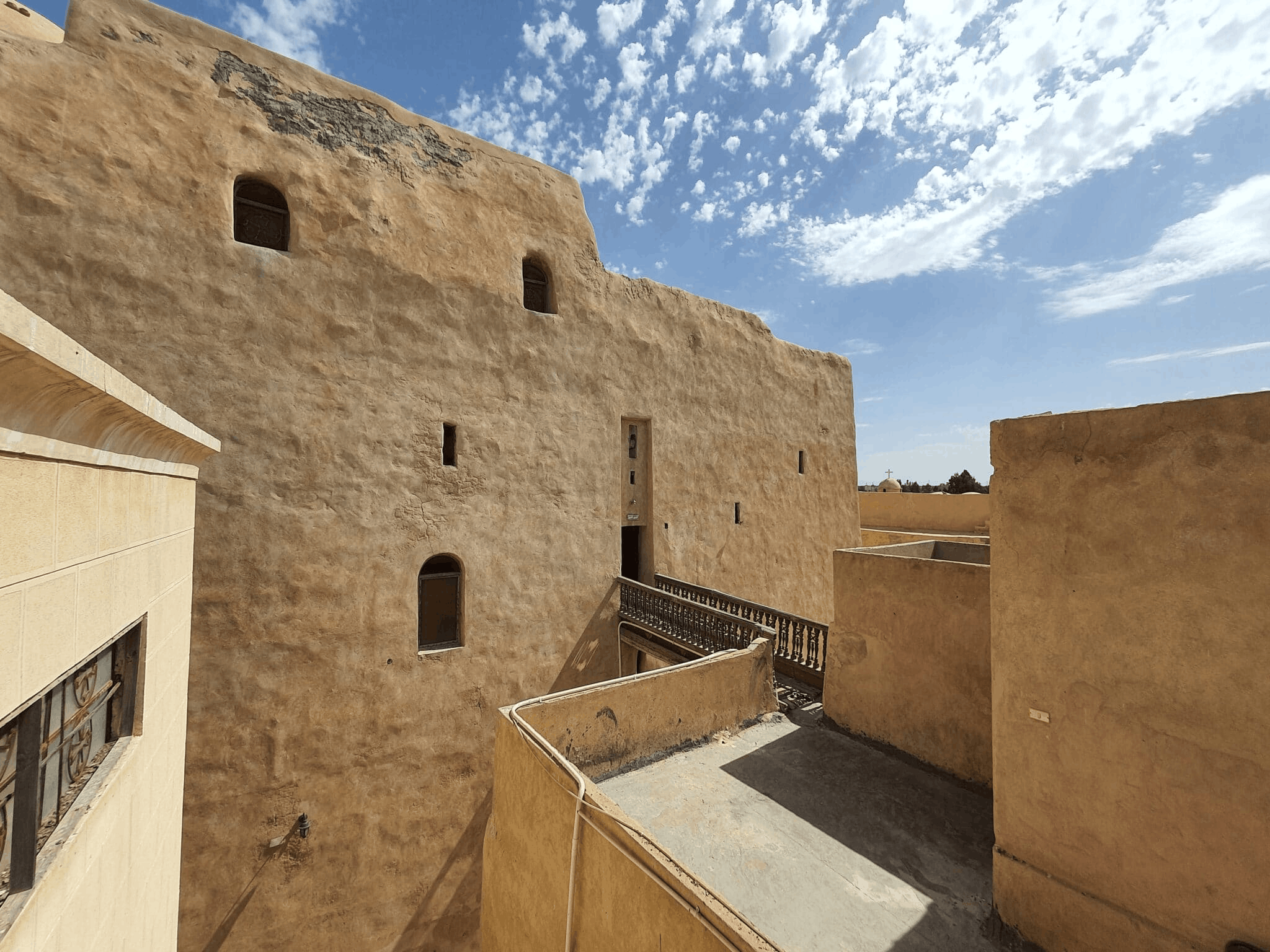
Built by King Zeno in the 5th century AD. A refuge for monks during Berber attacks with a drawbridge pulley system.
READ MORE →